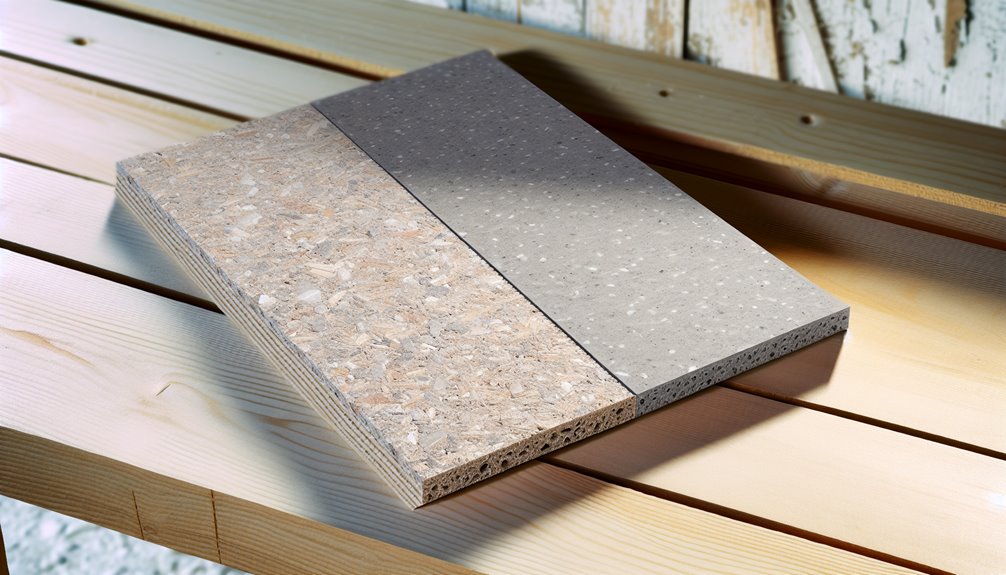
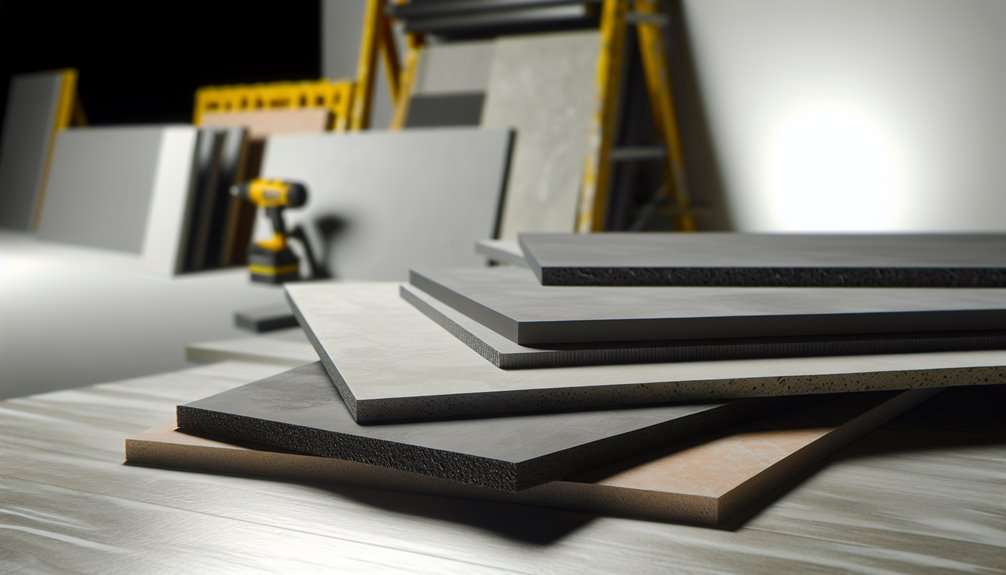
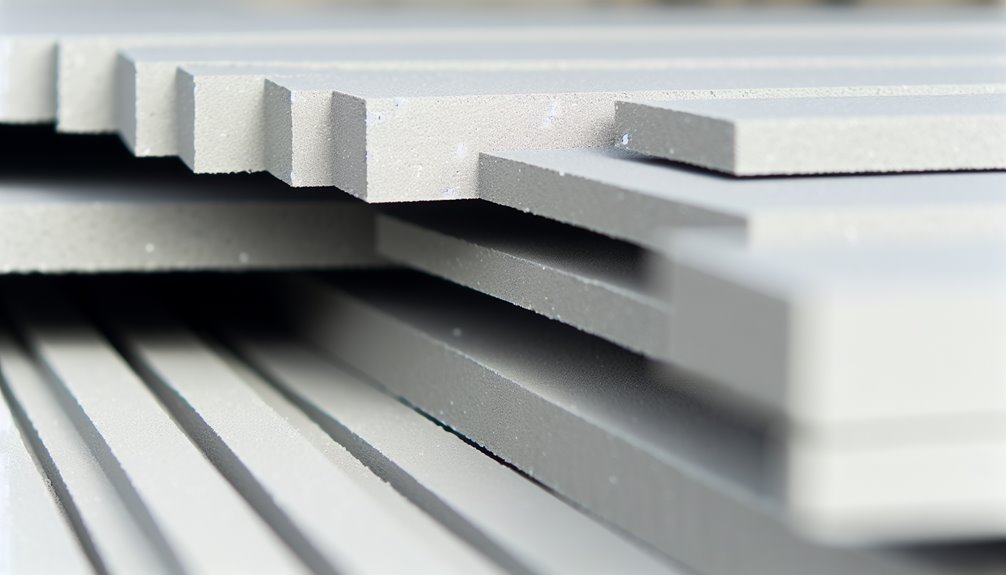
Cement board and fibre cement board, though similar in name, serve distinct roles in construction due to their unique properties. Cement board excels in interior settings, particularly wet areas, due to its moisture resistance. Conversely, fibre cement board is engineered for exterior applications, prized for its weather resistance and durability. Understanding these differences is essential for choosing the right material, as each offers specific advantages and potential pitfalls worth exploring further.
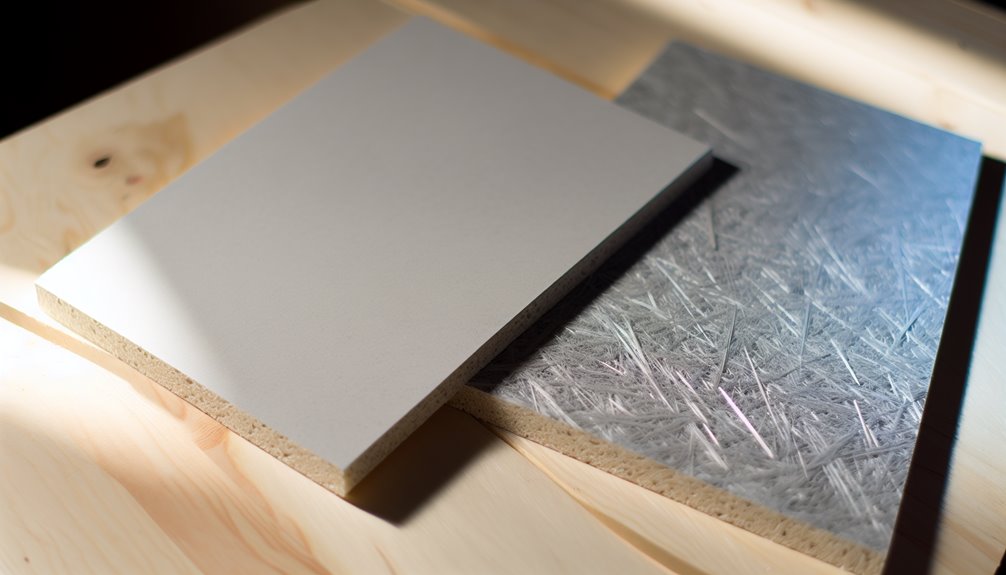
While both cement board and fibre cement board serve as durable building materials, the key difference lies in their intended use and structural composition. Cement board is primarily utilized as an interior substrate ideal for wet environments, whereas fibre cement board is designed for exterior applications, offering enhanced flexibility and strength due to its inclusion of cellulose fibers.
The cement board vs fibre cement board debate centers on their distinct compositions. Cement board comprises cement with mineral fillers, providing rigidity but less flexibility. In contrast, fibre cement board integrates cellulose fibers, enhancing its resistance to cracking and impact.
This difference between cement board and fiber cement allows fibre cement boards to handle outdoor conditions better, resisting moisture, mold, and temperature fluctuations effectively.
Cement board is designed as a durable, moisture-resistant substrate, not a finished surface. Its primary role is to provide a stable base for tiles, coatings, or other finishes in environments where gypsum boards would degrade.
In practice, cement board is used for:
Unlike decorative panels, cement board is rarely left exposed. It is typically installed behind finishes to improve adhesion, durability, and resistance to moisture and heat.
Its design prioritises stability under load and resistance to environmental stress, making it a functional component within a wall or floor system rather than a visible architectural material.
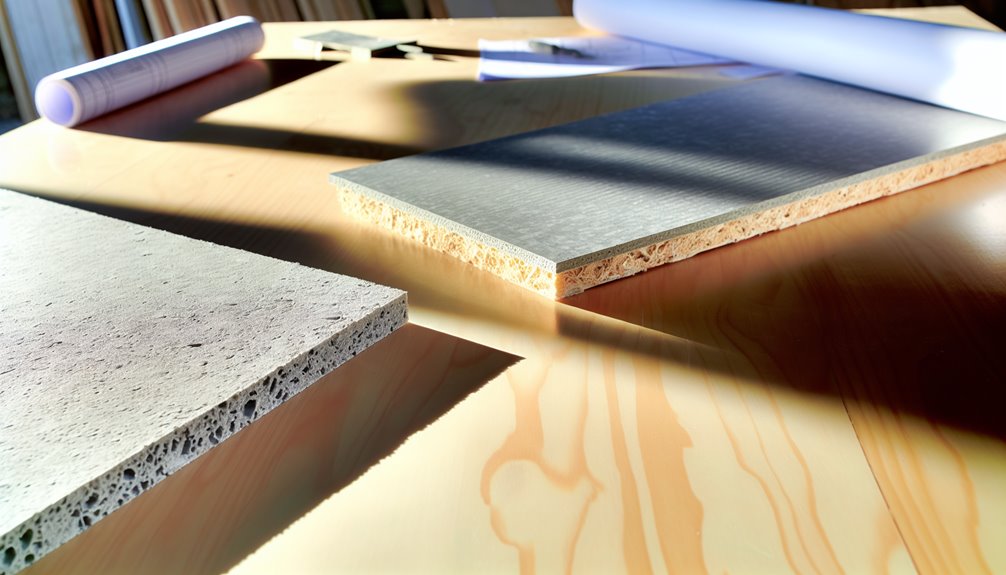
Fibre cement board is engineered for a range of exterior applications, including cladding and façades. It serves as a durable solution for architectural wall panels, soffits, and other external uses.
Unlike traditional cement board, which is often used indoors, fiber cement board uses extend to visible, finished surfaces outdoors. This makes it particularly suitable for decorative exterior systems, offering resilience and longevity.
The comparison of cement board vs siding panels highlights fiber cement's versatility, as it mimics the appearance of materials like wood or stone while providing enhanced durability. Its design is intended to withstand environmental stressors, offering low maintenance and protection against rot, fire, and pests.
Fiber cement board uses make it a preferred choice for sustainable and aesthetically pleasing construction projects.
A crucial distinction between cement board and fibre cement board lies in their structural and material composition. Cement board consists of cement combined with mesh reinforcement, providing basic strength and rigidity.
Cement board combines cement and mesh for foundational strength and rigidity.
In contrast, fiber cement board integrates cement with cellulose or synthetic fibers, enhancing density and weather resistance.
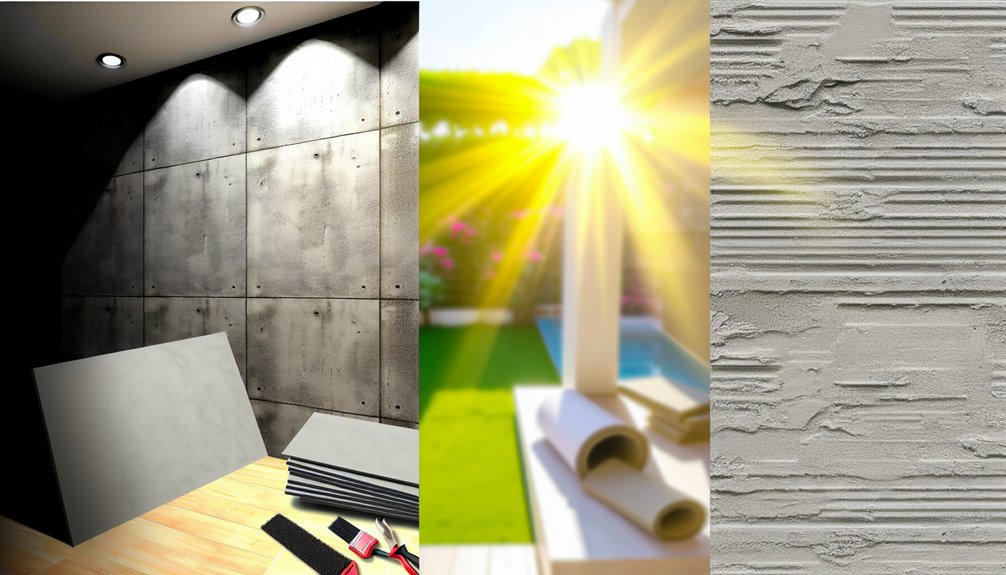
Choosing between cement board and fibre cement board comes down to where the material will be used.
Cement board is designed for interior applications, especially in wet areas such as bathrooms, kitchens, and tiled surfaces. It provides a stable, moisture-resistant substrate but is not built to withstand prolonged exposure to weather.
Fibre cement board, by contrast, is engineered for exterior use. It resists UV, rain, temperature changes, and environmental stress, making it suitable for façades and exposed architectural applications.
| Application Area | Recommended Material |
|---|---|
| Interior wet areas | Cement board |
| Kitchen backsplashes | Cement backer board |
| Exterior façades | Fibre cement board |
| Exposed conditions | Fibre cement board |
Cement board is for protected interior use, while fibre cement board is designed for exterior performance.
Evaluating the suitability of cement board and fiber cement board for specific environments highlights their distinct durability and weather resistance characteristics.
Cement board applications typically focus on interior settings due to its moisture resistance but lack of complete weatherproofing. In contrast, fiber cement excels in exterior use, withstanding diverse weather conditions.
This analysis emphasizes the need to match board type to environmental demands.
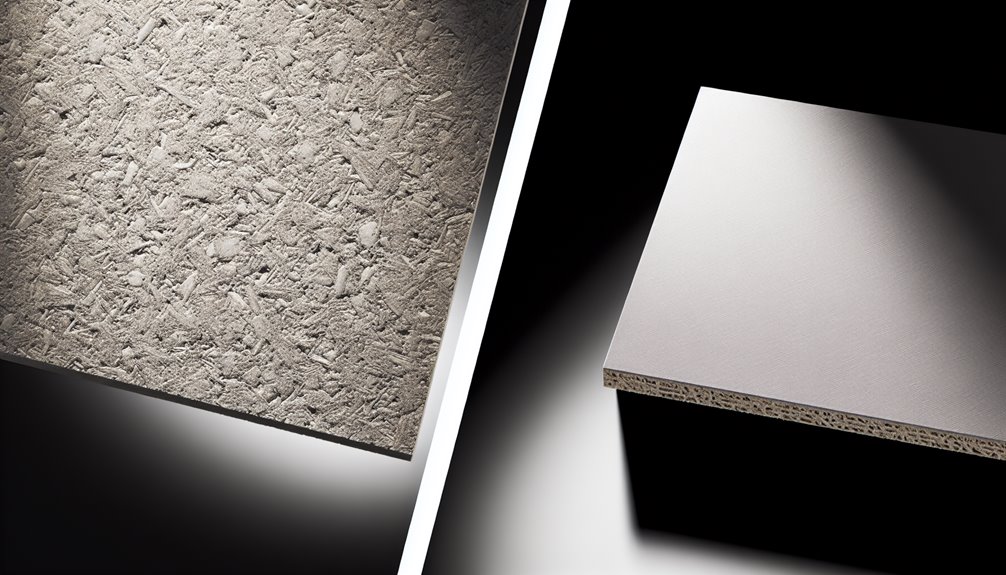
In contrast, fiber cement board offers a broad range of surface finishes, including textured, coated, or decorative options. This versatility enables its use in both interior and exterior architectural applications, with designs that mimic wood or stone, enhancing visual appeal.
Fiber cement's ability to maintain its appearance over time, without significant maintenance, further distinguishes it. Consequently, while cement board excels in structural support, fiber cement board provides both structural integrity and aesthetic flexibility, meeting diverse design needs.
Installation of cement board and fibre cement board diverges according to their intended applications. Cement board is primarily used as backing under tiles or finishes, ensuring a stable surface in wet areas such as bathrooms and kitchens.
Cement board serves as a stable backing for tiles, ideal for wet areas like bathrooms and kitchens.
Fibre cement board, on the other hand, is typically installed as an external panel system or cladding, requiring specific considerations.
These distinctions guide the installation process based on material suitability and environmental conditions.
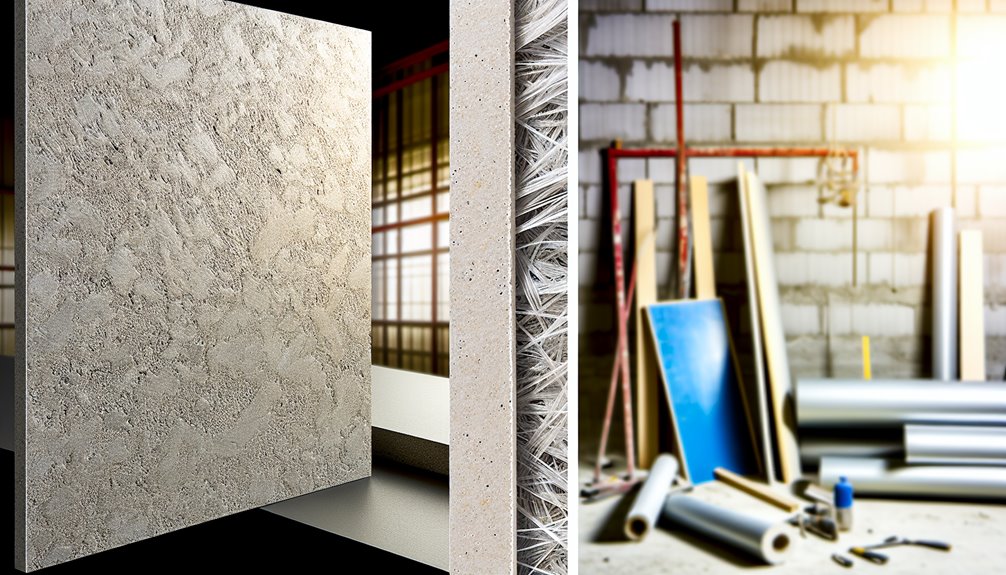
When evaluating cost and lifecycle considerations between cement board and fibre cement board, it’s crucial to recognize their distinct roles and financial implications.
Cement board presents a lower initial cost, making it suitable for projects with budget constraints and shorter lifecycle requirements. Its usage is typically focused on interior applications where cost efficiency is prioritized over longevity.
In contrast, fibre cement board incurs a higher initial expense, justified by its durability and long-term exposed use. It is designed for exterior applications, providing resistance to environmental factors, consequently reducing replacement and maintenance costs over time.
While fibre cement requires a more significant upfront investment, its extended lifecycle and reduced need for repairs can result in overall cost savings in the long run.
In environments where moisture poses a significant challenge, cement board becomes an essential choice due to its resistance to water and mold.
It is particularly suitable for applications in wet interior areas, such as bathrooms and kitchens, where maintaining structural integrity is essential. Cement board serves as a reliable base for tile systems, ensuring durability and long-lasting performance.
Additionally, its fire-resistant properties make it an advantageous option for indoor settings requiring enhanced safety measures.
Key applications include:
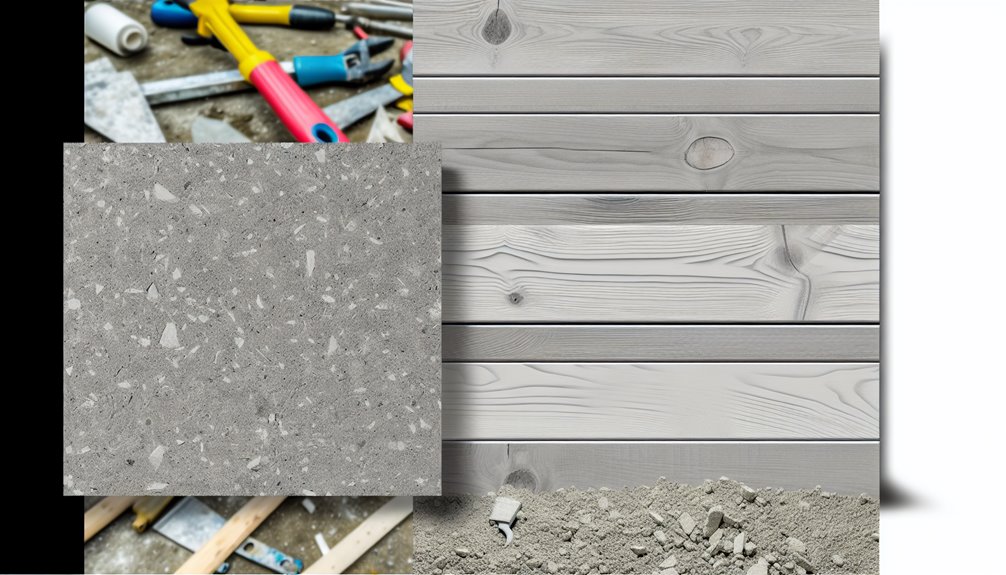
Fibre cement board is a highly versatile material, ideally suited for applications requiring robust weather resistance and durability. Engineered for external environments, it excels when panels are exposed to varying weather conditions.
Fibre cement board is the ultimate choice for exterior applications, offering exceptional weather resistance and durability.
Its composition, combining cement and cellulose fibers, provides exceptional resilience against moisture, making it the preferred choice for exterior cladding. The board’s durability guarantees a long-lasting, finished surface that withstands environmental challenges, offering low maintenance over time.
Additionally, fibre cement board is rot-proof and fire-resistant, contributing to its suitability for outdoor structures. Its ability to mimic different textures and appearances, such as wood or stone, offers aesthetic flexibility without sacrificing performance.
Therefore, it is a superior solution for projects demanding both strength and visual appeal.
Choosing the right material for specific applications is critical, particularly when evaluating fibre cement board's advantages for exterior use. Common mistakes often arise from misunderstanding material properties or misapplying products.
For instance, using cement board as exterior cladding can lead to performance issues as it's not designed for such exposure. Additionally, confusing fibre cement with tile backer board can result in improper installations.
Key errors include:
Understanding these factors guarantees ideal material selection and application success.
Cement board can be used for outdoor projects due to its moisture resistance and durability. However, it may not be ideal for extreme climates as it lacks flexibility and can be prone to cracking under stress.
Fiber cement board effectively withstands extreme temperatures due to its composition of cement and cellulose fibers, providing stability and preventing warping or cracking. Its resilience to thermal fluctuations makes it suitable for various climates and outdoor applications.
Like a green oasis in a desert, eco-friendly options exist for both boards. Cement boards can be asbestos-free, while fiber cement boards utilize sustainable materials like cellulose fibers, aligning with LEED certification standards for environmental responsibility.
Fiber cement cutting requires specialized tools including carbide-tipped scoring knives, circular saws with diamond-tipped blades, or fiber cement shears. Dust reduction methods, such as dust-collecting attachments and protective gear, are essential for safety.
Maintaining fiber cement siding involves regular cleaning with mild detergent and water, inspecting for damage, applying touch-up paint when needed, and ensuring proper sealing to prevent moisture infiltration. Routine upkeep preserves its appearance and longevity.
In summary, choosing between cement board and fibre cement board hinges on function and foresight. Cement board capably caters to confined, damp corners, offering cost-effective coverage. Conversely, fibre cement board flaunts formidable fortitude against the elements, presenting a premium yet prudent exterior option. Weighing the weatherability and wear, along with initial outlays and ongoing outperformance, dictates the decision. Understanding these distinctions guarantees efficient, effective material selection for specific structural scenarios.