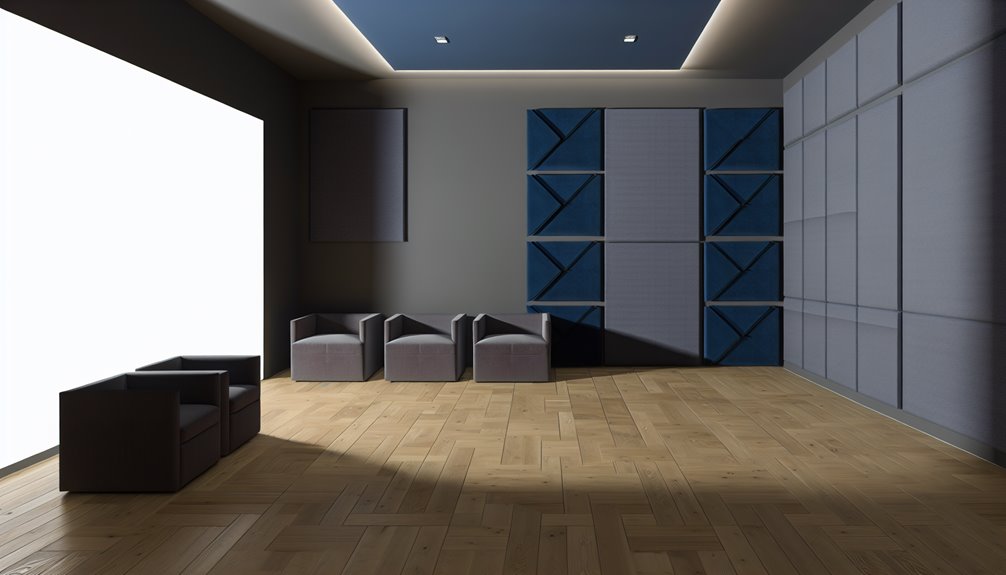
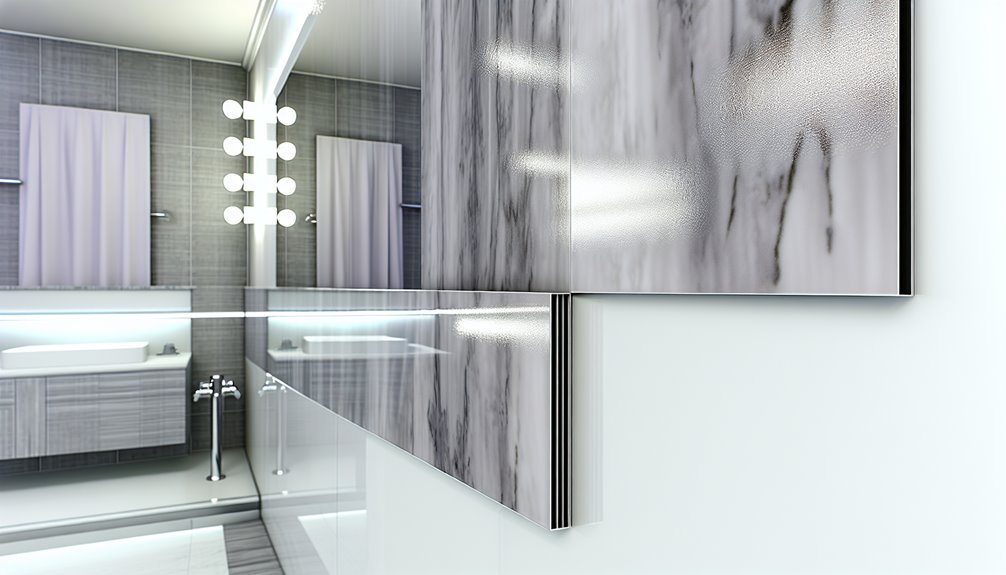
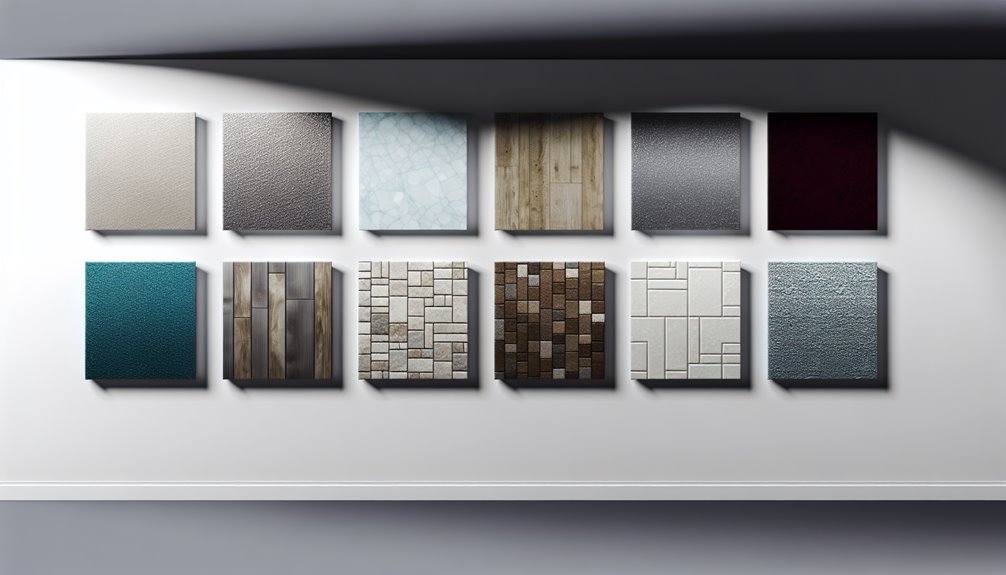
Metal decorative panels have become a core element of contemporary commercial facades, combining visual order with tested performance in fire, impact, and acoustics. Available as single-skin, composite, and honeycomb systems, they influence not only appearance but also the integration of lighting, ventilation, and maintenance strategies. As codes tighten around energy, combustibility, and resilience, the choice of panel type, metal, coating, and detailing starts to determine far more than surface aesthetics.
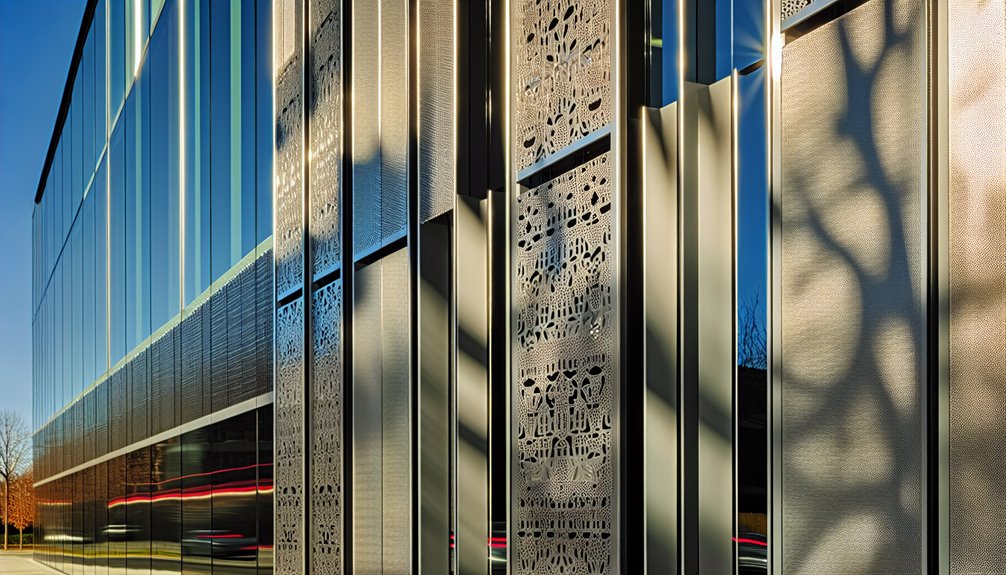
Metal decorative panels are engineered architectural wall systems that combine a visible metal “skinwith an internal structure and supporting sub-frame to deliver both aesthetic and performance outcomes.
Unlike simple claddings, metal decorative panels operate as composite assemblies, designed to manage loads, accommodate movement, and interface cleanly with adjacent trades and building systems.
Unlike basic claddings, these composite metal panels actively manage structural loads, thermal movement, and integration with surrounding building systems.
In commercial projects, they are deployed on both building envelopes and as decorative metal wall panels interior, where designers require predictable behavior under code-governed fire, impact, and acoustic criteria.
Panel geometry, joint configuration, and sub-frame anchorage are coordinated to maintain alignment, flatness, and service access.
This system-driven approach allows controlled integration of lighting, signage, and mechanical terminations while preserving a consistent visual language across interior and exterior conditions.
In commercial applications, metal decorative panels are typically classified by structural configuration rather than surface appearance, a distinction that directly affects performance criteria and code compliance.
The three primary categories—single-skin metal panels, metal composite panels, and metal honeycomb panels—offer different profiles for stiffness, weight, and fastening strategies.
Understanding these classifications enables architects and specifiers to align aesthetics with required fire ratings, wind-load resistance, and envelope performance.
Among the primary classifications of metal decorative panels, single-skin metal panels are the most straightforward: formed or profiled metal sheets mechanically fixed to a supporting substrate.
Within metal building panel types, they are often selected as metal decorative wall panels where direct control over fastening patterns, joint layout, and module size is required.
Single-skin systems perform well on moderate spans and controlled scales, particularly in interiors or protected facades where impact loads and flatness tolerances are manageable.
Designers can calibrate rib depth and profile geometry to balance aesthetics with stiffness.
Limitations emerge on large, highly visible surfaces, where oil-canning and deflection become harder to control, and in high-impact zones, where codes or performance criteria may trigger the need for thicker gauges or supplemental backing.
Defined by their multi-layer construction, metal composite panels pair thin metal skins with a bonded core to achieve stiffness, flatness, and lightweight performance that single-skin sheets cannot match at comparable thickness. In a commercial metal decorative panel specification, this class allows designers to tune structural and visual behavior by adjusting skin alloy, coating system, and core chemistry within code constraints.
| Attribute | Design / Performance Implication |
|---|---|
| Panel Make-up | Controls inertia, oil-canning, span limits |
| Core Type | Balances fire rating, weight, cost |
Compared with an aluminum honeycomb panel, standard composite builds typically offer simpler fabrication, tighter radii, and more economical façade coverage, with trade-offs in ultimate stiffness and impact resistance. Detailing of joints, sub-framing, and drainage paths is critical to maintain long-term flatness and finish integrity.
Where composite panels balance thin metal skins over a bonded core, metal honeycomb panels extend the sandwich concept with a highly engineered cellular core that delivers greater stiffness at extremely low weight.
In a typical honeycomb metal panel, aluminum or steel skins are adhesively bonded to an aluminum or steel hexagonal matrix, forming a stable, dimensionally consistent assembly ideal for large-format decorative walls and ceilings.
Designers specify these systems where flatness tolerance, deflection control, and reduced subframing are critical, particularly on high, wide commercial facades.
A steel honeycomb panel offers superior impact resistance and fire performance, supporting stringent code paths for egress routes and public interiors.
Honeycomb construction also enables precise joint alignment, hidden-fix systems, and integration with continuous insulation and rain-screen cavities.
Honeycomb metal panels occupy a central role in commercial projects because their core geometry delivers an exceptional stiffness‑to‑weight ratio, enabling large, flat surfaces with minimal deflection.
This structural efficiency is critical for decorative metal wall panels exterior applications, where tight tolerances on flatness and alignment must be maintained over long spans. Designers gain predictable performance, while specifiers can clearly document metal wall panel details for bids, shop drawings, and code review.
The honeycomb core acts as a controlled shear web between thin face sheets, stabilizing the assembly against buckling and impact.
This translates into superior panel stability under wind load, thermal movement, and service impacts—essential in airports, transit hubs, and lobbies where visual consistency, durability, and long-term dimensional control are non‑negotiable.
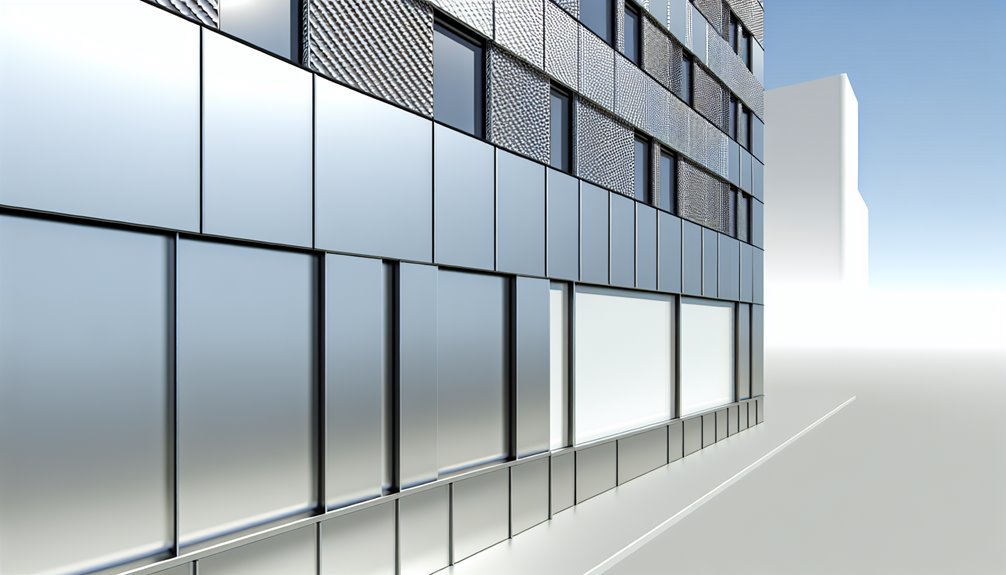
When specifying honeycomb assemblies for commercial façades, the choice between aluminum honeycomb panels and steel honeycomb panels directly impacts structural performance, panel weight, and lifecycle cost.
Aluminum honeycomb units prioritize low mass, corrosion resistance, and ease of fabrication, making them efficient for large-format cladding and retrofit systems.
Steel honeycomb panels favor higher impact resistance, stiffness, and fire robustness, aligning with code-driven applications in high-traffic or high-load zones.
Aluminum honeycomb panels offer a high strength-to-weight ratio and superior corrosion resistance, making them an efficient alternative to steel honeycomb systems for commercial façades and interior feature walls.
Their cellular core structure supports large-format modules while minimizing dead load on the primary structure, enabling thinner subframing and more flexible anchoring layouts.
Design teams value aluminum honeycomb for precision flatness across extensive runs, critical for curtain wall alignment and tightly controlled joint reveals. The material’s inherent stability suits complex CNC-routed geometries and integrated lighting or ventilation patterns without distortion.
Steel honeycomb panels extend the performance envelope of cellular metal cladding where higher rigidity and impact resistance are required than aluminum systems can provide.
Their steel skins and core geometry deliver superior compressive strength, making them preferred in high‑traffic, damage‑prone zones such as ground-level façades, transit hubs, and service corridors.
Compared with aluminum honeycomb, steel options tolerate harder impacts, resist deformation from cart or equipment strikes, and better support point loads from integrated hardware.
Designers trade added weight for tighter deflection control on wide spans, reduced backing structure, and enhanced security performance.
Specifiers can align panel gauges, core cell size, and protective finishes with fire-resistance, blast, or impact criteria, ensuring compliance while maintaining a controlled, repeatable visual language across commercial façades and interiors.
Although both are marketed under similar trade names, color metal and color steel honeycomb panels refer to distinct cladding systems whose base metals, coating technologies, and structural cores drive different performance profiles in commercial environments.
“Color metal typically denotes aluminum skins with factory-applied polyester or PVDF coatings, prioritizing low weight, flatness, and edge detailing.
“Color steel honeycomb uses steel faces bonded to a honeycomb core, offering higher impact resistance and stiffness at comparable thickness.
In controlled corridors, lobbies, and other public-facing zones, architects weigh:
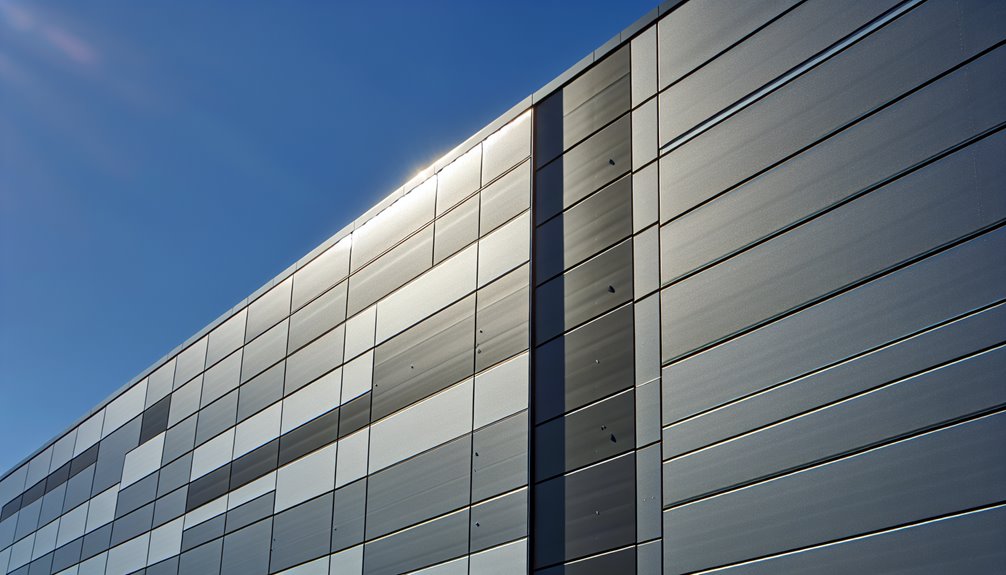
Color-coated galvanized steel panels combine a zinc-based protective layer with factory-applied polymer paints, creating a composite system engineered for corrosion resistance and visual control.
The color coating defines surface gloss, texture, and chromatic accuracy, enabling façade designers to meet brand guidelines and environmental context requirements.
Engineered for durability and visual consistency, galvanized steel used in color-coated decorative panels is first coated with a continuous zinc layer that acts as a sacrificial barrier against corrosion.
This metallurgical bond, typically achieved by hot-dip galvanizing, guarantees that zinc preferentially oxidizes, protecting the underlying steel substrate even when cut or scratched.
For specifiers seeking deterministic performance, the zinc coating delivers quantifiable protection:
This zinc foundation is the critical first layer before any engineered top systems are applied.
Visual performance is often the decisive factor when specifying galvanized steel for decorative cladding, and this is where factory-applied color coating becomes critical. The natural galvanized finish reads as technically robust yet visually inconsistent: spangle variation, reflectivity shifts, and limited palette control can conflict with tightly scripted façade concepts.
Factory-applied coatings convert the substrate into a predictable, specifiable surface with defined color, gloss, and texture tolerances, allowing designers to align panels with brand standards and adjacent materials.
| Aspect | Natural Galvanized | Color-Coated Galvanized |
|---|---|---|
| Visual uniformity | Variable spangle, mottling | Highly consistent, batch-tested |
| Color range | Silver/grey only | Extensive RAL/NCS mapping |
| Design control | Limited tuning | Precise, repeatable appearance |
For decorative projects, this controllability is the primary driver for specifying coated systems.
Metal side cladding panels and edge protection profiles form a critical layer in decorative wall systems, safeguarding vulnerable junctions while preserving a clean, continuous design language.
They shield terminations, corners, and interfaces where impact, abrasion, and misalignment typically occur, especially in high-traffic commercial environments.
These components are specified to control how wall linings meet doors, ceilings, and adjacent finishes in:
When detailed correctly, side cladding and edge profiles lock the visual grid, conceal cut edges, and maintain code-compliant clearances, while enabling controlled replacement of damaged sections without disturbing the primary decorative panel field.
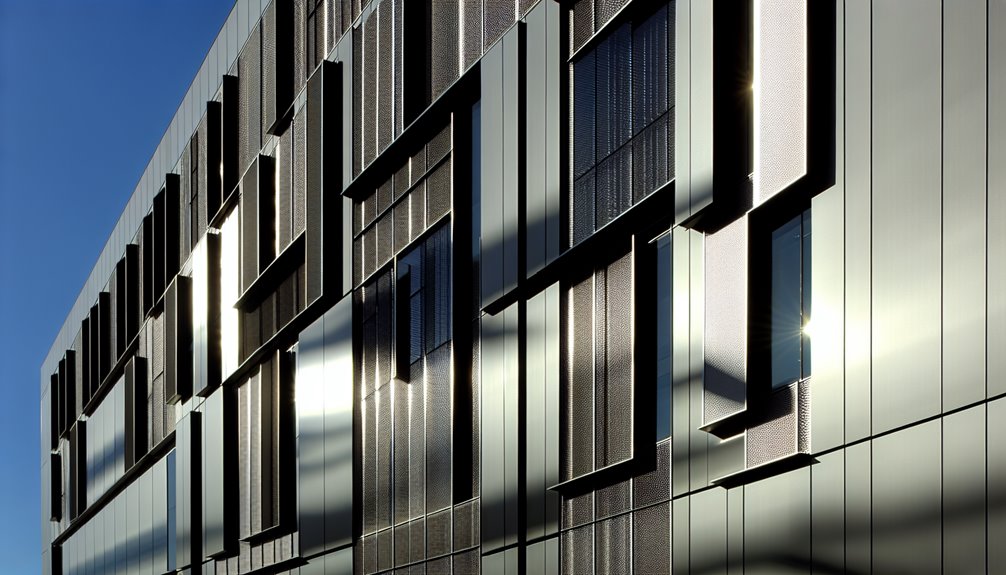
Across most commercial building types, steel and aluminum decorative wall panels form the core specification set when impact performance, fire compliance, and long-term appearance must be balanced. Specifiers typically lead with function: load paths, impact zones, and service conditions, then refine aesthetics through patterning, coating systems, and joint geometry.
| Criterion | Steel Panels | Aluminum Panels |
|---|---|---|
| Structural robustness | High impact resistance, minimal deflection | Moderate impact resistance, greater deflection |
| Weight / handling | Heavier; requires stronger sub-framing | Lightweight; reduced structural and lift loads |
| Corrosion behavior | Needs protective coating systems | Inherent corrosion resistance, anodizing options |
| Maintenance profile | Longer repaint cycles with robust finishes | Easy cleaning; finish repair more visible |
| Cost / lifecycle | Efficient in abuse-prone zones | Efficient where access, speed, weight dominate |
Designers coordinate material choice with tested assemblies and code-listed fastening systems.
When evaluating interior versus exterior metal decorative wall panels, designers distinguish sharply between environmental exposure and code-driven performance.
Interior panels are primarily governed by impact resistance, cleanability, fire and smoke development ratings, and acoustic behavior.
Exterior assemblies, by contrast, must withstand UV, thermal cycling, wind loads, and bulk water while preserving finish integrity over time.
To maintain visual continuity, many commercial projects utilize the same metal family inside and out, adjusting coatings, substrates, and jointing strategies to suit each microclimate and regulatory regime.
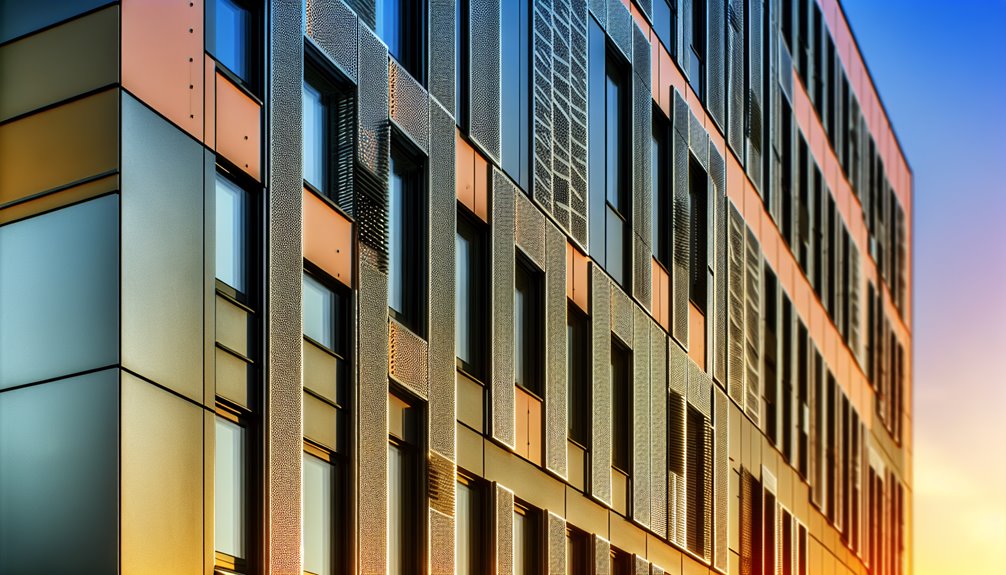
In commercial applications, the performance of metal decorative panels depends heavily on rigorous joint design and effective movement control to accommodate thermal expansion, building drift, and differential deflection without overstressing fixings or panel edges.
Designers must coordinate joint widths, sealant specifications, and backing systems in accordance with relevant façade and fire codes, ensuring continuity of air, water, and fire barriers at all interfaces.
Equally critical is installation accuracy within defined tolerances, as misalignment, out-of-plane variation, and improper anchorage can accelerate panel failure and compromise both aesthetics and code compliance.
Joint design and movement control are critical to the performance and durability of metal decorative panels on commercial facades. Designers must anticipate panel movement from thermal expansion and contraction, ensuring joints accommodate cyclical dimensional change without distressing fixings, finishes, or adjacent systems.
Selection between wet and dry joints is a primary control decision, informed by performance criteria, maintenance strategy, and code-driven water-management requirements.
Joint layout, spacing, and detailing must be coordinated with structural movements, thermal modeling, and manufacturer limits to maintain visual alignment and system integrity.
Although metal decorative panels are inherently rigid systems, their visual performance depends heavily on installation accuracy and adherence to defined tolerances for flatness, alignment, and fixings.
Designers typically specify permissible deviations in panel plane, edge offset, and joint width to maintain coherent visual lines across large façades or interior feature walls.
Flatness control requires coordination between panel fabrication, subframe engineering, and on-site adjustment capability, with shim ranges and bracket tolerances defined in advance.
Alignment is governed by surveyed control lines and must account for cumulative error over panel grids.
Fixing strategies—concealed or expressed—are detailed to manage tolerances without visible distortion, rattling, or pattern misregistration.
Poor installation accuracy rapidly undermines premium finishes and any intended design hierarchy.
Selecting the right metal decorative panel starts with defining performance criteria as rigorously as visual intent. Specifiers begin by mapping project environment and traffic intensity to material hardness, coating class, and required impact resistance.
High-traffic lobbies, for example, demand scratch‑tolerant finishes and mechanically robust fixing systems, while sheltered zones can prioritise finer pattern resolution.
Fire safety and regulatory requirements are then cross‑checked against local codes, reaction‑to‑fire ratings, and substrate compatibility.
Cleaning, maintenance, and lifecycle cost are treated as variables in a long‑term cost function, not afterthoughts.
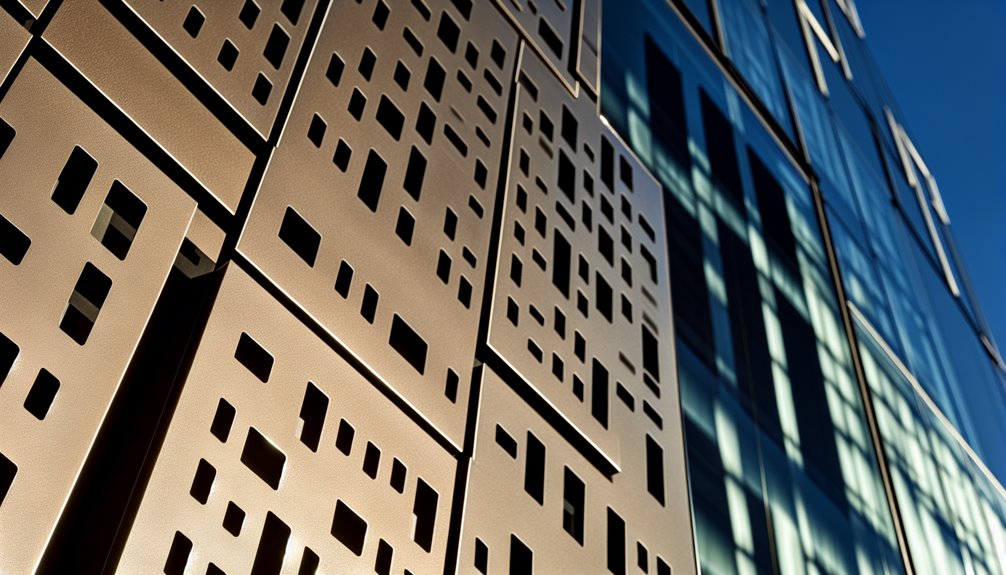
At Philigreen, we develop metal decorative panel systems as complete, buildable wall solutions for commercial and public buildings. Our focus is on performance in real projects—fire safety, structural stability, moisture control, and long-term durability—not just surface appearance.
Our systems are based on steel and aluminum honeycomb and composite panels, using formaldehyde-free materials and controlled coating processes. We support custom sizes, finishes, perforations, and side-cladding details, allowing designers to achieve precise visual control while maintaining system integrity.
Designed for large-format interior and façade applications, our panels integrate with assembly keel and dry installation systems, ensuring accurate alignment, clean junctions, and efficient installation. This system-based approach helps project teams reduce maintenance demands and maintain consistent visual performance over time.
When specifying metal decorative panels for commercial buildings, many failures trace back to a small set of recurring oversights rather than material defects.
One frequent error is treating panels as static surfaces instead of dynamic assemblies that expand, contract, and deflect. Without defined movement joints and tolerances in the specification, even premium systems can warp or buckle.
Key risk areas typically include:
Robust specifications translate these constraints into explicit joint sizing, minimum performance classes, and protected edge conditions.
Yes; when engineered with ventilated cavities, thermal breaks, and high‑albedo finishes, such panels can enhance envelope performance, reduce solar heat gain, support rain‑screen behavior, and complement prescribed insulation layers without substituting for code‑mandated Ror U‑values.
They influence ratings through substrate combustibility, perforation percentage, mounting method, and assembly layering. Designers must verify NFPA 285, ASTM E84, and local façade/interior finish limits, ensuring tested assemblies, fire-stopping details, and documented listings align with jurisdictional code paths.
They are generally compatible, often contributing to LEED/BREEAM points via recycled content and durability; LEED, for instance, allocates up to 2 points for recycled materials, which precise metal specification, verified EPDs, and low-VOC coatings can help secure.
Different systems range from reflective (unperforated) to high NRC performers (perforated/expanded with mineral wool or fiberglass backing, typically NRC 0.65.90). Performance depends on perforation ratio, cavity depth, backing density, and edge/seam detailing.
They endure like code behind a firewall: aluminum and stainless resist saline or acidic “attacks,corten stabilizes only in controlled cycles, while copper/brass tarnish quickly. Performance depends on specified alloys, coatings, edge detailing, and a rigorously enforced maintenance protocol.
Metal decorative panels operate at the intersection of code compliance, performance, and architectural expression. The real challenge is not selecting a material, but selecting a system that aligns with a project’s long-term functional and regulatory intent. Decisions such as honeycomb versus composite, aluminum versus steel, or color metal versus color steel directly affect durability, detailing, and approval outcomes. As commercial buildings are held to increasingly higher standards, informed specification becomes essential—not only to achieve the desired visual result, but to ensure consistent performance throughout the building’s lifecycle.
If you are planning a commercial or public building project, our team can support you with system selection, detailing strategies, and buildable metal decorative panel solutions tailored to your design and performance requirements. Contact us now!