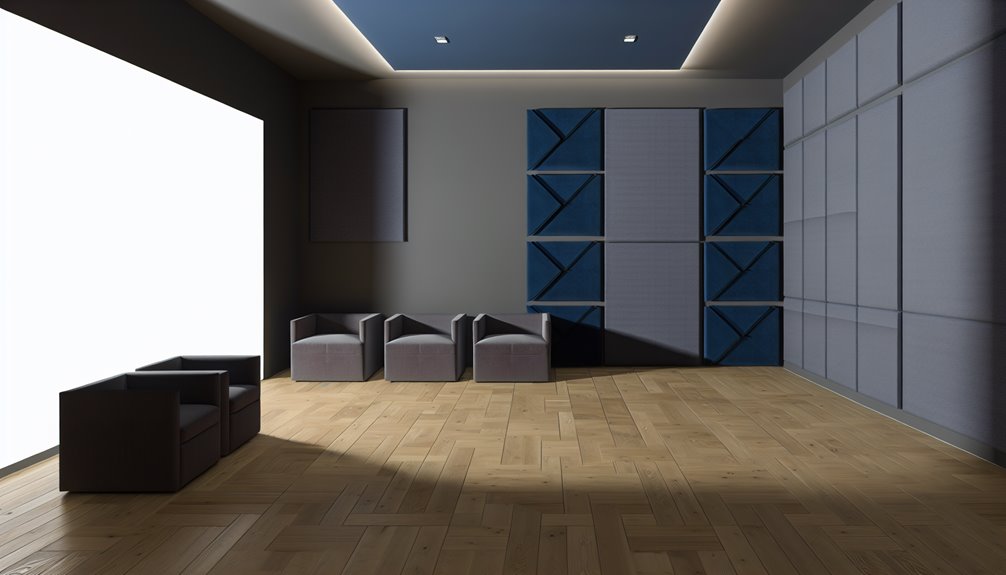
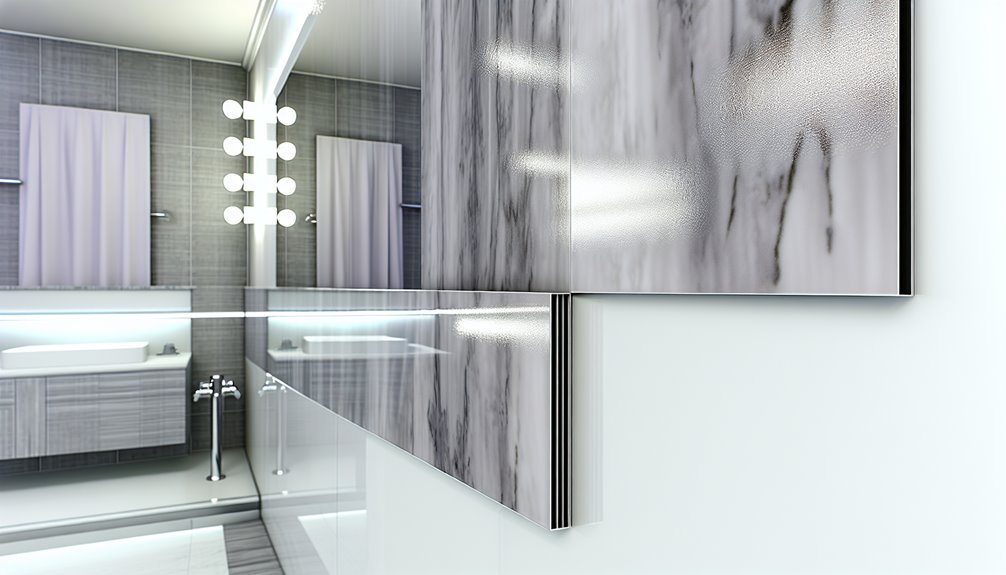
PVC wall panels offer high strength-to-weight efficiency (<1.5 kg/m²) and rapid tongue-and-groove installation, reducing labor and fixings. Closed-cell, non-porous surfaces are waterproof, mold-resistant, and cleanable with mild detergents. Fire-performance options meet ASTM E84/UL 723 with low flame spread and smoke. Low-VOC, phthalate-free formulations support IAQ (GREENGUARD Gold, FloorScore). Cost-effective (~$1/sq ft) with durable, scuff-resistant finishes and UV-stable aesthetics. Suitable for healthcare, hospitality, and kitchens, with retrofit-friendly profiles. Additional performance considerations and application guidance follow.
PVC panels offer a high strength-to-weight ratio for rapid, low-labor installation, with tongue-and-groove profiles enabling precise alignment and reduced fixings.
Their closed-cell composition provides waterproof, mold-resistant performance and specified fire ratings (e.g., Class A/B per ASTM E84 or EN 13501-1 options), supporting safer, code-compliant interiors.
Compared with gypsum or wood, they deliver lower installed cost and lifecycle maintenance, with non-porous surfaces that clean using mild detergents and do not require sealing or repainting.

In many interior applications, the low areal density of rigid PVC panels—often under 1.5.5 kg/m² with hollow-core profiles—enables rapid handling, positioning, and fastening, reducing installation time and labor.
Their lightweight wall panels reduce crew fatigue, allow single-person lifts, and support easy installation with standard cutters, snap scores, and self-tapping screws.
Tongue-and-groove edges and clip systems accelerate alignment, minimizing tolerances per ASTM and ISO dimensional standards.
Result: fewer lifts, faster coverage rates, and cost-effective wall panels with predictable schedules.
Reduced handling weight is only part of the performance profile; long-term serviceability is driven by the material’s closed-cell, non-hygroscopic polymer matrix and interlocking joints that achieve near-zero water ingress at seams.
In practice, waterproof pvc panels eliminate capillary uptake, preventing swelling, delamination, and substrate contamination in high-humidity zones. Mold resistance results from inert PVC chemistry and smooth, low-porosity skins that deny biofilm anchorage; cleaning cycles remain predictable with low maintenance pvc panels.
Specifiers can reference ASTM D570 (water absorption), ASTM G21 (fungal resistance), and ISO 4892 (humidity/aging) to validate performance.
In food processing, wash-down corridors, and bathrooms, durable pvc wall panels maintain dimensional stability, resist staining, and support routine sanitation protocols, extending lifecycle intervals and minimizing unplanned downtime across controlled interior environments.
Although thermoplastics vary widely in heat behavior, modern rigid PVC wall and ceiling panels can be specified with fire-performance credentials that support safer interiors.
When selected with verified test data, fire-resistant pvc panels achieve low flame spread and smoke development, enabling use in corridors, wet rooms, and food-processing areas.
Specifiers should reference ASTM E84 (or UL 723) indices, NFPA 286 room-corner results where required, and EN 13501-1 classifications for global projects.
Halogen content and additives must be disclosed; low-smoke, self-extinguishing formulations further enhance the benefits of pvc wall panels while maintaining hygiene and washdown resilience.
Recyclable substrates and controlled manufacturing align eco-friendly pvc wall panels with environmental targets.
1) Self-extinguishing surfaces limiting vertical flame travel.
2) Low smoke density preserving egress visibility.
3) Compliant joints and trims curbing fire propagation.
4) Documented classifications simplifying approval paths.
While material selection often balances upfront price with lifecycle performance, PVC wall and ceiling panels deliver a quantifiable cost advantage versus gypsum, tile, or wood by combining low unit cost with reduced installation and maintenance expenses.
Material pricing commonly falls near $1/sq ft, undercutting drywall or wood at $2/sq ft. Rapid installation via tongue-and-groove profiles shortens schedule durations, lowering labor hours and ancillary costs (scaffolding, dust control).
Panels are lightweight, reducing handling, freight, and substrate reinforcement requirements. Standard lengths minimize waste, and cuts generate no wet trades or curing delays.
For owners seeking tight cost control, these pvc panel benefits translate into lower CapEx and predictable OpEx, positioning them as a cost-effective alternative to traditional materials and a core rationale among the advantages of pvc panels.
Engineered with non-porous PVC skins and sealed tongue-and-groove joints, these panels minimize maintenance by preventing water ingress, mold colonization, and staining per common hygiene and moisture-control practices.
Surface energy is low, so soils release with mild detergent and water; abrasive cleaners are unnecessary and discouraged. For facilities management, pvc interior wall panels align with low maintenance protocols, reducing cleaning cycles and chemical inventories while preserving finish quality on pvc decorative wall panels.
When specified with rigid PVC formulations and UV-stabilized, impact-modified skins, PVC wall and ceiling panels deliver service lives of 105 years indoors—up to 40 years with controlled environments—while maintaining structural integrity under routine use.
Properly compounded profiles exhibit high Izod impact values and resist ductile cracking, minimizing puncture risk in circulation corridors and service zones. Closed-cell extrusions limit moisture ingress, preserving fastener retention and joint fidelity within a modular wall system.
For facilities seeking predictable performance, custom pvc wall panels can be ordered to specified thickness, impact class, and UV rating.
Phili green pvc panels demonstrate consistent modulus retention and low creep under sustained load. Compliance with relevant ASTM/EN test protocols enables risk-managed deployment in healthcare, education, and light industrial interiors where repeatable impact resistance is critical.
Beyond functional performance, PVC wall and ceiling panels offer broad aesthetic configurability through co-extruded skins, digital print lamination, and embossed textures that simulate stone, wood, concrete, and metallic finishes with controlled gloss levels (e.g., 50 GU at 60°).
Specifiers can tune sheen, chroma, and surface roughness (Ra) to meet project briefs, while UV topcoats preserve colorimetric stability (ΔE 1.0 per ASTM D2244) under lighting variability.
Edge treatments, joint reveals, and tongue‑and‑groove profiles align with precise module grids to maintain visual continuity.
Aesthetic configurability is matched by material stewardship, with many PVC panel lines specified to low-emission criteria such as GREENGUARD Gold, FloorScore, or UL GREENGUARD, and manufactured to meet VOC limits per ISO 16000 and ASTM D5116 chamber testing.
Formulations increasingly use rigid, phthalate-free PVC with stabilizers compliant to RoHS and REACH SVHC thresholds. Producers adopt closed-loop compounding with pre- and post-consumer recyclate, documented via ISO 14001 EMS and, where applicable, EPDs conforming to ISO 14025/EN 15804.
Adhesives and inks are screened to SCAQMD Rule 1168 and CARB limits to control total VOCs and formaldehyde.
End-of-life pathways include mechanical recycling under RIC programs. Specifiers can require batch-level emissions data, chain-of-custody for recyclate, and third-party surveillance audits to maintain compliance.

This section benchmarks PVC wall panels against drywall, wood wall panels, and FRP/plastic sheets using metrics such as installed cost, moisture/chemical resistance, fire performance (ASTM E84), VOC emissions (low-VOC options), impact/load capacity, and installation time.
It outlines where PVC meets or exceeds code and hygiene requirements (e.g., wet zones and food-processing areas) and where alternatives offer superior structural or aesthetic outcomes.
Comparative findings will reference common standards and test methods to guarantee material selection aligns with project specifications.
While both materials serve as common interior wall finishes, PVC panels and drywall diverge markedly in cost, performance, and installation standards.
PVC panels typically run $1/sq ft and install via tongue‑and‑groove over furring or flat substrates, minimizing dust and curing time.
Drywall, at $2/sq ft plus finishing, requires taping, mudding, sanding, and paint, extending schedules.
For wet zones, PVC’s closed‑cell construction is waterproof and mold-resistant; standard gypsum board requires moisture‑rated variants and strict vapor control.
Fire ratings differ: select PVC panels with documented flame‑spread/smoke indices; Type X drywall remains the baseline for code-compliant fire assemblies.
Material selection between PVC panels and wood wall panels hinges on quantified performance, lifecycle cost, and code compliance.
PVC panels typically cost $1/sf versus wood at $2/sf, reduce install time via tongue-and-groove profiles, and require minimal maintenance. They are moisture-proof, insect-resistant, and suitable for wet zones; wood requires sealing, is hygroscopic, and can swell or rot.
PVC’s load capacity is limited; use backing where fixtures are mounted, per manufacturer data. Fire behavior differs: untreated wood is combustible; PVC softens above ~60°C (140°F) and must meet applicable flame spread/smoke criteria (e.g., ASTM E84, local codes).
For IAQ, select low-VOC, phthalate-free rigid PVC or certified wood (low-formaldehyde).
Aesthetically, wood offers natural grain; PVC provides consistent finishes and easy cleaning.
How do PVC wall panels stack up against FRP (fiberglass-reinforced plastic) sheets and other plastic cladding in code-driven applications?
PVC interlocking panels deliver sealed, low-porosity faces and hidden fasteners; FRP typically requires OSB/gypsum backers, troweled adhesives, and exposed moldings.
In wet zones, PVC’s integral tongue-and-groove and fewer seams reduce biofilm risk. For hygiene and food facilities, both can meet FDA/USDA intent; verify ASTM E84 (Class A) and low-VOC listings.
Heat proximity remains a constraint for PVC and most plastics; reference NFPA 286 where required.

In commercial fit-outs, PVC wall and ceiling panels are specified for hospitality interiors, healthcare environments, and education/office buildings where ASTM-certified moisture, impact, and chemical resistance are required.
Their tongue-and-groove systems and low-VOC, FDA-compliant options support hygienic surfaces and rapid installation in bathrooms, kitchens, and other high-humidity zones.
Selection should align with fire ratings, cleanability protocols, and durability criteria appropriate to occupancy type and traffic load.
Beyond aesthetic branding requirements, hotels and hospitality interiors benefit from PVC wall and ceiling panels due to their lightweight, ASTM-certified construction, FDA-compliant hygiene properties, and tongue-and-groove systems that expedite installation and reduce downtime.
Operators gain predictable performance in humid zones, back-of-house corridors, spas, and guest-bath assemblies where moisture, cleaning chemicals, and impacts are frequent. Panels provide water-tight seams, resist scratches, and clean with mild detergents, supporting consistent housekeeping cycles.
Fire-rated options and chemical resistance add risk control without sacrificing design flexibility across textures and finishes.
1) Guest bathrooms with seamless, grout-free surrounds that eliminate mold-harboring joints.
2) Spa and pool enclosures maintaining hygienic, wipe-clean surfaces under high humidity.
3) Service corridors protected from cart impacts and daily sanitation chemicals.
4) Food-service prep walls meeting hygiene standards while accelerating maintenance turnaround.

Building on the proven performance in hospitality environments, PVC wall and ceiling panels align with healthcare-grade requirements for hygiene, durability, and rapid deployment.
In clinical zones, patient rooms, corridors, and procedure support areas, rigid virgin-vinyl panels provide non-porous, water- and chemical-resistant surfaces that withstand frequent disinfection without degradation.
Tongue-and-groove joints enable rapid, low-dust installation and create continuous, grout-free finishes that minimize microbial harborage.
Facilities teams prioritize ASTM-certified, FDA-compliant options with documented low VOCs and suitable fire performance ratings for occupied healthcare spaces.
Panels resist impact, abrasion, and staining, maintaining surface integrity under carts and equipment traffic.
Routine maintenance requires only a damp cloth and mild detergent; abrasive cleaners are unnecessary.
Color-stable, matte textures support glare control and visual cleanliness.
Specify phthalate-minimized, low-emission formulations and verify third-party certifications to enforce compliance.
Although occupant health and life-cycle cost efficiency are primary drivers, educational and office buildings specify rigid PVC wall and ceiling panels for code-aligned durability, hygiene, and rapid deployment.
Specifiers value ASTM-certified, FDA-compliant, chemical-resistant skins that withstand daily abrasion, routine cleaning, and incidental impact in corridors, classrooms, open offices, and support spaces.
Tongue-and-groove profiles accelerate night-shift retrofits and minimize disruption, while seamless surfaces eliminate grout lines and reduce maintenance.
Low-VOC, phthalate-free rigid formulations align with IAQ goals. Panels integrate with furring or clips, enabling flat, plumb finishes over legacy substrates.
1) High-traffic corridor shields: scuff-resistant, easily disinfected, uniform lines.
2) Classroom feature walls: matte textures, concealed fasteners, durable edges.
3) Office collaboration zones: acoustic backers, cleanable skins, rapid install.
4) Breakout circulation nodes: corner guards, chemical resistance, consistent color.

In addition to education and office retrofits that prioritize certified durability and IAQ, moisture-intensive zones in commercial facilities demand materials with verified water, chemical, and hygiene performance.
PVC wall panels address bathrooms, commercial kitchens, locker rooms, and wash-down areas with ASTM-certified, FDA-compliant surfaces that resist water ingress, chemical cleaners, and abrasion. Non-porous, tongue‑and‑groove assemblies create near-seamless finishes that eliminate grout and reduce mold harborage. Panels made from rigid virgin vinyl provide dimensional stability, impact resistance, and rapid wipe-down maintenance using mild detergents.
For kitchens, select fire-rated SKUs and maintain clearance from high-heat sources; for showers and restrooms, specify sealed joints and compatible trims to control vapor paths.
Routine inspections for loosened fasteners or cracked edges sustain integrity. Low-VOC, phthalate-minimized options support IAQ objectives while meeting budget and installation speed targets.
Despite lifecycle concerns, PVC panels deliver specific environmental benefits tied to performance and standards-based practice: their high durability and moisture, UV, and impact resistance reduce replacements and associated material throughput; low-maintenance service (no staining, painting, or sealing) lowers use-phase chemicals and VOCs; and recyclable PVC content can divert waste and cut embodied energy relative to virgin resin.
When specified with documented recyclate and low-VOC certifications, panels support reduced operational impacts and align with energy-efficiency targets by adding thermal moderation to wall assemblies.

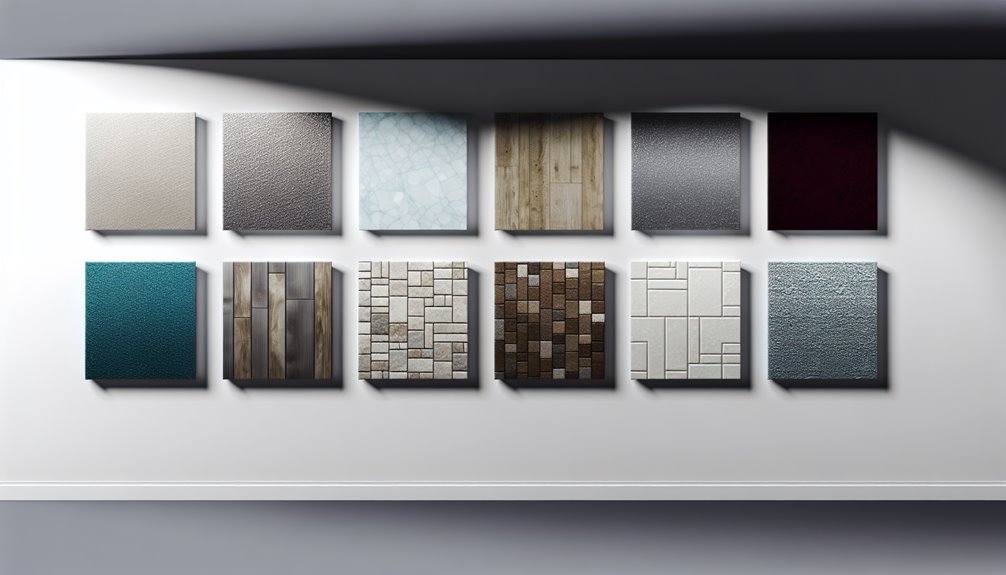
From woodgrain to marble and metallic sheens, PVC wall panels deliver broad design flexibility through factory-applied laminates, printed films, and embossed textures produced via extrusion-calibrated profiles. Formulations blend PVC resin with stabilizers, fillers, and lubricants to achieve consistent surface energy for film adhesion and crisp emboss fidelity. Profiles integrate tongue-and-groove joints, enabling precise pattern alignment on site. Options span matte, satin, and high-gloss for glare control and maintenance targets. Panels can be lightly sanded and coated with premium acrylics where bespoke color control is required. Designers can specify moisture-proof backings and low-VOC finishes to meet project standards.
| Custom Variable | Typical Options |
|---|---|
| Surface finish | Matte, satin, gloss |
| Pattern library | Wood, stone, metallic |
| Installation interface | Adhesive, clips, furring strips |
Specifiers should note PVC’s temperature sensitivity: panels can soften, warp, or lose mechanical strength under sustained heat loads or near heat sources, necessitating adherence to manufacturer max service temperatures and local fire-performance codes.
Environmental assessments should weigh PVC’s recyclability within established take-back streams against the renewability and end-of-life pathways of natural materials, using LCA and EPD data where available.
For large-scale projects, procurement should exclude low-grade formulations by requiring third-party certifications (e.g., low-VOC, fire rating), resin grade disclosure, impact/UV test results, and documented QA/QC across production batches.
Although PVC wall panels perform well in humid environments, their behavior under elevated temperatures introduces critical limitations that must be addressed at design stage.
PVC exhibits a high coefficient of thermal expansion; in extreme heat it can warp, creep, or buckle, compromising alignment and seals. Above roughly 60°C (140°F), softening and loss of mechanical strength accelerate; proximate heat sources, solar gain, or poor ventilation magnify risk.
Specifications should reference fire and heat performance (e.g., ASTM E84, UL 94, ISO 4892 UV/heat aging) and detail movement joints, fastening schedules, and clearances.
1) Sunlit atrium wall: panel edges bow where expansion gaps were omitted.
2) Commercial kitchen perimeter: softened cladding near appliances deforms.
3) Dark south façade: thermal cycling causes joint creep.
4) Mechanical room: inadequate standoff distances lead to localized buckling.
While PVC wall panels are marketed as “recyclable," their end-of-life pathway is constrained by limited take-back infrastructure, contamination from adhesives and coatings, and additive packages that complicate mechanical reprocessing.
In practice, post-consumer PVC panels often fail to meet input specifications for closed-loop recycling, and downcycling can degrade mechanical properties.
Compared with natural materials (e.g., timber cladding, gypsum, or tile set on cement backer), PVC is non-biodegradable and exhibits higher embodied energy, though it offers superior moisture resistance and low maintenance during service life.
Natural materials may be compostable or inert but typically require sealing, periodic refinishing, or grout maintenance.
Decision-makers prioritizing control should verify VOC and fire classifications, assess regional recycling access, and perform life-cycle trade-off analyses aligned with project environmental objectives.
Before committing to PVC wall panels at scale, procurement teams should establish minimum performance thresholds and vet supply against relevant standards to avoid low-grade products.
Specifying verifiable metrics curbs risks associated with fire behavior, VOC emissions, thermal movement, and UV stability. Requirements should reflect real service conditions: humidity, heat loads, impact frequency, and cleaning chemistry. Certification, third-party audits, and retained samples support lot-to-lot conformity over multi-phase rollouts.
1) Fire and emissions: demand tested ratings (e.g., Class A/1 surface flame spread where applicable) and documented low-VOC formulations; reject panels prone to toxic off-gassing.
2) Dimensional stability: set maximum thermal expansion, flatness tolerance, and creep limits; require mock-up exposure.
3) UV/heat resistance: specify accelerated aging performance and colorfastness indices.
4) Mechanical integrity: define minimum impact resistance, fastener pull-out, and joint strength.
At Phili Green, we align aesthetic precision with standards-driven performance. Our PVC decorative wall panels are built on durable, formaldehyde-free substrates engineered for water- and fire-resistance, supporting healthier interiors and consistent code compliance.
We select materials for longevity and stability, reducing lifecycle risk in both interior and exterior applications. Every project benefits from our experienced installation teams, ensuring uniform joints, accurate alignment, and prompt issue resolution backed by documented QA/QC.
Each design is customisable to meet architectural tolerances, acoustic needs, or hygiene standards. With certified materials, low-VOC coatings, and verified fire performance, we deliver safety, reliability, and confidence from design through installation.
Continuous innovation drives our mission—combining European-grade finishes, sustainable manufacturing, and scalable wall solutions for hotels, offices, and large commercial developments.
Ready to specify a smarter wall system?
Contact our team today to explore custom PVC decorative wall panel solutions for your next project or request a sample and technical datasheet from our experts.
👉 Get in touch with PhiliGreen Panels
PVC panels provide limited airborne sound insulation; thin hollow profiles yield low STC unless combined with mass layers. They reduce reverberation minimally. For performance, specify thicker rigid PVC, acoustic backers, sealed perimeters, resilient channels, and verify ratings per ASTM E90/E413.
Reputable brands offer 10- to 25- year limited warranties covering manufacturing defects, moisture and delamination; some extend to 40 years. Certifications include Class A fire (ASTM E84), low-VOC (Greenguard/ISO 16000), CE/UKCA, REACH/RoHS, and ISO 9001/14001. Like torque wrenches, documentation guarantees predictable performance.
Yes. PVC panels can integrate with concealed lighting and smart systems when heat clearances are observed, fire-rated panels are used, and UL/IEC-compliant fixtures, low-voltage LED strips, cable management, ventilation, and serviceable access panels are specified and installed per manufacturer guidelines.
Damaged PVC panels are spot-repaired by cutting out the defect, inserting a color-matched patch or replacement plank via tongue‑and‑groove disengagement, then sealing with PVC-compatible adhesive. Minor gouges fill with PVC putty; heat gun corrects warping. Verify fire/smoke ratings post-repair.
They swear by near-mythic precision: score rigid PVC with a sharp carbide blade, use fine-tooth (60�?0T) non-ferrous blades, support fully, cut face-up, feed slowly, control heat, clamp guides, deburr edges, and follow manufacturer-recommended RPM and PPE protocols.
In sum, PVC panel systems demonstrate commendable performance where moisture, hygiene, and lifecycle cost are sensitive topics. Compared with drywall, timber, and tile, they offer expedited installation, low-VOC options, and compliant fire-rated SKUs, provided heat-load limitations are respected. Applications across healthcare, hospitality, and back-of-house environments benefit from wipe-clean surfaces and stable dimensional tolerances. While end-of-life conversations remain delicate, recycled-content and take-back pathways are advancing. For specification rigor and reliable supply, Phili Green Panels present a disciplined, standards-aligned choice.