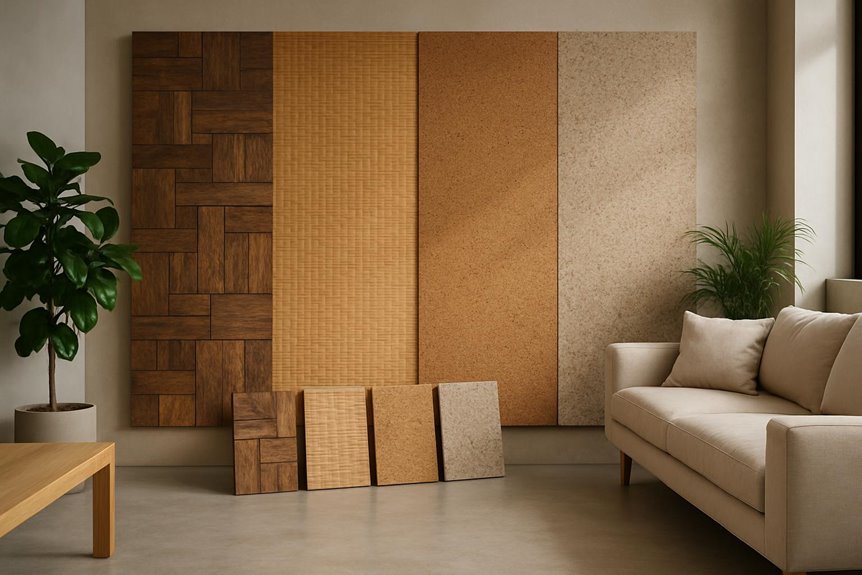
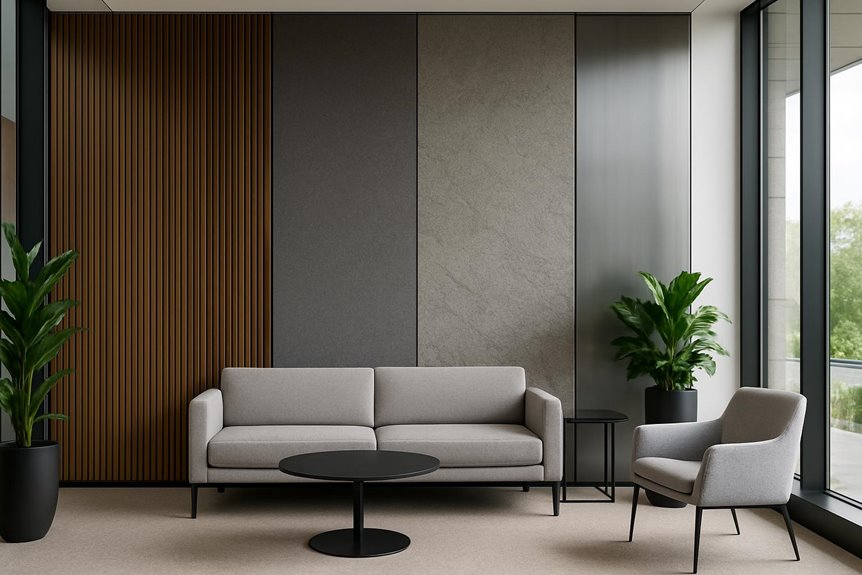
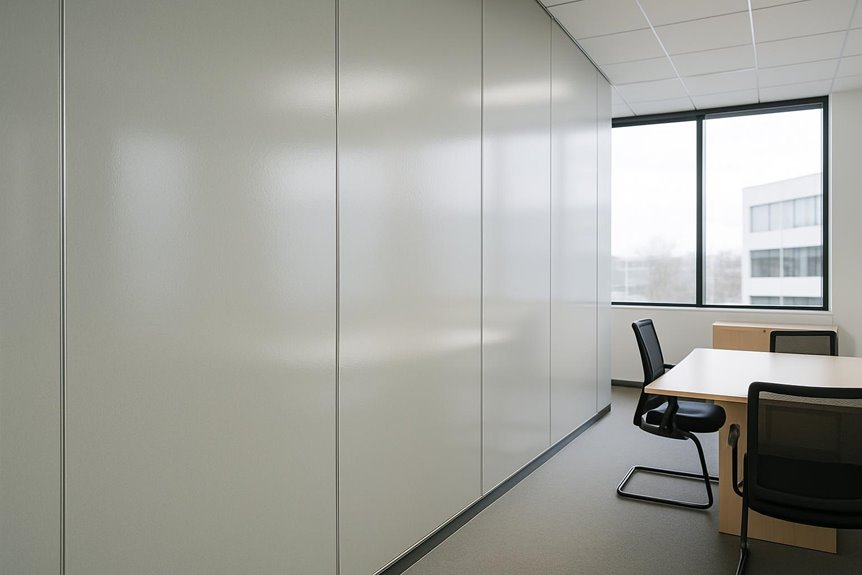
In the domain of commercial design, the choice between HPL (High-Pressure Laminate) and PVC wall panels invites a nuanced exploration of aesthetics, durability, and functional performance. Each material carries distinct advantages and limitations, influencing design decisions in a variety of high-traffic environments. As trends in sustainability and design flexibility evolve, understanding how these materials measure up under commercial demand becomes essential. The exploration of these attributes can reveal which material might best align with contemporary commercial needs.
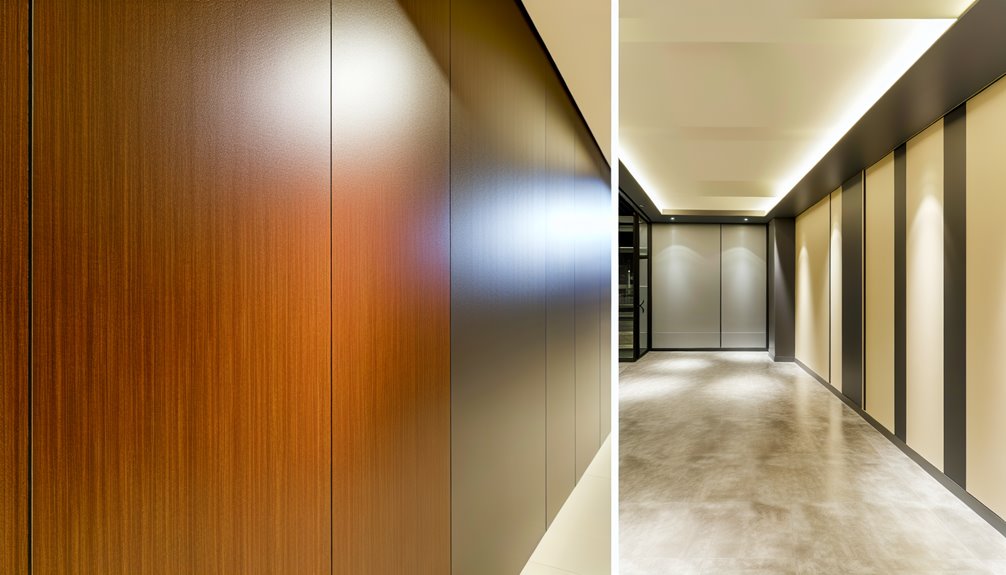
In the domain of commercial interiors, both High Pressure Laminate (HPL) and Poly Vinyl Chloride (PVC) wall panels hold significant appeal due to their distinct attributes tailored for high-demand environments.
HPL wall panels are renowned for their impressive durability, withstanding foot traffic, trolleys, and repeated impacts effortlessly. Their scratch-resistant surface guarantees longevity, making them ideal for areas where daily cleaning with chemicals and abrasives is routine.
HPL panels boast unmatched durability and scratch resistance, ideal for high-traffic areas undergoing daily chemical cleaning.
Meanwhile, PVC wall panels offer moisture resistance and a sleek, contemporary look, excelling in environments where aesthetics meet functionality.
Both types of durable interior wall panels provide solutions for long wall runs where surface distortion is a concern, ensuring that commercial spaces maintain their pristine appearance over time, despite rigorous use.
Commercial settings demand materials that gracefully balance style with functionality, and both HPL and PVC wall panels offer unique structural attributes that cater to these needs.
HPL panels are dense, rigid laminates bonded to stable substrates, providing a solid foundation for high-traffic wall finishes. This density translates into superior impact resistance, maintaining flatness and stability over time, making them ideal for environments where durability is paramount.
In contrast, PVC panels are lighter and more flexible, relying on a plastic composition that allows for ease of installation and adaptability. Their flexibility can accommodate various designs, offering low-maintenance wall panels that are particularly appealing for trend-aware environments.
Consequently, in the debate of HPL vs. PVC wall panels, each presents distinct advantages shaped by its structural characteristics.
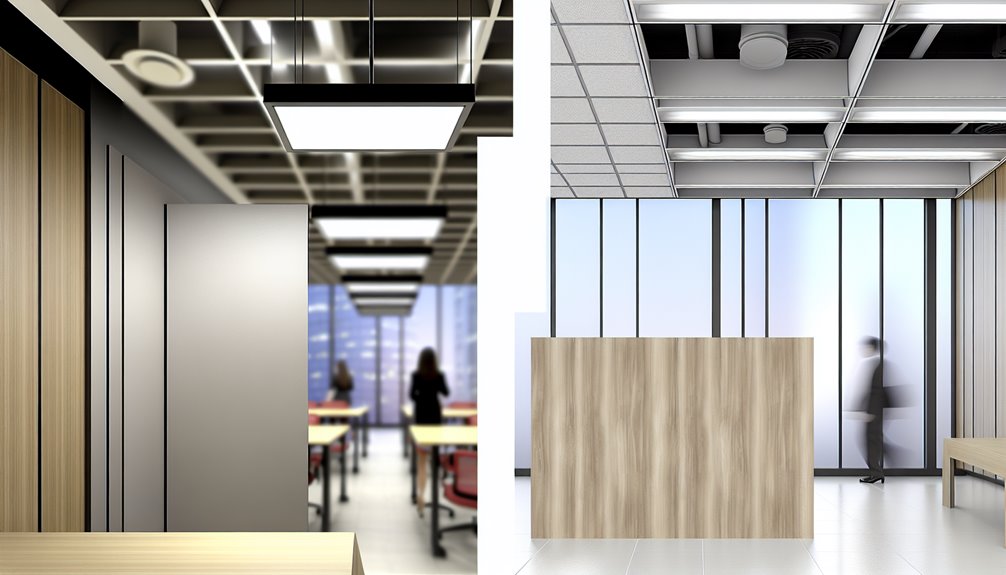
While both HPL and PVC wall panels offer aesthetic versatility, it is the durability under real commercial use that truly differentiates them.
HPL resists scratching, denting, and surface wear, making it a superior choice for commercial wall panel systems where longevity and resilience are paramount. This robust material withstands the rigors of interior wall cladding in commercial environments, ensuring a lasting, pristine appearance.
Conversely, PVC is more prone to deformation, gouging, and surface damage, especially under repeated trolley impact and frequent cleaning routines. These vulnerabilities limit its practicality in high-traffic areas.
PVC's susceptibility to damage under frequent use restricts its effectiveness in bustling environments.
For those prioritizing durability in their commercial projects, HPL's ability to maintain its structural and visual integrity under demanding conditions clearly sets it apart from its PVC counterpart.
Fire safety is a vital factor in the selection of wall panel materials, particularly in commercial settings where compliance with stringent regulatory codes is non-negotiable.
High-pressure laminate (HPL) systems, when specified accurately, can meet essential commercial fire classifications, positioning them as reliable fire-rated wall panels. This inherent capability enhances their suitability for diverse commercial fit-out materials, guaranteeing a long and safe interior wall panel lifecycle.
Conversely, Poly Vinyl Chloride (PVC) panels often struggle with limitations in flame spread and smoke development, leading to their early elimination in regulated environments.
The fire performance of these materials significantly hinges on system design, demanding an extensive approach to secure peak compliance and safety in commercial applications.
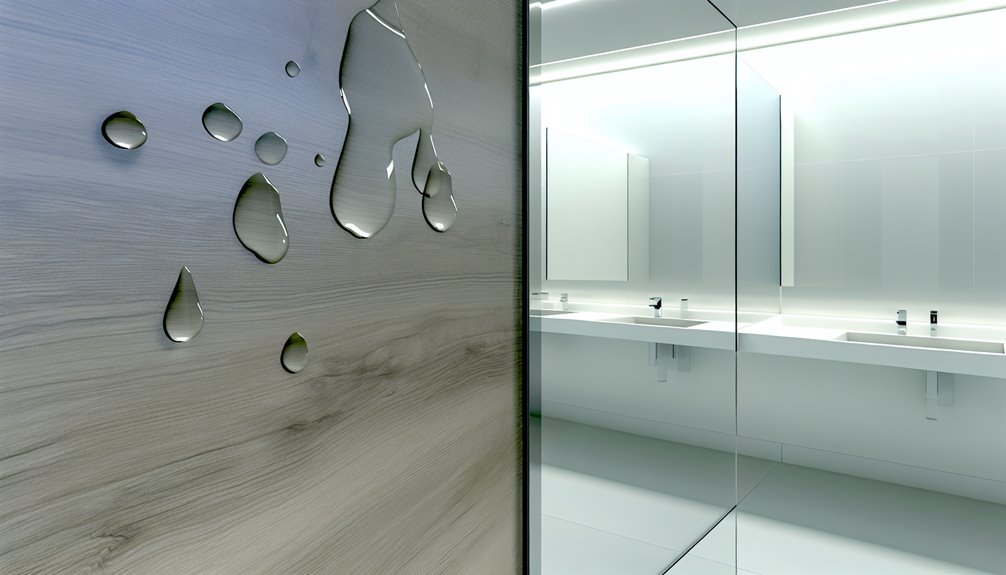
In the domain of modern interior design, moisture, cleaning, and hygiene considerations play a pivotal role in material selection. High-pressure laminate (HPL) wall panels, with their robust resistance to frequent cleaning agents, offer an ideal solution for demanding environments like hotel corridor wall panels and office interior wall systems. Their chemical resistance is paramount in settings where sanitation is essential, such as healthcare and hospitality.
In contrast, PVC laminate wall boards excel in moisture resistance, making them suitable for low-stress, humid areas. However, their susceptibility to chemical wear may limit their application in rigorous commercial settings.
Ultimately, the choice between HPL and PVC hinges on the specific environmental demands, ensuring both aesthetic appeal and functional integrity are maintained.
Considering the role of moisture, cleaning, and hygiene in material selection, the longevity of appearance is equally important in maintaining the visual appeal of interior spaces.
High-Pressure Laminate (HPL) panels excel in this regard, retaining their color, texture, and surface integrity far longer than their PVC counterparts. The durable nature of HPL guarantees that commercial spaces remain vibrant and appealing over time.
Conversely, Poly Vinyl Chloride (PVC) surfaces are prone to fading, yellowing, or marking when exposed to ultraviolet light and cleaning agents. Such changes can detract from the visual harmony of a space, requiring more frequent replacements or repairs.
For those prioritizing aesthetic longevity, HPL offers a more reliable choice for enduring design elegance in commercial projects.
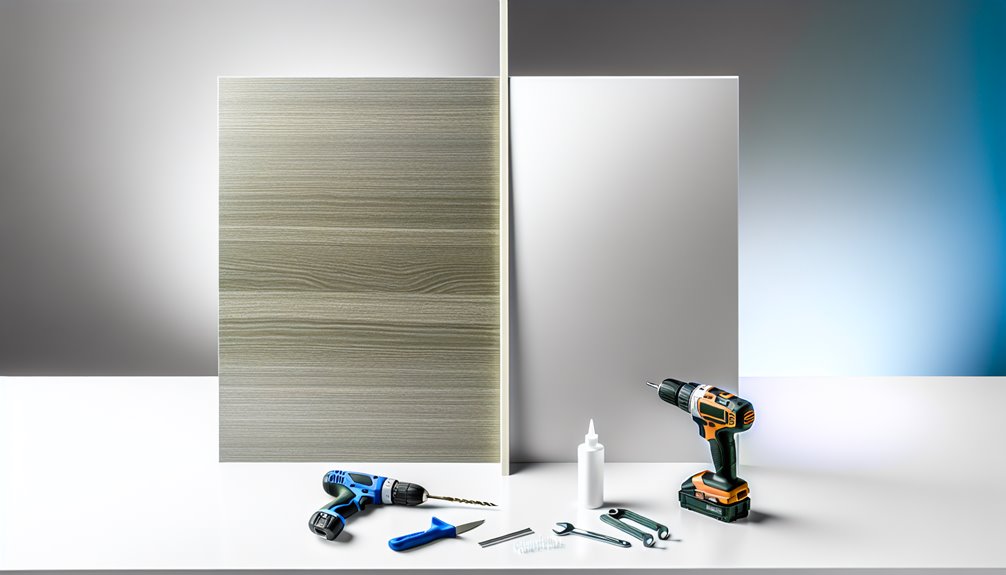
While the choice of wall panels can greatly impact the aesthetic and practical aspects of a space, installation and maintenance are equally essential considerations.
High-pressure laminate (HPL) panels require more robust fixing and backing systems, often translating to a longer installation period but ensuring durability and stability.
Conversely, Poly Vinyl Chloride (PVC) panels offer a quicker installation process, appealing to projects with tight timelines. However, this speed may necessitate earlier replacements, impacting long-term cost efficiency.
Understanding these nuances allows decision-makers to maintain control over project timelines and future maintenance demands, aligning with aesthetic and functional goals.
Balancing aesthetic appeal with practical considerations in material selection extends beyond installation to encompass lifecycle cost versus initial expenditure.
In this regard, PVC panels present an attractive option with lower upfront costs. However, in commercial settings, the total cost of ownership is paramount.
HPL panels, despite their higher initial price, offer significant long-term savings. Their durability reduces replacement frequency and repair downtime, ensuring a lower maintenance cost over time.
HPL panels offer enduring savings with reduced replacements and lower maintenance costs over time.
HPL’s robust nature appeals to those who prioritize enduring performance and reduced lifecycle expenses. As businesses increasingly gravitate towards cost-effective long-term investments, HPL’s superior longevity and reduced upkeep expenses underscore its value in demanding commercial environments, aligning with the growing trend towards sustainable and economically sound choices.
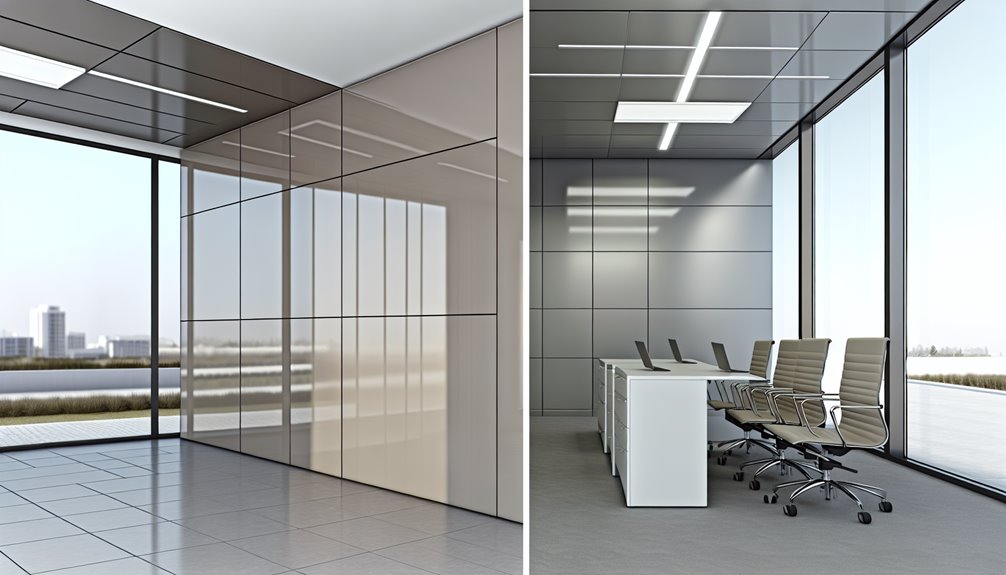
In the domain of modern design, HPL wall panels emerge as a favored choice for a variety of sophisticated environments. Their application is particularly prevalent in areas where durability meets elegance, seamlessly blending form and function.
These panels are meticulously crafted to withstand the rigors of high-traffic areas while maintaining an aesthetic appeal that complements contemporary spaces.
HPL panels offer a harmonious blend of practicality and style, making them indispensable in environments where both aesthetic excellence and resilience are paramount.
PVC wall panels, in many instances, offer an appealing and cost-effective solution for interior spaces where modern aesthetics meet functional demands.
Their sleek, contemporary look makes them an ideal choice for environments requiring moisture resistance, such as high-humidity areas. These panels are particularly beneficial in settings where budget constraints are a priority without compromising on style.
PVC's lightweight nature guarantees easy installation, aligning with current trends favoring quick, adaptable design solutions. Additionally, they require minimal maintenance, making them suitable for commercial projects with high traffic and frequent cleaning needs.
While not as durable as HPL, PVC’s affordability and versatility offer a practical alternative for spaces where aesthetics and functionality are balanced against a controlled budget.
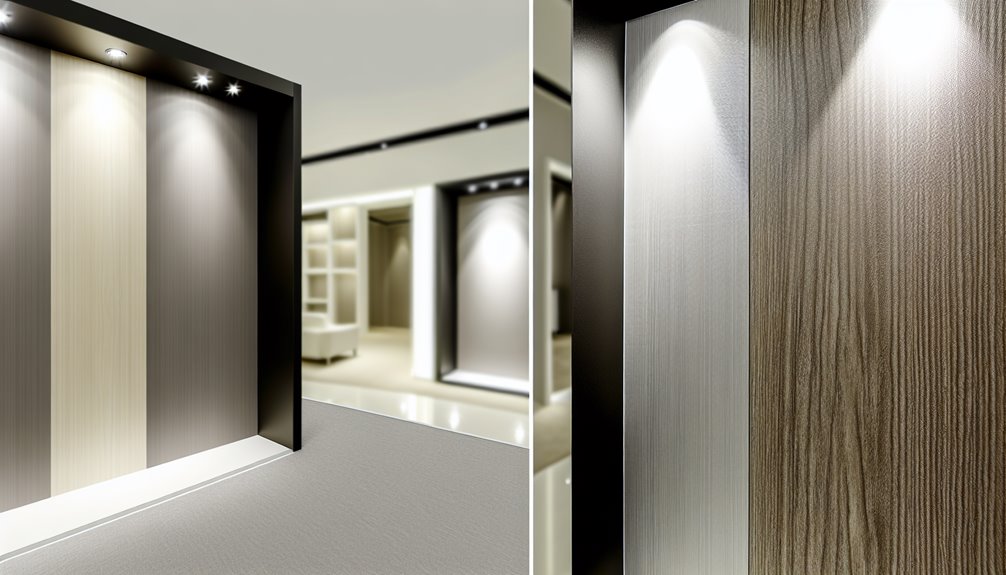
While the allure of PVC wall panels lies in their modern aesthetics and cost-effectiveness, discerning the appropriate material for a project extends beyond superficial appeal.
Selecting between High Pressure Laminate (HPL) and Poly Vinyl Chloride (PVC) requires careful consideration of several factors. Decision-makers should evaluate the intended environment and specific demands of the space to guarantee an ideal balance of functionality and style.
These elements guide a choice that aligns with both practical needs and design aspirations.
Yes, HPL wall panels can be customized with digital prints, offering a tailored aesthetic. This customization empowers designers to create unique, visually striking interiors, aligning with current trends and catering to those seeking precise control over their spaces.
PVC wall panels raise environmental concerns due to their non-recyclability. Despite their sleek appearance and moisture-resistant properties, eco-conscious designers may seek alternatives that align better with sustainable practices, balancing aesthetics with environmental responsibility in their projects.
HPL wall panels offer a broad spectrum of color choices, including vibrant solids, sophisticated wood grains, sleek metals, and unique special patterns. This extensive palette caters to modern design trends, ensuring aesthetic versatility and customization possibilities.
PVC wall panels offer limited acoustic properties, primarily functioning as decorative elements rather than soundproofing solutions. Their design focuses on aesthetics and moisture resistance, appealing to those who prioritize visual appeal and spatial ambiance over acoustic control.
HPL wall panels, like a bridge to a greener future, enhance sustainability through their recyclability and long lifespan, offering an eco-friendly choice for those seeking enduring elegance in commercial spaces. They merge aesthetic appeal with environmental consciousness.
In the bustling corridors of commercial spaces, where elegance meets endurance, HPL wall panels stand resilient like a fortress. Their robust nature and sleek surface offer a sophisticated canvas, enduring the relentless dance of feet and time. PVC, while nimble and lightweight, can falter under such scrutiny, like a delicate tapestry unraveling. For those crafting environments where longevity and aesthetic grace intertwine, HPL emerges as the timeless choice, marrying form and function in a harmonious embrace.
For commercial projects requiring system-engineered wall panel solutions, PhiliGreen supports material selection, panel system design, and specification alignment for high-traffic and regulated environments.