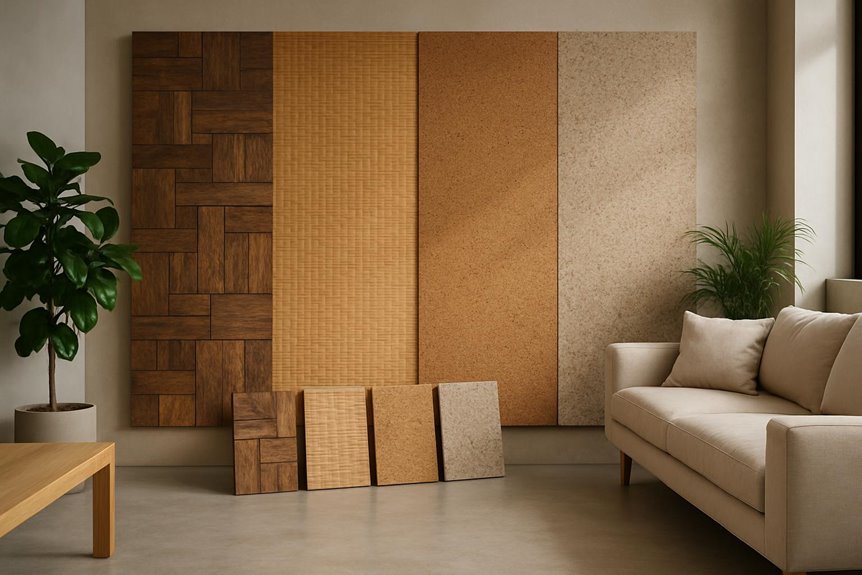
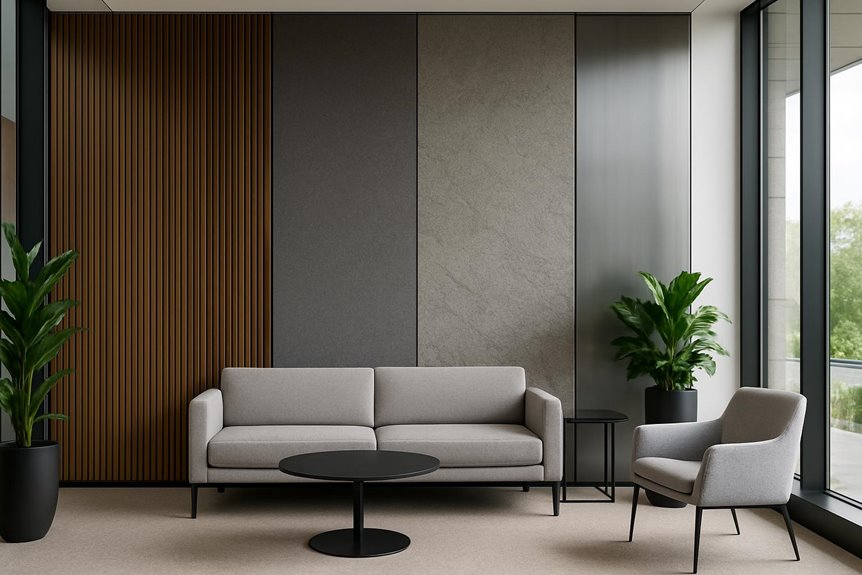
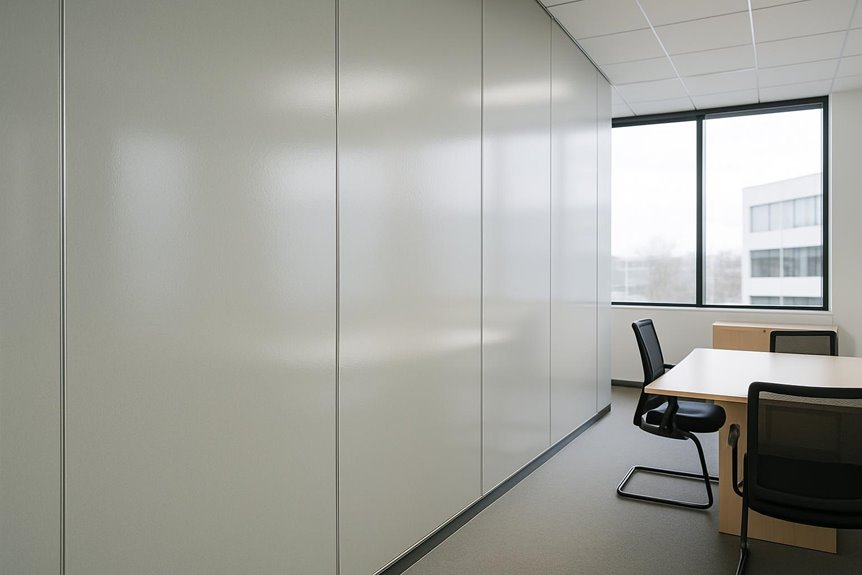
In 2026, wall panel finishes are defined by a shift towards understated elegance and practical sophistication. Matte solid colors lead the trend, offering a chic and low-maintenance solution. Brushed metal textures and fine hairline finishes introduce subtle depth. Meanwhile, soft stone-inspired surfaces and concrete-look finishes blend aesthetic allure with durability. Subtle patterns and custom color-matching options add visual intrigue, offering an array of choices that cater to diverse design narratives.

Matte solid colors, with their understated elegance, offer a sophisticated alternative in modern interior design.
These low maintenance wall finishes are increasingly popular for their ability to reduce glare with low reflectivity. They provide a refined backdrop, effectively hiding fingerprints and surface imperfections, making them ideal for high-traffic areas.
Low maintenance and low reflectivity, matte finishes hide imperfections, perfect for high-traffic areas.
In spaces such as offices, healthcare facilities, and public interiors, matte solid colours are a preferred choice due to their practical benefits and aesthetic appeal.
As decorative surface materials, they deliver a seamless, calming effect, enhancing the overall atmosphere without overwhelming.
The trend towards matte finishes reflects a desire for control over the visual narrative, ensuring environments remain sophisticated, polished, and effortlessly stylish, setting a new standard in contemporary design.
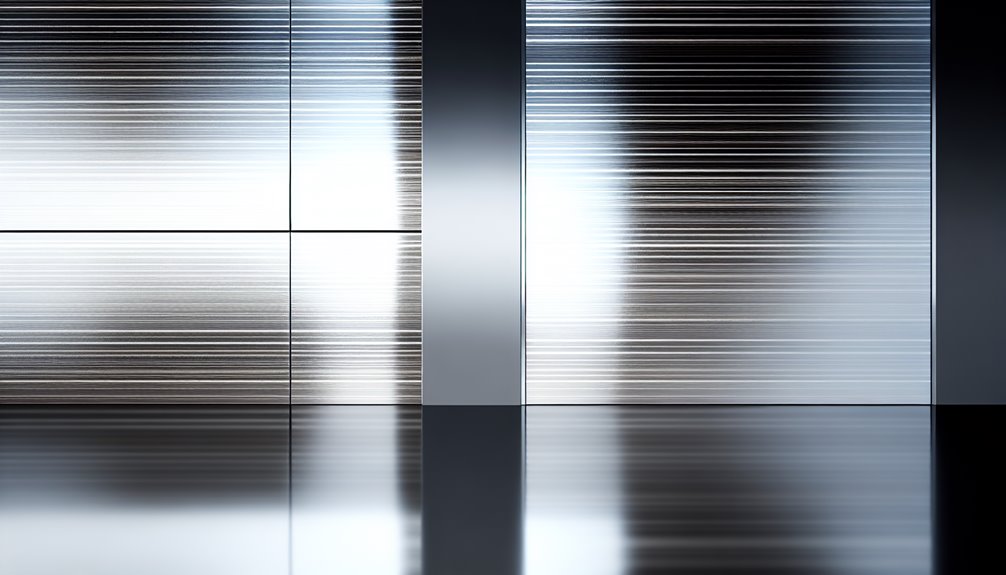
In the domain of modern interior design, where understated elegance is prized, brushed metal textures offer a compelling alternative to matte solid colors.
These decorative wall panel finishes are celebrated for their directional texture, which adds depth without gloss, making them ideal for spaces where subtle sophistication is desired. As architectural decorative textures, they excel in concealing scratches, outperforming polished finishes while maintaining a refined aesthetic.
Their application is prevalent in commercial and transport environments, aligning with the demand for durable and visually appealing interior wall panel textures.
Brushed metal textures effortlessly merge functionality with style, providing a versatile option for those seeking to elevate their interior spaces with modern, yet timeless, decorative solutions.
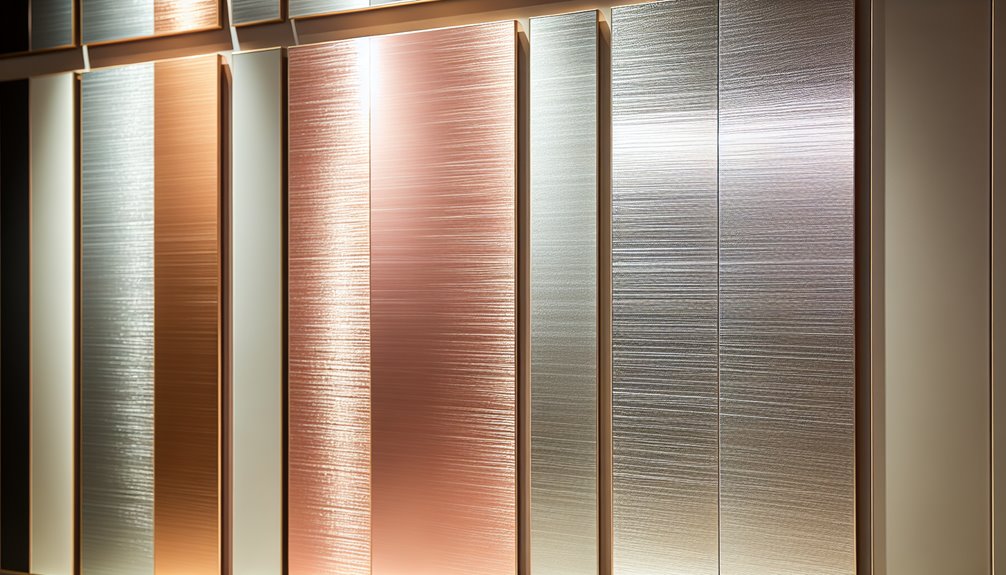
Fine hairline finishes present an exquisite option in modern interior design, characterized by their subtle linear texture and refined appearance.
These wall panel finishes offer an elegant decorative surface texture that captivates discerning homeowners and designers alike. The textured wall panel surfaces perform exceptionally well under artificial lighting, creating an interplay of light and shadow that enhances any space.
Their popularity in 2026 arises from their ability to transform feature walls and reception areas into sophisticated focal points.
Key advantages of fine hairline finishes include:
These finishes provide the control necessary to craft unique and inviting spaces.
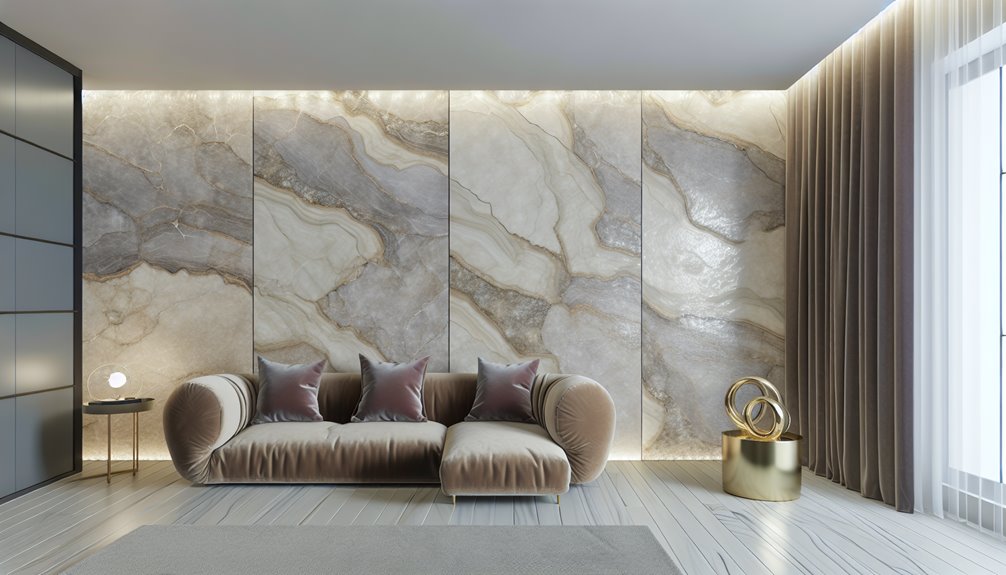
Soft stone-inspired surfaces have emerged as an enchanting trend in modern interior design, offering the visual allure of natural stone without the cumbersome weight or complex installation challenges.
These innovative architectural surface textures provide a sophisticated option for modern wall panel finishes, capturing the essence of stone with a more forgiving maintenance profile.
A sophisticated choice for wall finishes, offering stone's essence with easier maintenance.
Ideal for both hospitality and mixed-use developments, these large format wall panel finishes are celebrated for their seamless integration into diverse spaces. They mimic the grandeur of stone while eliminating concerns over heavy joints and structural load.
This trend not only enhances aesthetic appeal but also offers practicality, making it a preferred choice for those seeking to blend elegance with utility in contemporary design environments.
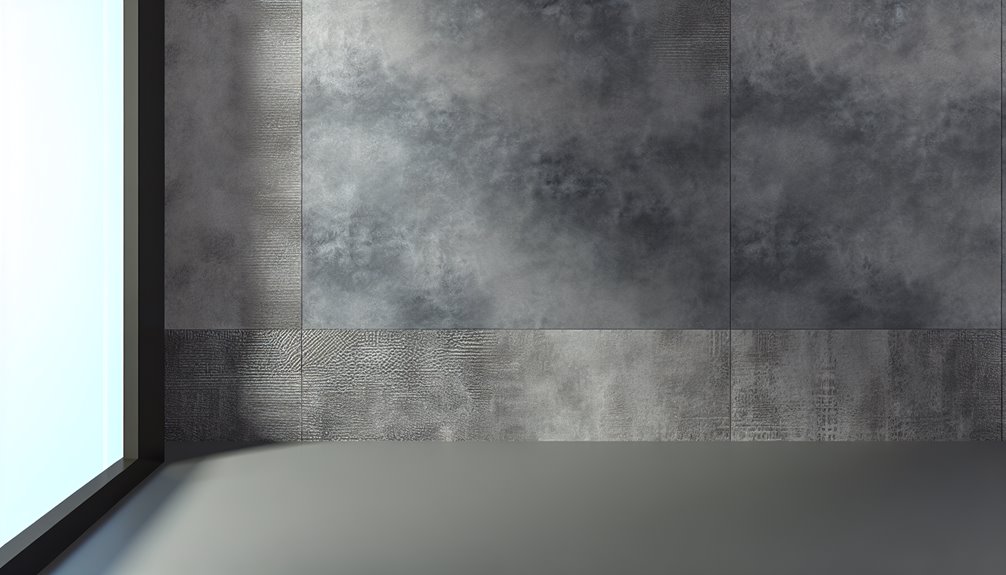
Building upon the elegance of soft stone-inspired surfaces, concrete-look finishes emerge as a compelling choice for those drawn to an industrial aesthetic without the inherent limitations of raw concrete.
These commercial wall panel finishes offer a sophisticated, durable alternative, maintaining stable color and texture across expansive areas. Their versatility complements contemporary metal and glass architecture, making them a staple in modern design.
Consider these attributes that underscore their popularity:
Their refined presence redefines industrial charm, offering control over ambiance and style.
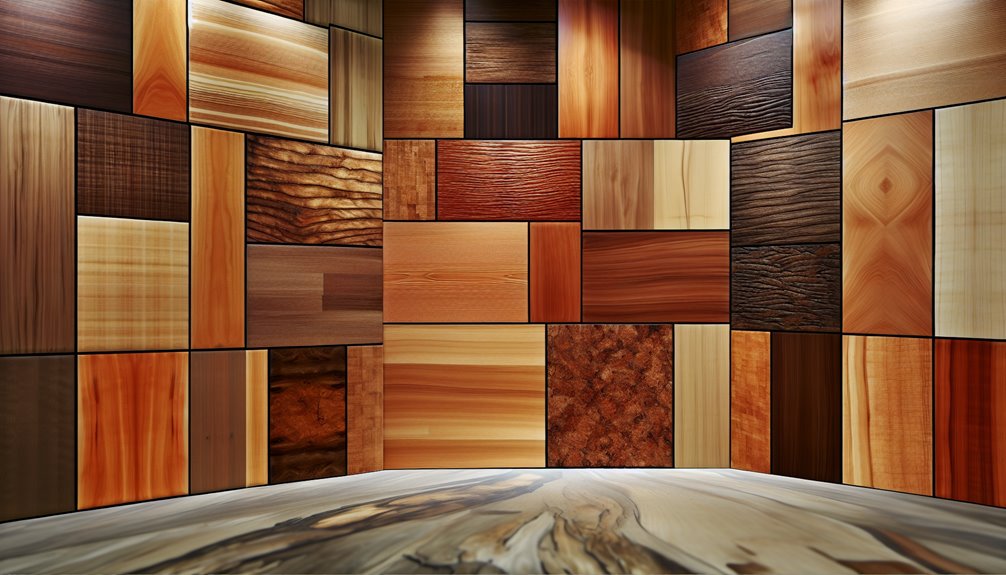
As the allure of natural wood continues to captivate design enthusiasts, woodgrain textures crafted from non-timber materials emerge as a sophisticated alternative, marrying the warmth of authentic wood with enhanced durability. These innovative surfaces boast resistance to warping, staining, and moisture, making them ideal for both residential and commercial interiors. Their versatility in design applications allows for seamless integration into various aesthetic themes, from modern minimalism to rustic charm.
| Feature | Benefit |
|---|---|
| Warm Appearance | Natural wood-like aesthetics |
| Enhanced Durability | Longevity without degradation |
| Moisture Resistance | Suitable for humid environments |
| No Warping | Maintains shape over time |
| Stain Resistance | Easy maintenance and cleaning |
This trend underscores a shift towards sustainable, high-performance materials, meeting the demands of discerning consumers.
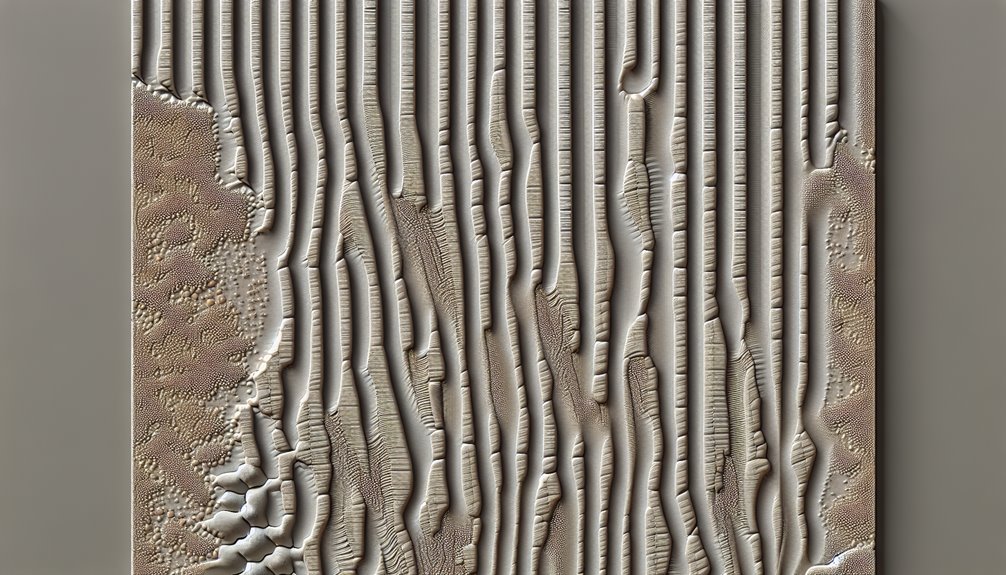
The evolution from woodgrain textures to cutting-edge micro-textured surfaces marks a pivotal moment in interior design, where innovation meets aesthetic refinement.
These surfaces provide an elegant solution for modern interiors, seamlessly blending function with form. Micro-textured surfaces offer several advantages:
This trend not only elevates design sophistication but also guarantees that spaces are both visually appealing and functionally efficient.
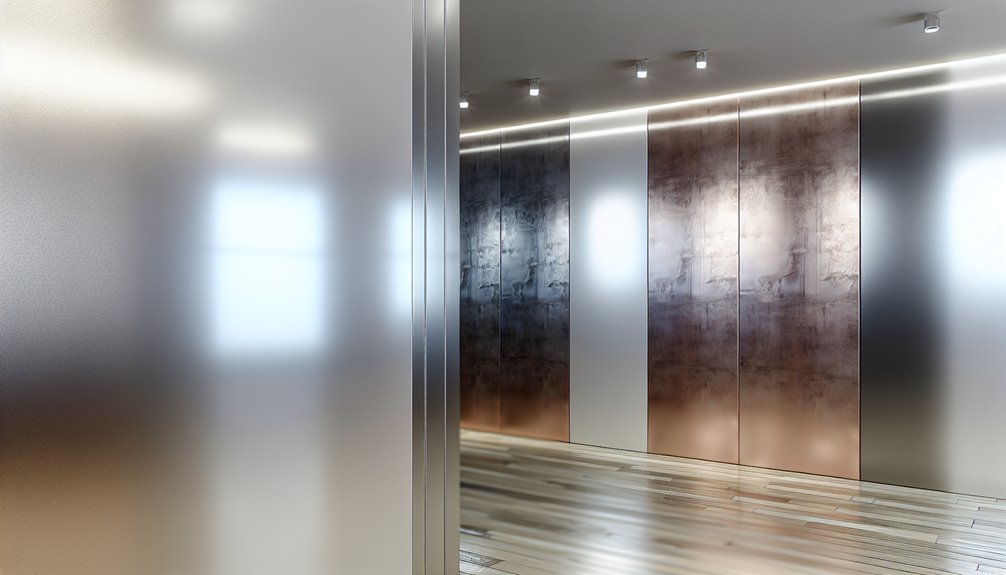
While high-gloss finishes can be striking, satin and low-sheen metallics offer a refined alternative that balances elegance with understated sophistication. These finishes are becoming increasingly popular in premium commercial spaces due to their controlled reflectivity, which guarantees visual comfort without overwhelming the senses. The subtlety of satin and low-sheen metallics requires less maintenance compared to their high-gloss counterparts, making them a practical choice for discerning designers.
| Feature | Benefit | Application |
|---|---|---|
| Controlled Reflectivity | Enhances visual comfort | Office and retail environments |
| Low Maintenance | Reduces upkeep requirements | Hotels and luxury spaces |
| Elegant Subtlety | Adds sophistication | Lobbies and conference rooms |
This trend caters to those who desire a seamless blend of form and function, assuring environments remain both visually appealing and effortlessly manageable.
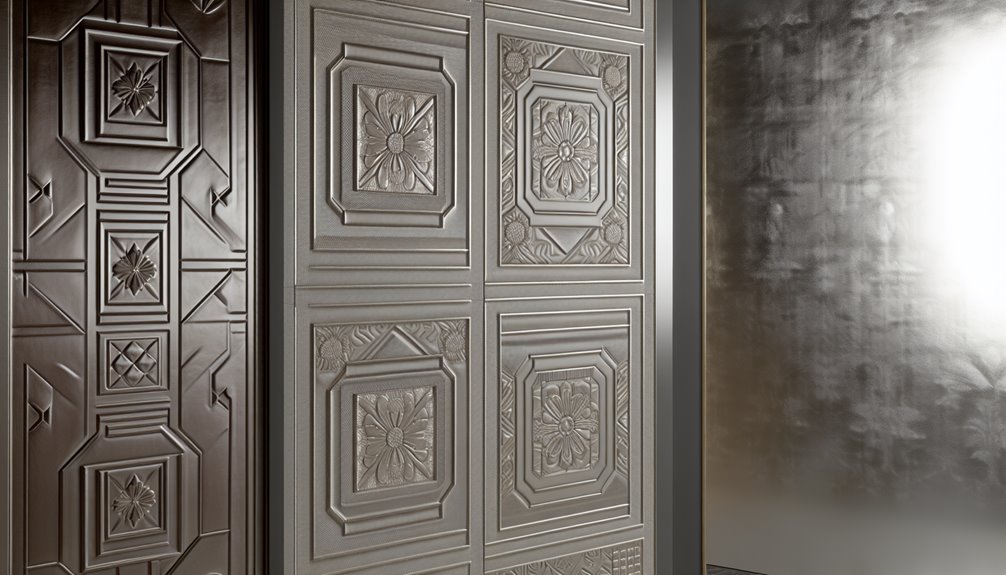
In the domain of wall finishes, the allure of satin and low-sheen metallics gracefully introduces the appeal of subtle patterned or embossed finishes, which offer a nuanced approach to elevating interior design.
These finishes are increasingly favored for their ability to add depth without the need for additional materials. When used selectively, they transform feature walls into focal points, enhancing the architectural narrative of a space.
The effectiveness of such finishes lies in their restraint and non-repetitive application.
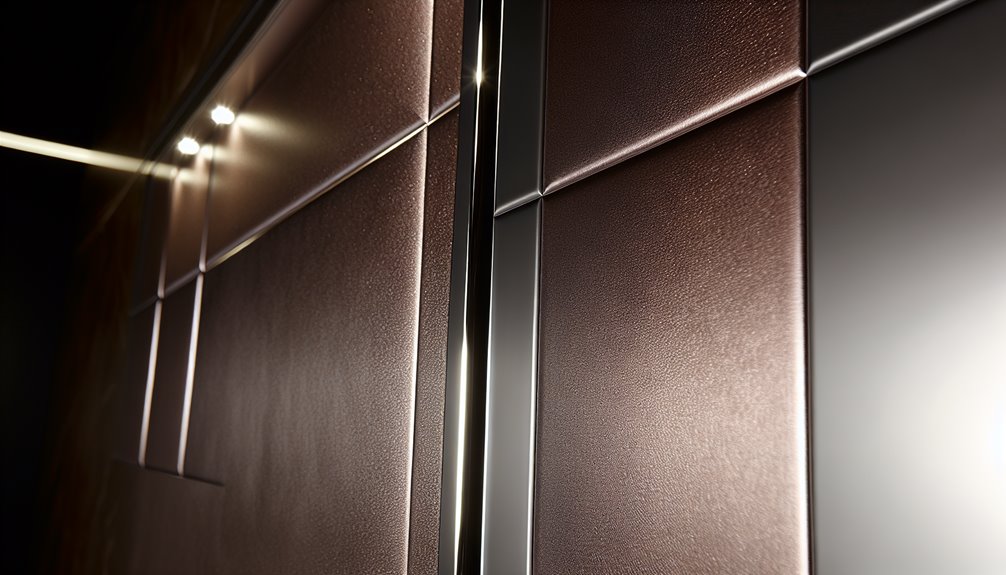
Amidst the evolving landscape of interior design, custom colour-matched finishes are increasingly becoming a cornerstone for those seeking a cohesive aesthetic that aligns seamlessly with brand or architectural palettes.
The demand for RAL or project-specific tones is on the rise, reflecting a shift towards precision in achieving visual harmony. As consumers and designers gravitate towards finish consistency over novelty, these tailored hues offer a sophisticated approach to interior spaces.
This trend underscores a desire for control in creating bespoke environments where every element is meticulously curated. Custom finishes not only support a unified design narrative but also enhance the overall perception of quality and intentionality, ensuring spaces resonate deeply with personal or corporate identity.
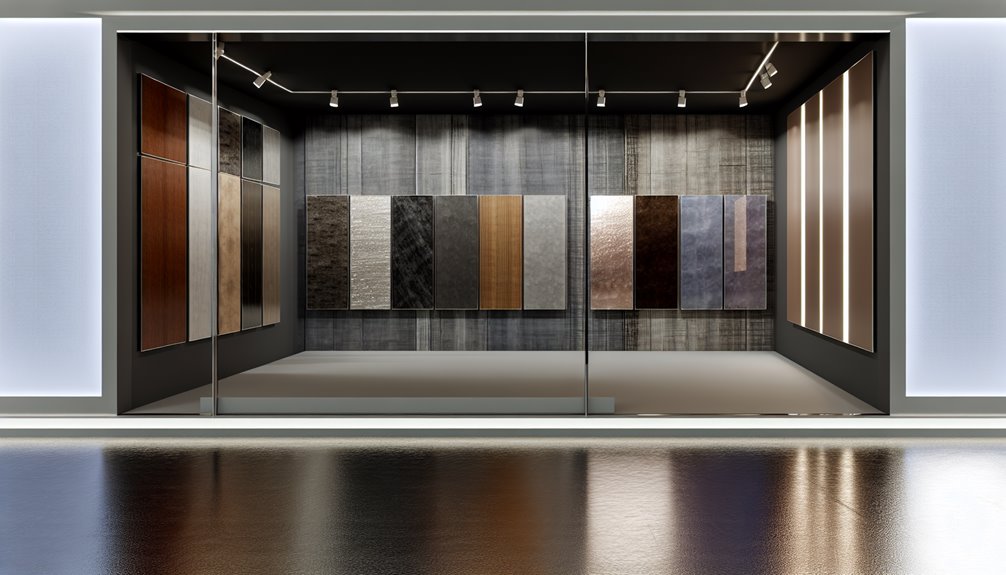
How does one navigate the intricate world of wall panel finishes to perfectly suit a project? By focusing on key elements, one can achieve a harmonious balance of aesthetics and functionality.
First, consider the lighting type and angle; the finish must complement lighting to enhance the visual appeal.
Second, analyze the traffic level and contact frequency; durability and resistance to wear are essential in high-traffic areas.
Finally, assess the cleaning methods and chemicals; maintenance requirements should align with the space's usage.
Each decision should reflect the desired longevity and style, ensuring that the panel size, joint visibility, and the expected design life resonate with the overarching design ethos.
Mastering these details empowers one to make informed choices.
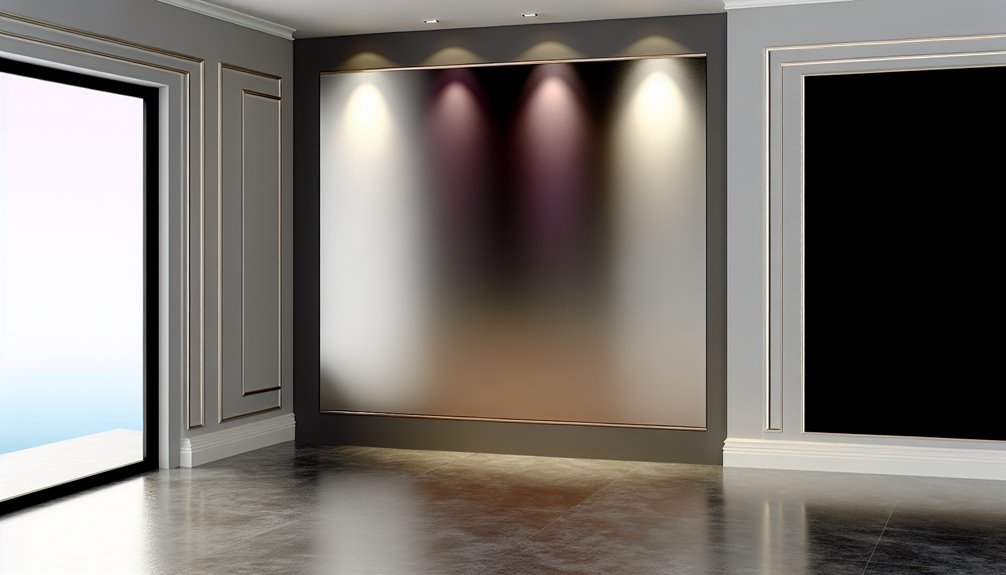
Maneuvering the nuanced landscape of wall panel finishes requires an understanding of evolving trends, particularly as certain finishes begin to wane in popularity.
In 2026, high-gloss reflective surfaces, highly irregular textures that trap dirt, and finishes that exaggerate panel distortion are losing favor. This shift underscores a preference for low-maintenance, visually stable surfaces that harmonize with today's minimalist, clean-lined interiors.
High-gloss finishes, once prized for their sheen, now deter due to high upkeep. Meanwhile, irregular textures, although initially engaging, become impractical as they accumulate dirt, disrupting aesthetic clarity.
Similarly, exaggerated panel distortions, initially alluring, fail to provide the enduring appeal and simplicity desired in modern design. The demand leans toward surfaces that offer elegance without excessive care.
Popular wall panel finishes impact the environment through resource extraction, manufacturing emissions, and waste generation. Sustainable options, like recycled materials and low-VOC finishes, mitigate adverse effects while addressing the aesthetic and performance expectations of discerning, eco-conscious consumers.
Sustainable alternatives to traditional wall panel materials include bamboo, recycled wood, reclaimed metal, cork, and eco-friendly composites. These materials offer environmental benefits like reduced carbon footprint and renewability, appealing to eco-conscious consumers seeking control over their space's aesthetic.
Ironically, while wall panel finishes can elevate a room's aesthetic, certain choices may inadvertently compromise indoor air quality. Trend-conscious individuals, seeking control, might prioritize low-VOC finishes to harmonize both environmental and health considerations within their spaces.
Innovations in sustainable materials and smart technology integration drive wall panel finish trends. Enhanced durability, eco-friendly compositions, and digital customization options offer consumers control over aesthetics, ensuring finishes align with modern environmental and design demands.
Yes, popular finishes can be applied to outdoor wall panels. Durable materials like PVC and stone resin, paired with weather-resistant finishes, guarantee longevity and maintain aesthetic appeal, aligning with architectural trends and environmental considerations for exterior applications.
In 2026, the most popular wall panel finishes are defined less by visual drama and more by how well they perform over time. Matte, brushed, stone-inspired, and low-sheen surfaces have become the preferred choices because they manage light effectively, hide wear, and reduce long-term maintenance. High-gloss finishes, once favoured for impact, are steadily giving way to textures that deliver visual stability and durability in real-world environments.
For projects where finish selection must balance design intent, performance, and lifecycle value, Guangdong Phili Green Panels Co., Ltd. works with designers and specifiers to develop wall panel finishes and surface textures suited to commercial and public building applications. Our focus is on finishes that look right on day one—and continue to perform long after handover.
If you’re planning a project and need guidance on wall panel finishes or decorative surface textures, contact Philigreen to discuss finish options, performance requirements, and system integration for your application.