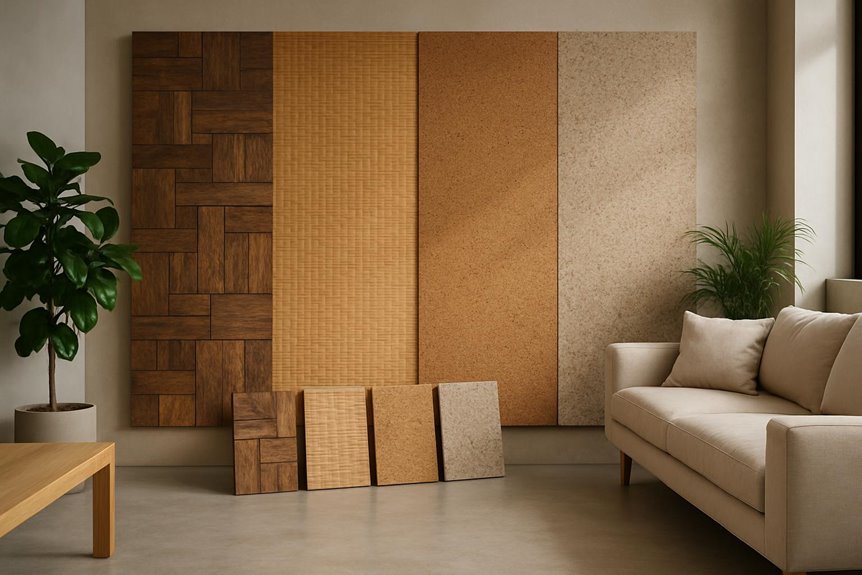
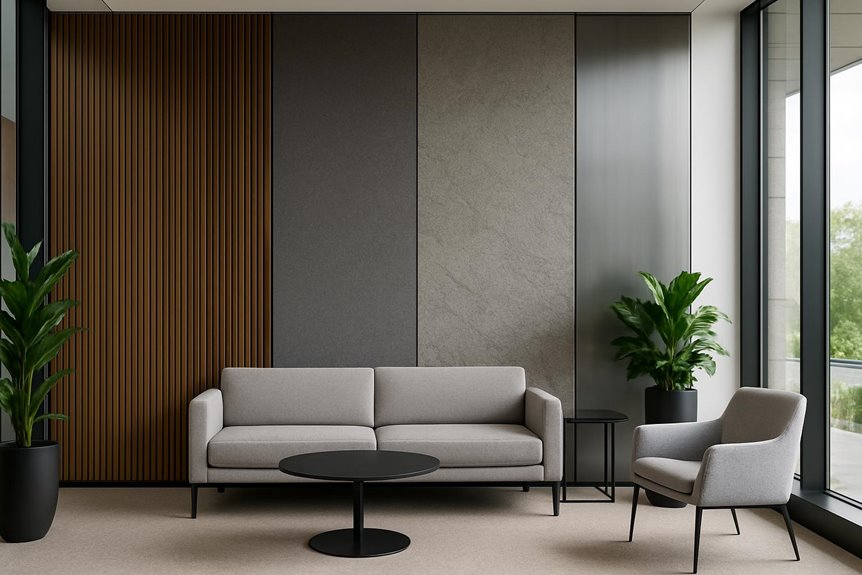
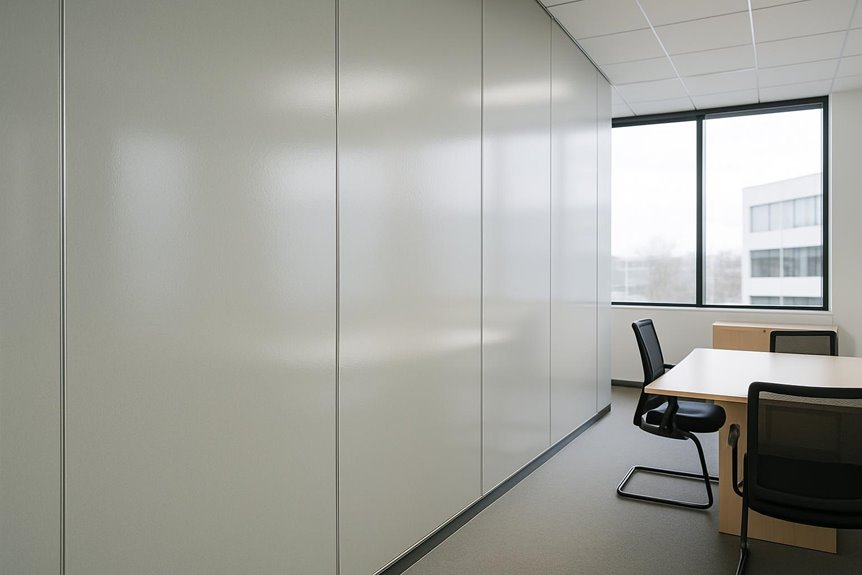
Cement boards play a vital role in modern construction, particularly in moisture-prone areas. They are essential for tile backing in bathrooms and kitchens, providing protection against water damage and mold. As flooring underlayment, they enhance stability and resist moisture. Their durability makes them suitable for commercial interior walls and wet ceilings. While effective, they have specific limitations and alternatives. Curious about their full range of applications and where they might not be ideal?
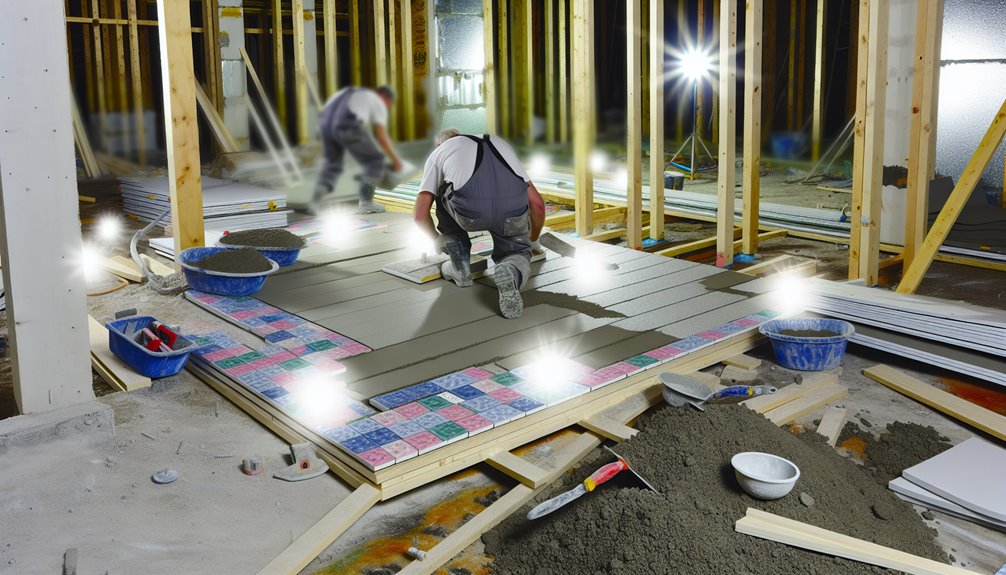
Cement boards are an essential material for tile backing in various moisture-prone environments, such as showers, bathrooms, wet rooms, kitchen backsplashes, and laundry rooms.
These boards provide a reliable solution due to their moisture-resistant properties, making them ideal for preventing water damage and mold growth.
Cement board applications extend to creating a solid base that supports tiles effectively, ensuring longevity and durability in wet areas.
As a moisture resistant wall board, it offers superior performance over alternatives like gypsum, which can warp or deteriorate when exposed to water.
The use of cement board for tile backing is a preferred choice for builders and homeowners seeking a robust, long-lasting foundation that withstands the challenges of humid conditions in various residential and commercial settings.
Serving as an essential layer under ceramic and porcelain tiles, cement boards offer enhanced stability and moisture protection when used as flooring underlayment.
This application is particularly beneficial over plywood or subfloors, where they act as a barrier against movement and moisture-related damage beneath hard floor finishes.
Cement board flooring underlayment is especially effective in areas requiring improved impact resistance, such as bathrooms.
Cement backer board uses extend to providing a robust, water-resistant base that prevents tile cracking and warping.
By incorporating cement board for bathrooms, construction projects can achieve long-lasting durability and reduced maintenance concerns.
This makes cement boards an ideal choice for maintaining structural integrity in wet and high-traffic areas.
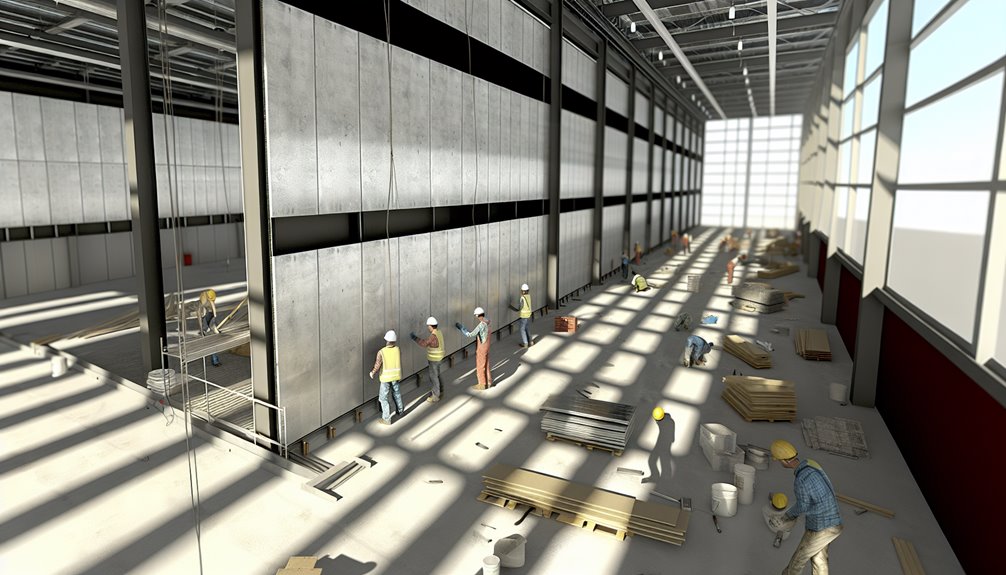
In many commercial environments, cement boards provide a robust solution for interior walls, particularly in service corridors, plant rooms, and utility areas. These areas demand materials that withstand high traffic and potential fire hazards.
Cement boards used for interior walls offer significant advantages over traditional drywall, primarily due to their density and fire-resistant properties. Fire resistant cement boards enhance safety by reducing the risk of fire spread, making them ideal for critical infrastructure.
Compared to drywall, they offer superior durability and resilience, essential for withstanding long-term use in demanding settings. Cement board vs drywall use is a clear choice in such environments, as cement boards effectively balance strength, safety, and longevity, ensuring reliable performance in commercial interior applications.
A significant role is played by cement boards in ceilings and soffits due to their robustness and versatility.
These boards are particularly valued for their excellent moisture resistance, making them ideal for bathrooms and wet ceilings. This capability prevents sagging and fungal growth, ensuring long-lasting durability.
In mechanical service zones, fibre cement board applications provide a reliable solution due to their structural integrity.
When specified correctly, cement board exterior use in covered soffits enhances protection against environmental exposure and potential damage.
The adaptability of cement boards allows for diverse applications, offering a strong and stable surface that withstands various conditions.
Cement boards provide a versatile, durable surface, perfect for withstanding diverse conditions in construction.
These characteristics make them an indispensable material in modern construction, answering the question of what cement boards are used for effectively.
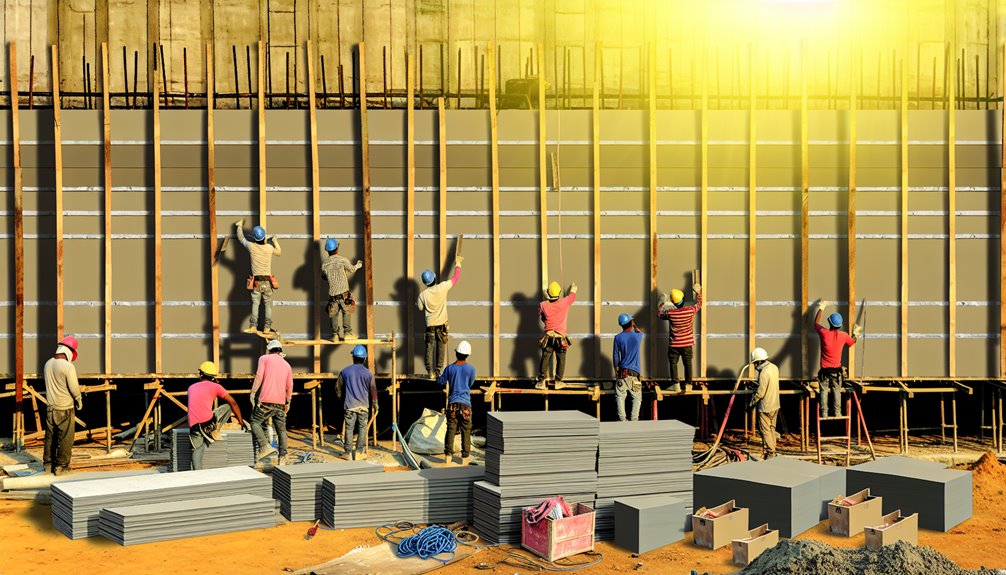
Cement boards play an important role in exterior applications, providing a durable substrate for cladding systems and protected installations. They serve as exterior sheathing, offering strength and stability for various construction needs.
While cement boards are highly effective in these roles, they are not designed as decorative façade panels and require added protective systems to prevent exposure-related damage. This limitation highlights the necessity of using them in conjunction with other materials to guarantee weather resistance and aesthetic appeal.
Their application is vital in maintaining structural integrity, especially in areas prone to environmental stressors. As a result, while cement boards are invaluable for foundational purposes in exterior settings, they must be part of a thorough system to achieve ideal performance.
Moving from exterior applications, fire-resistant assemblies benefit greatly from the use of cement boards. Known for their non-combustible composition, cement boards enhance fire performance in regulated spaces. This makes them an ideal choice for fire-rated wall systems, shaft walls, and mechanical enclosures.
Their ability to withstand high temperatures without igniting or spreading flames markedly improves safety in various construction environments. Cement boards are particularly valued in areas where fire resistance is critical, ensuring compliance with building codes and safety standards.
Their durability and strength provide reliable protection, making them essential in both residential and commercial projects. By incorporating cement boards into fire-resistant assemblies, builders can achieve enhanced fire safety without compromising structural integrity or design flexibility.
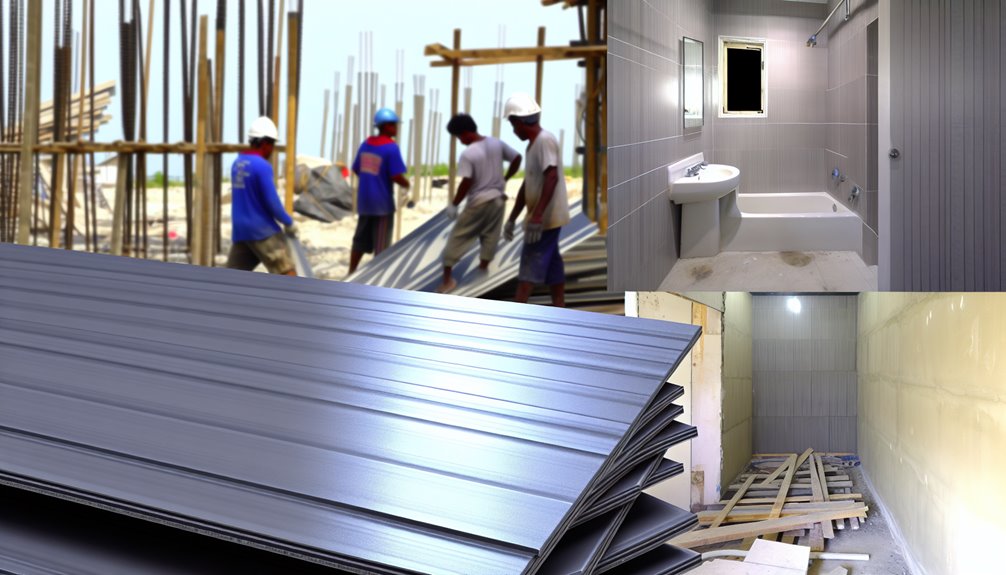
Infrequently, cement boards are misapplied in construction projects where they are not the best choice. They should not be used as primary structural panels due to their insufficient load-bearing capacity.
Additionally, cement boards are unsuitable as finished decorative wall surfaces because they lack aesthetic appeal compared to other materials. In applications requiring waterproofing without a membrane, they may fall short, as they are not entirely waterproof on their own.
For projects where lightweight materials like gypsum suffice, using cement boards can lead to over-specification and unnecessary costs. Recognizing these limitations helps prevent inappropriate use, ensuring that the most suitable materials are selected for each specific application, optimizing both performance and budget.
Understanding the distinct uses of cement board and fibre cement board is vital for effective construction planning. Cement boards are primarily used in interior wet areas, providing a robust and water-resistant base for tiles in bathrooms and kitchens. Their moisture resistance makes them ideal for preventing water damage in such environments.
On the other hand, fibre cement boards are favored for exterior applications. They serve as durable cladding and façade panels, offering protection against weather elements while enhancing building aesthetics.
This distinction is significant, as using the wrong type can lead to specification errors. As a result, selecting the appropriate board based on the intended application guarantees structural integrity and longevity in construction projects.
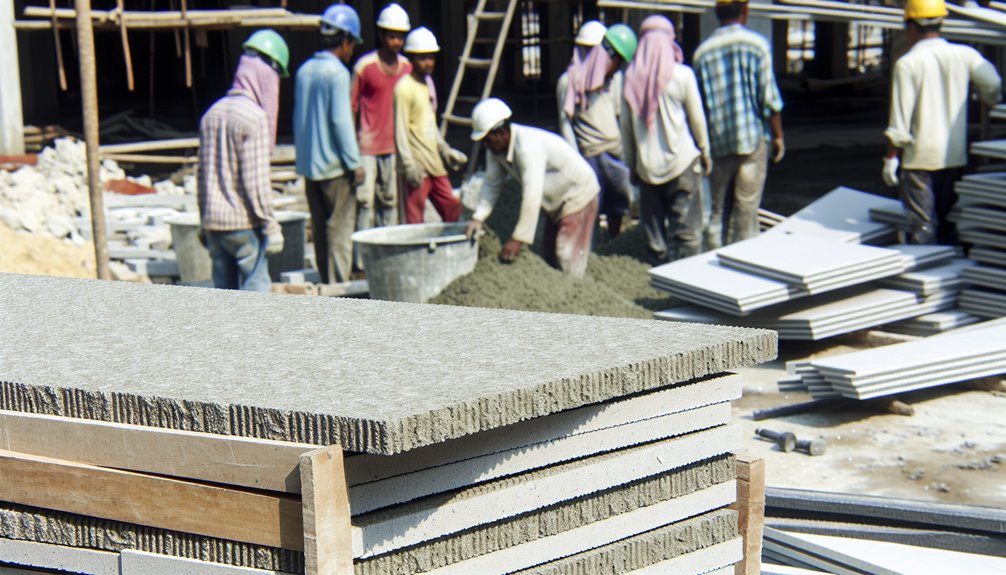
When considering materials for construction projects, cement board emerges as an ideal choice in scenarios where moisture exposure is prevalent. This makes it particularly suitable for wet areas like bathrooms and kitchens.
Its inherent fire resistance also positions it as a preferred option in spaces where safety is paramount. Additionally, cement board's high impact resistance guarantees it withstands heavy use and wear, making it a robust choice for high-traffic areas.
For those prioritizing long-term durability over ease of installation, cement board proves advantageous. Its ability to resist warping, rotting, and pest damage further solidifies its utility in both interior and exterior applications.
This combination of attributes makes cement board a versatile and reliable material in various construction contexts.
In certain construction scenarios, opting for alternative materials to cement board can be advantageous.
For fully dry areas, gypsum boards offer a lightweight and cost-effective solution, providing a smooth surface ideal for painting and interior decor.
When speed of installation is vital, prefabricated panels allow for quick assembly, reducing labor time considerably.
In projects where minimizing weight is critical, such as in high-rise buildings, lighter materials like foam boards can prevent structural strain while maintaining adequate strength.
Budget constraints may also dictate the choice of materials; plywood or gypsum board can be more economical options without compromising basic functionality.
Ultimately, selecting the appropriate material depends on specific project needs, emphasizing factors like environment, efficiency, and cost.
Cement boards offer superior durability compared to plywood, resisting moisture, warping, and rotting. They are fire-resistant and maintain structural integrity in wet environments, making them ideal for long-lasting applications in both interior and exterior construction.
Cement boards offer environmental benefits such as a low carbon footprint, recyclable content, and reduced water usage. They support sustainable construction through eco-friendly manufacturing practices, minimizing waste and pollution, and enhancing durability and efficiency in building projects.
Cement boards, acting like a silent shield, can effectively contribute to soundproofing. Their dense structure reduces noise transmission, making them a suitable choice for areas requiring quiet. However, they are not as effective as specialized acoustic materials.
Cement boards in outdoor settings require regular inspections for cracks and sealant wear. Cleaning to remove debris and ensuring proper drainage prevents water damage. Occasional resealing enhances longevity and maintains resistance to environmental factors.
Cement boards, as if trying to prove their resilience, are indeed suitable for high-temperature areas. Their non-combustible nature stands unflustered in heat, unlike their more delicate counterparts, adding a touch of irony to construction choices.
In the vast landscape of construction, cement boards stand as steadfast guardians against moisture and decay. Picture them as silent sentinels in bathrooms, kitchens, and bustling commercial spaces, their resilience unwavering against time and wear. Their presence underfoot and overhead reinforces stability, while their adaptability extends to exterior domains, albeit with care. As the sun sets on a construction site, the choice between cement boards and alternatives shapes the future, ensuring structures stand firm against nature's trials.