Cement board sizes play a pivotal role in construction, impacting both structural integrity and installation efficiency. Standard dimensions and thicknesses cater to diverse applications, from tile backing to commercial high-impact areas. Selecting the right size involves balancing ease of handling with seam reduction. Differences between cement and fiber cement boards further complicate choices. Understanding these nuances is essential for optimizing project outcomes, prompting deeper exploration into the specifics of their application and performance.
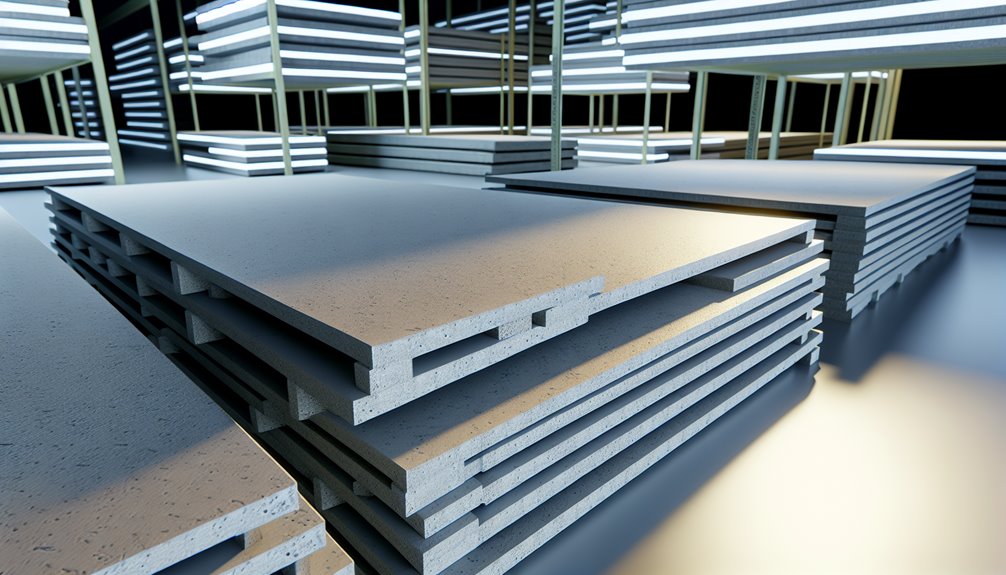
Standard cement board sizes are essential for ensuring compatibility with construction frameworks and efficient installation processes.
Typical cement board dimensions are 1200 × 2400 mm (4 × 8 ft) and 900 × 1800 mm (3 × 6 ft), offering versatility for various applications.
Cement board thickness is available in multiple specifications, ranging from 6 mm (1/4 inch) for lighter applications to 20 mm (3/4 inch) for more robust structural needs.
These standardized options enable precise alignment with framing systems, facilitating seamless integration and reducing material waste.
Manufacturers may offer slight variations in sizes to accommodate specific project requirements, ensuring that the cement board specifications align with both residential and commercial construction standards.
Choosing the right cement board thickness is critical for strength, stability, and long-term performance. Thickness should match the application—not just availability.
| Application | Typical Thickness | Purpose |
|---|---|---|
| Tile backer board | 6 mm | Stability over subfloors |
| Interior walls | 9–12 mm | General wall support |
| High-impact areas | 15 mm+ | Increased durability |
Selecting the correct thickness ensures the board performs as intended—too thin can lead to movement or cracking, while overspecifying adds cost without benefit.
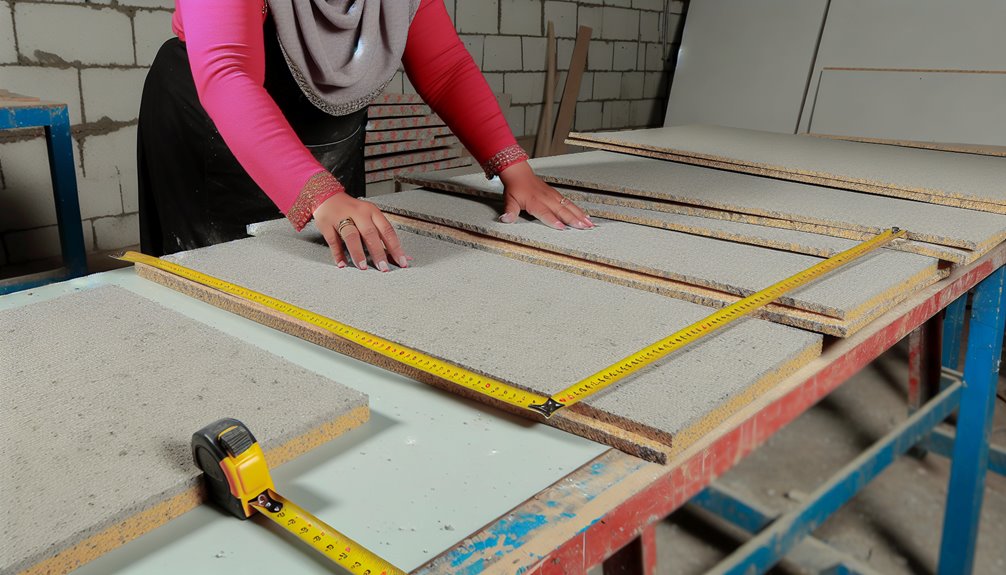
Panel size greatly influences the installation process, impacting labor efficiency and material handling.
Larger cement backer board sizes, such as the cement board 4x8 size, minimize seams but complicate handling due to increased weight and bulk. This can result in extended labor time and challenges with alignment accuracy.
Conversely, smaller fiber cement board sizes facilitate easier installation and handling but lead to a higher seam count, necessitating additional joint treatment.
Smaller fiber cement boards ease handling but increase seams, requiring more joint treatment.
The trade-off between reduced joints and ease of handling is pivotal in determining installation efficiency.
Larger panels may demand more skilled labor to guarantee precise alignment, while smaller panels might increase the need for meticulous joint finishing, ultimately affecting overall project timelines and costs.
A notable distinction exists between cement backer boards and fiber cement boards, primarily regarding size, thickness, and intended application.
Cement backer boards typically feature smaller cement board panel sizes, designed mainly for interior use, such as tile substrates. These panels usually come in dimensions suitable for confined spaces, offering ease of handling and installation.
Conversely, fiber cement boards are engineered for larger exterior cladding applications, with standard sizes often reaching 2440mm × 1220mm, and thicknesses ranging from 4mm to 30mm. The increased dimensions of fiber cement boards accommodate broader coverage, essential for external facades.
Additionally, fiber cement boards possess varied density classifications, enhancing their suitability for diverse structural applications, whereas backer boards focus on foundational support for interior finishes.
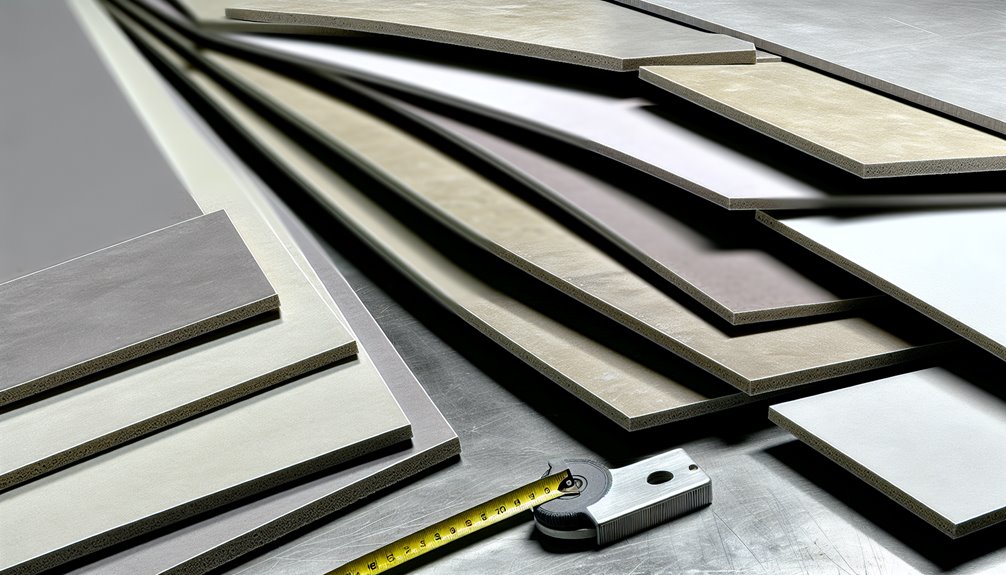
Selecting the correct cement board size depends on how the board will perform in the system—not just its dimensions. The right choice balances application, load conditions, and installation efficiency.
In general, thinner boards are suitable for ceilings and light wall applications, while thicker panels are required for floors or areas exposed to higher loads and impact.
| Factor | What to Check |
|---|---|
| Application | Floor, wall, or ceiling |
| Load exposure | High, medium, or low traffic |
| Substructure spacing | Standard or wider framing |
| Finish type | Tile, render, or cladding |
| Handling constraints | Panel size vs ease of installation |
The best cement board size is the one that matches structural demands, installation conditions, and finish requirements—not simply the largest or thickest available.
Why are custom sizes necessary in certain construction projects? Custom sizes are essential when standard dimensions fail to meet specific architectural and structural requirements.
Large-format installations, such as prefabricated wall systems and commercial façade backing systems, often necessitate tailored dimensions to guarantee precise alignment and reduce cutting waste. By customizing cement board sizes, construction projects benefit from improved efficiency and material utilization.
This approach minimizes on-site modifications, thereby enhancing installation speed and accuracy. Additionally, custom dimensions contribute to the structural integrity of prefabricated elements, assuring seamless integration with existing frameworks.
Although custom sizing may involve longer lead times and increased costs, the trade-off is justified by superior alignment and reduced labor, ultimately optimizing project outcomes.
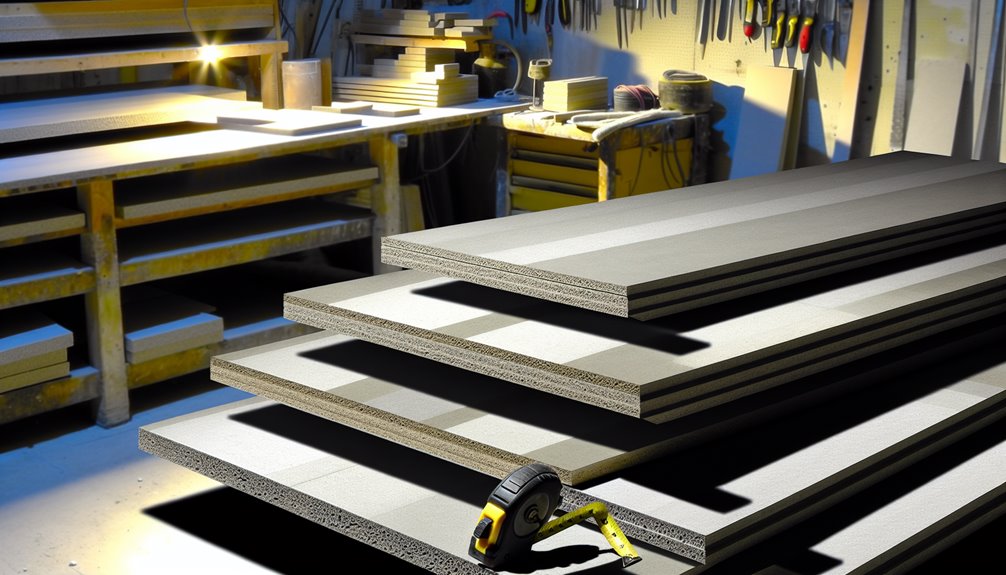
Numerous mistakes can occur when selecting cement board size, impacting both cost and performance. One common error is using thin boards on flexible subfloors, leading to instability and potential failure.
Overspecifying thickness where unnecessary not only escalates expenses but also adds unwarranted weight. Confusion between fiber cement and backer board sizes can result in improper selections, compromising installation integrity.
Additionally, ignoring panel handling limits may cause damage during transport and installation, affecting the board's structural properties. Each of these errors underscores the necessity of aligning board specifications with application requirements.
Precision in choosing the correct size and type is essential to optimize both functionality and budget, ensuring long-term success in construction endeavors.
Selecting the appropriate size of cement board is vital to the longevity and performance of a construction project. Thicker boards inherently resist cracking and deflection, enhancing structural integrity.
Proper sizing minimizes joint stress, which is imperative for maintaining the durability of finishes. This reduction in joint stress also prevents premature wear and potential failure points in the installation.
It is necessary to select dimensions that align precisely with the project's structural requirements to guarantee peak performance and lifespan. Correct panel dimensions directly impact the long-term durability of the construction, as inappropriate sizing can lead to compromised structural stability.
Consequently, meticulous attention to size selection not only enhances material performance but also safeguards against future maintenance challenges.
Cement boards require a primer before painting to guarantee adhesion. Direct painting risks inadequate bonding, leading to peeling. Proper surface preparation, including cleaning and priming, is essential for ideal paint adherence and long-term durability.
Board density dramatically influences thermal insulation, with higher densities acting like impenetrable fortresses against heat transfer. Low-density boards, in contrast, offer minimal resistance, leading to more significant energy fluctuations and less control over interior climate stability.
The environmental impacts of cement board production include carbon emissions from cement manufacturing, energy consumption, and resource extraction. Efficient processes, recycling, and sustainable materials can mitigate these effects, enhancing eco-friendliness while maintaining product performance and durability.
Cutting thicker cement boards requires specialized tools like carbide-tipped circular saws. With precision, these tools handle boards over 12mm, minimizing dust and ensuring smooth edges. Proper equipment use enhances control and efficiency in installation.
Fiber cement boards are suitable for high seismic zones due to their robust structural integrity and resistance to cracking. Their dimensional stability provides enhanced durability, ensuring safety and performance in areas prone to seismic activity.
Cement board size should always be selected based on application requirements, structural support, and installation conditions. Thickness affects strength and durability, while panel dimensions influence handling efficiency, joint control, and long-term performance.
Using the correct size reduces installation risk, improves finish stability, and avoids unnecessary cost from over- or under-specification. In both residential and commercial projects, sizing decisions should be made with a clear understanding of load conditions, moisture exposure, and system design.
For projects requiring reliable wall panel systems and performance-driven material selection, PhiliGreen provides technical support across panel specifications, applications, and integrated building solutions.