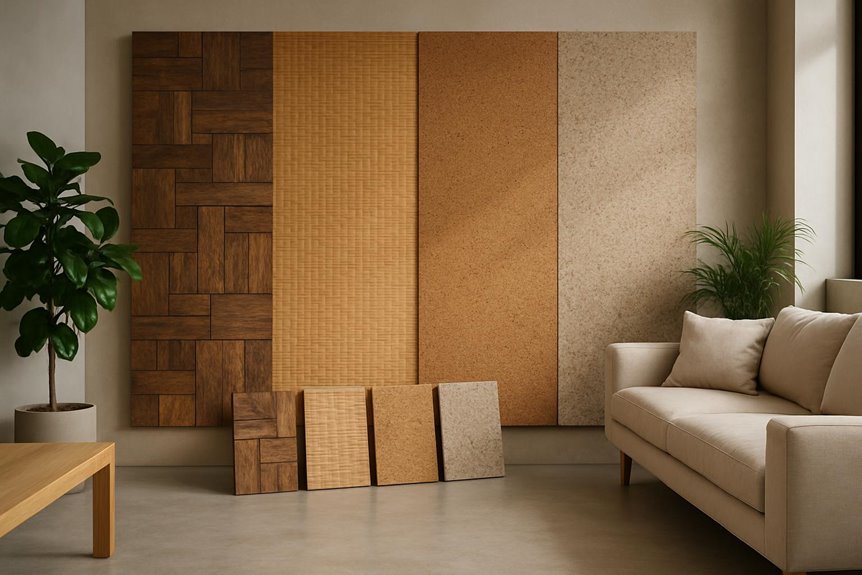
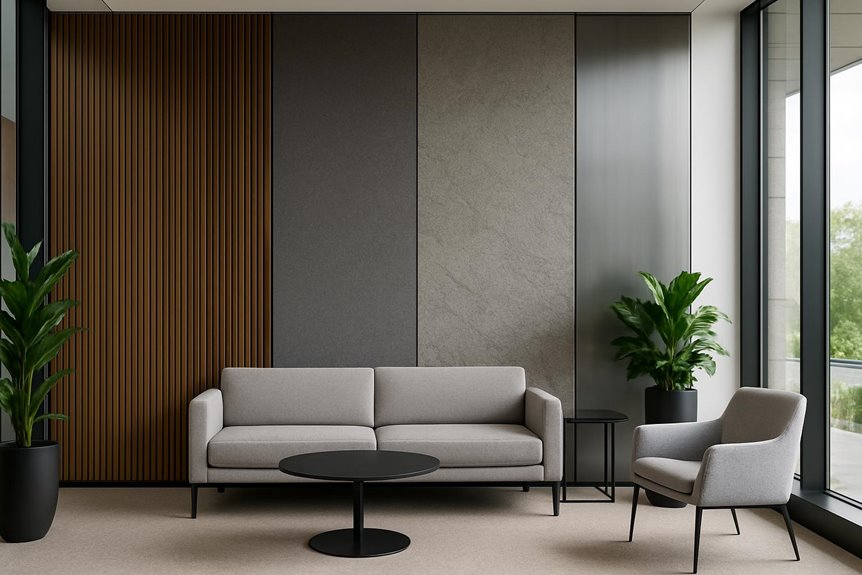
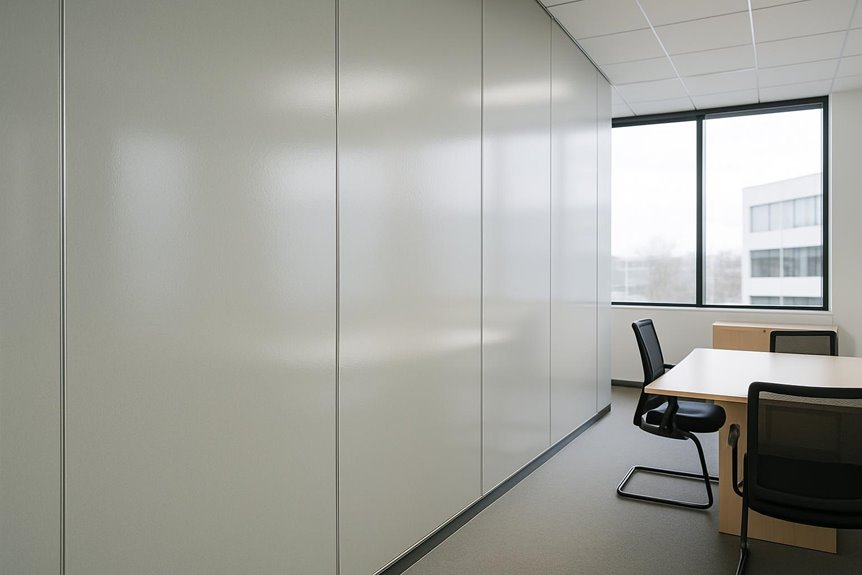
When evaluating fiber cement board for interior walls in commercial projects, key factors such as durability, fire resistance, and moisture protection stand out. Despite higher initial costs and installation complexity, its long-term benefits in high-traffic and moisture-prone areas make it a compelling option. Comparing it with alternatives like drywall and PVC panels reveals distinct advantages and limitations. Understanding these intricacies is essential to determining its suitability for specific project needs. But when is it truly the best choice?
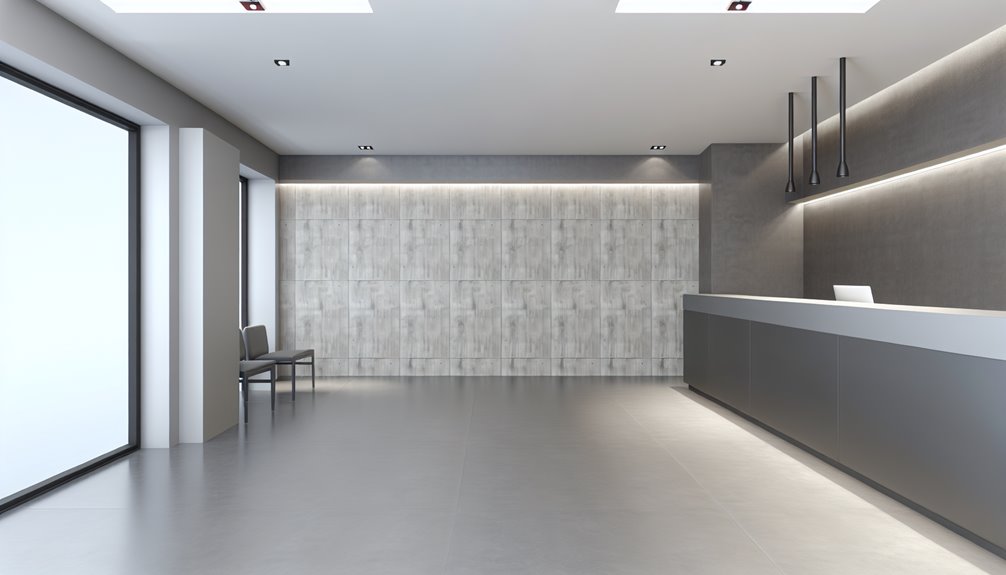
Although traditionally utilized for exterior applications, fiber cement board is increasingly being adopted for interior wall systems due to its unique blend of durability, versatility, and safety features.
This shift is driven by the need for durable interior wall boards that withstand wear and tear, offering a robust alternative to traditional materials. Its composition guarantees a non-combustible surface, enhancing safety in residential and commercial spaces.
The moisture-resistant wall board quality is particularly appealing for areas prone to humidity, reducing the risk of mold and decay.
Additionally, fiber cement board for interior walls provides a versatile aesthetic, mimicking wood or masonry finishes without the associated maintenance burdens.
These attributes make it a compelling choice for modern interior design challenges.
Fiber cement board excels in various indoor applications due to its durability and resistance to moisture.
It is particularly effective in corridors and circulation areas where high traffic demands robust materials, as well as in wet-adjacent interior zones where moisture resistance is vital.
Additionally, its low maintenance requirements make it ideal for public and shared interiors and long-life interior fit-outs, where enduring performance is essential.
Corridors and circulation zones place consistent stress on wall surfaces due to continuous movement and repeated contact. In these areas, material selection is driven by impact resistance, fire performance, and maintenance requirements, rather than appearance alone.
Fiber cement board performs well under these conditions. Its dense, rigid composition helps resist dents, abrasion, and surface wear caused by trolleys, luggage, and service equipment. When used within fire-rated wall assemblies, it also supports compliance in circulation spaces where safety requirements are stricter.
Compared with lighter wall boards, fiber cement reduces the frequency of repairs and repainting, making it a practical choice for interiors expected to remain in service without regular refurbishment.
| Performance Factor | Practical Outcome | Typical Use |
|---|---|---|
| Impact resistance | Minimises dents and surface damage | Corridors and passageways |
| Fire performance | Supports fire-rated wall assemblies | Circulation routes |
| Maintenance demand | Reduces repair and repaint cycles | High-use interior zones |
In high-use interiors, material stability and reduced maintenance often outweigh initial cost considerations.
Given the unique challenges presented by moisture-rich environments, fiber cement board emerges as an ideal material for wet-adjacent interior zones. Bathrooms, utility rooms, and cleaning areas benefit from its water-resistant properties.
The design of fiber cement board for indoor use guarantees durability and longevity, making it a practical choice for environments where moisture control is critical. Unlike traditional materials, fiber cement wall board resists mold and mildew, providing a robust barrier against water damage.
Decorative fiber cement panels offer aesthetic versatility, allowing seamless integration with various design themes while maintaining functionality. These panels provide a strategic solution for commercial projects, balancing aesthetic appeal with the technical demands of wet-adjacent spaces, ultimately assuring a controlled, resilient environment.
While often overlooked, public and shared interiors such as reception zones, stair cores, lift lobbies, and back-of-house service spaces benefit greatly from the strategic use of fiber cement board.
These areas demand materials that balance aesthetics with durability, making interior fiber cement panels an ideal choice. Unlike drywall, fiber cement offers enhanced resilience and moisture resistance, vital for high-traffic environments.
Ultimately, fiber cement vs drywall interior solutions provide longevity and performance in shared commercial spaces.
Fiber cement board excels in long-life interior fit-outs, offering unmatched durability and resilience in environments where shutdowns for repairs are costly. Its robust construction makes it ideal for spaces expected to remain in service for years without major refurbishment.
The board's resistance to rot, pests, and fire contributes to its longevity, ensuring continuous operation without the need for frequent maintenance.
Moreover, fiber cement's non-combustible nature adds an essential safety layer, aligning with stringent building codes. Its ability to mimic traditional materials like wood and stucco without compromising on durability positions it as a preferred choice for commercial projects.
This minimizes potential disruptions, providing a stable, long-lasting solution for high-demand interior applications, emphasizing efficiency and sustainability in commercial settings.
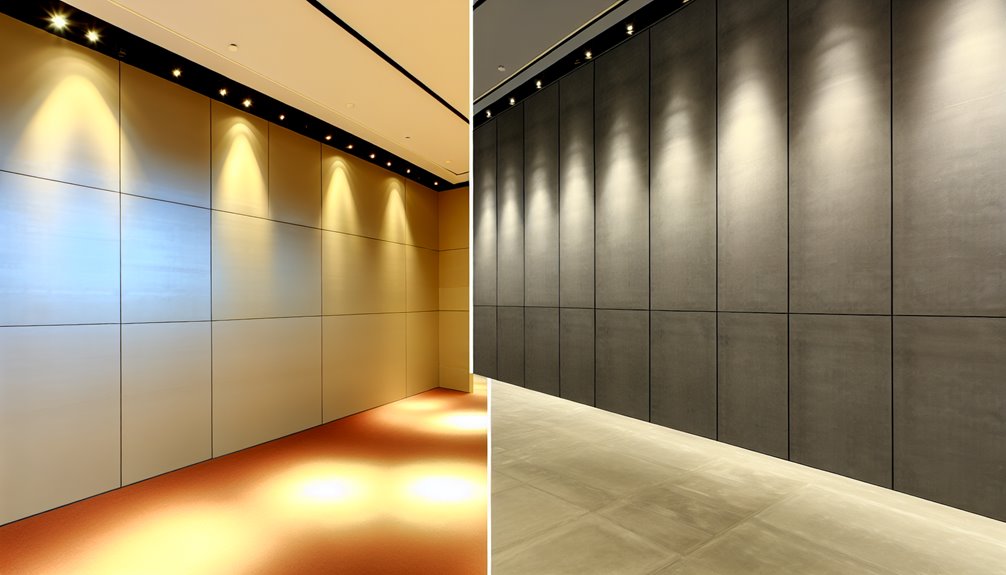
Although both fiber cement board and drywall serve as viable options for interior walls, their suitability largely hinges on specific environmental conditions and performance requirements.
Fiber cement board is particularly advantageous in high-moisture environments and demanding interiors due to its enhanced durability and moisture tolerance. In contrast, drywall is preferred for its lower initial cost and ease of installation in standard, low-wear areas.
Here are four considerations:
Selecting the right material depends on operational needs.
The choice between fiber cement board and HPL wall panels is defined by performance requirements versus surface finish expectations. These materials are often used in the same project, but typically serve different roles within the same interior environment.
Fiber cement board provides a rigid, mineral-based surface with strong resistance to impact, abrasion, and long-term wear. It is commonly used where wall systems are exposed to frequent contact or require stable performance over time. HPL wall panels, by contrast, are designed primarily for decorative finishes, offering consistent colour, texture, and surface detailing across large areas.
| Feature | Fiber Cement Board | HPL Wall Panels |
|---|---|---|
| Core material | Mineral-based board | Laminated decorative surface |
| Surface durability | High impact and wear resistance | Moderate impact resistance |
| Finish options | Limited or coating-dependent | Wide range of decorative finishes |
| Typical use | High-wear or service areas | Visible decorative wall surfaces |
In practice, selection is rarely about choosing one over the other entirely. Fiber cement is often specified in high-impact or service zones, while HPL is used in visible areas where finish quality is the priority. The most effective approach aligns each material with the conditions it is expected to perform.
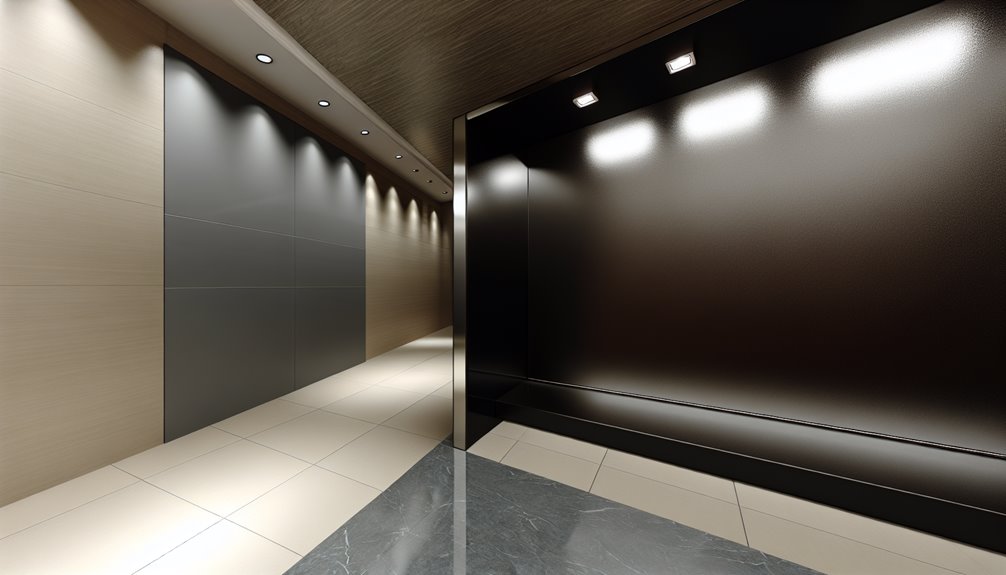
When evaluating wall panel options for interior applications, understanding the distinctions between fiber cement board and PVC wall panels is essential. Fiber cement boards offer superior fire resistance and robustness, making them suitable for demanding environments. Conversely, PVC panels are lightweight and cost-effective, ideal for light-duty applications.
Each option presents unique benefits, requiring careful consideration based on specific project needs.
Fiber cement interior systems have evolved considerably, offering a range of finishes that cater to both aesthetic and functional demands.
Modern options extend beyond the traditional plain grey boards, providing smooth paint-ready surfaces, concrete-look finishes, and stone-inspired textures. Grooved linear designs and large-format minimalist panels further diversify the palette, allowing for tailored applications in commercial projects.
Factory-coated decorative surfaces enhance durability and reduce on-site labor, ensuring precision in finishing. These varied options enable fiber cement to serve as both a substrate and a finished wall surface, adaptable to specific project requirements.
The availability of these finishes empowers designers and builders to achieve desired visual effects while maintaining the material's inherent durability and versatility.
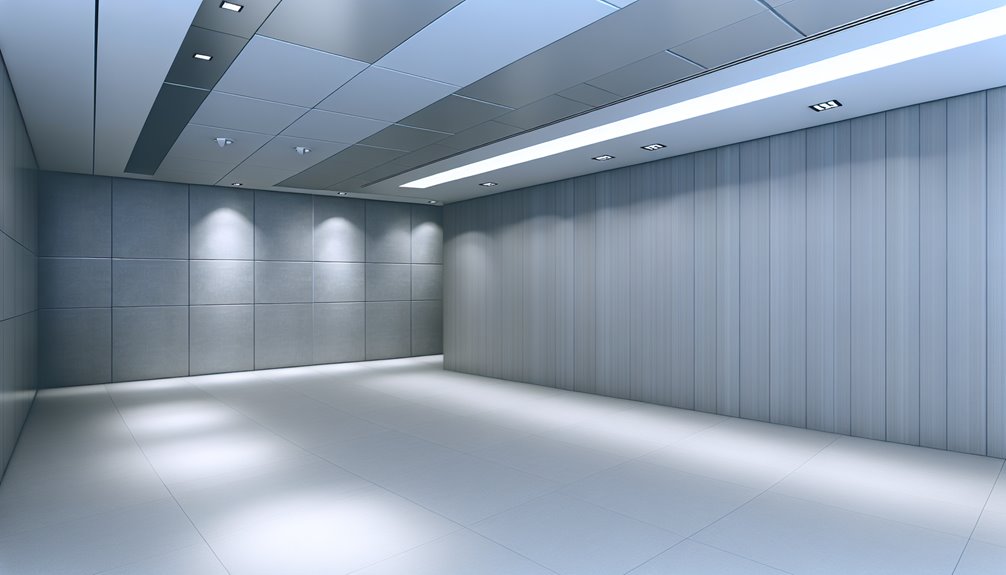
Modern fiber cement interior systems, with their diverse finishes, seamlessly integrate aesthetic appeal and functional performance.
These systems offer distinct advantages in commercial settings:
These attributes make fiber cement boards a robust choice for demanding commercial projects.
Fiber cement boards for interior walls typically range from 1/4 inch to 1/2 inch in thickness, providing flexibility for various structural requirements.
The installation methods vary based on the application, including options such as direct attachment to studs or mounting on a substrate for enhanced support.
Each approach requires careful consideration of factors like load capacity and thermal expansion to guarantee peak performance and longevity.
When considering the installation of fiber cement boards for interior walls, understanding the typical thickness ranges is essential for selecting the right option for each application.
The choice of thickness depends on the specific requirements of the commercial project:
Each thickness serves distinct purposes, ensuring that the fiber cement board meets the demands of the environment in which it is installed.
Selecting the appropriate installation method for fiber cement boards involves analyzing specific project requirements and environmental conditions.
The choice between framed drywall systems, mechanical fixing to battens or metal framing, and concealed fixing systems necessitates careful consideration of structural needs.
Adhesive-assisted decorative installations may be suitable where aesthetics and surface continuity are priorities.
Correct board thickness is essential, matching the span, impact level, and finish requirements to guarantee structural integrity and performance.
Each method offers distinct advantages; framed systems provide robust support, while concealed systems enhance visual appeal.
Mechanical fixings offer stability in high-impact areas.
Adhering to these guidelines guarantees that fiber cement boards meet both functional and aesthetic demands in commercial interior applications.
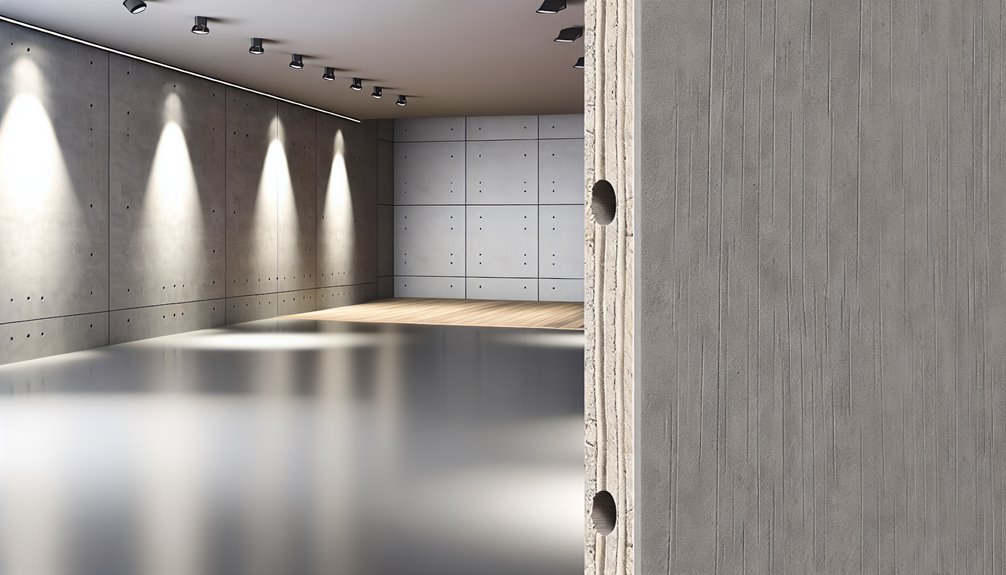
While evaluating wall board options, it’s crucial to take into account long-term costs beyond the initial purchase price.
Fiber cement boards, though initially more expensive, often reduce overall expenditure due to their durability and low maintenance requirements. In contrast, lower-cost boards might incur hidden expenses over time.
These include:
Fiber cement's robust nature minimizes these recurring costs, offering stronger value in the long term by reducing the frequency and impact of maintenance activities.
Why might fiber cement board not be the best choice for certain applications? It becomes evident when the lowest upfront cost is paramount.
Fiber cement's complex manufacturing and installation increase expenses, making it unsuitable for budget-focused projects.
Fiber cement's intricate production and setup elevate costs, rendering it unfit for budget-driven endeavors.
In addition, in scenarios requiring ultra-light temporary fit-outs, its heavier nature poses a challenge, necessitating alternate materials.
Projects prioritizing premium natural timber aesthetics should also look elsewhere, as fiber cement cannot replicate the authentic appeal of timber.
Moreover, when a very fast installation of lightweight partition systems suffices, fiber cement's demanding installation process becomes a hindrance.
Ultimately, selecting the correct material hinges on aligning performance priorities with specific project requirements, ensuring the best outcomes.
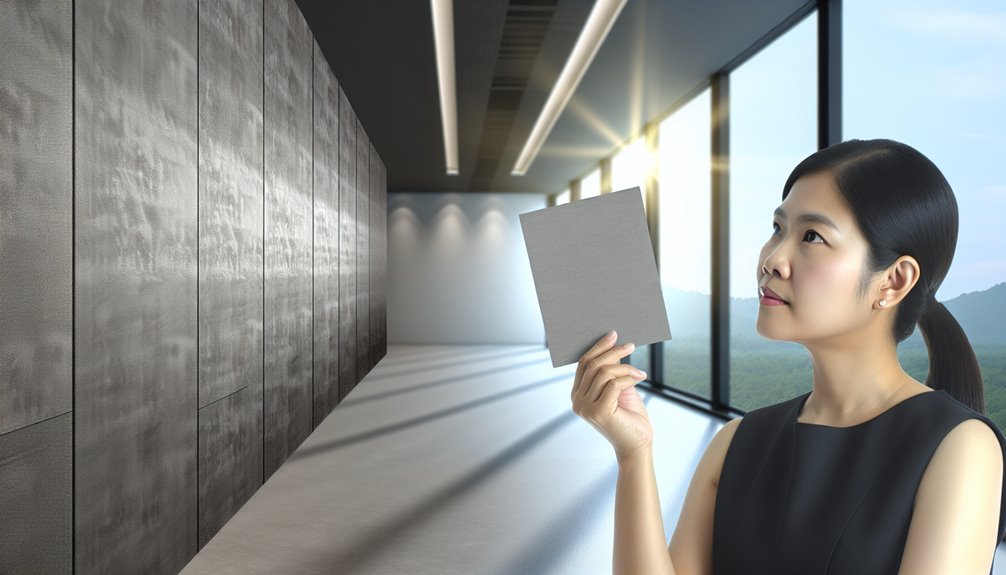
Evaluating the appropriate interior wall board involves a thorough assessment of specific project requirements. Selecting the right board is essential to meet functional and aesthetic needs.
Key considerations include:
These factors typically guide the selection process more effectively than merely comparing brands, assuring a successful and sustainable installation.
Related Article: Cement Board vs Fibre Cement Board
Fiber cement boards indoors impact the environment through energy-intensive production and silica dust risks. Their durability and low maintenance reduce long-term waste, yet installation challenges and potential moisture issues necessitate careful consideration for eco-conscious commercial applications.
Fiber cement board's indoor air quality impact is akin to a double-edged sword. While its non-combustible nature prevents harmful emissions, cutting generates silica dust, necessitating stringent controls and professional installation to guarantee a safe environment.
Fiber cement board finishes are limited by their inherent textures and colors. While versatile, they may lack the rich, varied aesthetics of natural materials. Design flexibility can be constrained, necessitating precise planning to achieve desired visual outcomes.
Coincidentally, fiber cement boards have moderate acoustic properties, offering fair sound insulation. Their density reduces noise transmission, but without specialized treatment, they don't match dedicated acoustic panels. Evaluating needs against performance guarantees ideal project outcomes for discerning clients.
Fiber cement boards can be customized to fit various design needs through cutting, painting, and texturing. Their adaptability allows for precise architectural detailing, offering a balance between aesthetic flexibility and structural integrity in commercial applications.
In the grand theater of commercial construction, fiber cement boards take the stage as the unsung heroes, delivering durability and low maintenance in exchange for their initial high cost. Ironically, while they stand up to fire and moisture, they might not always be the star performer on every project. With careful analysis and a discerning eye, the choice becomes clear—sometimes, the most formidable solution is concealed in the humble sophistication of fiber cement.