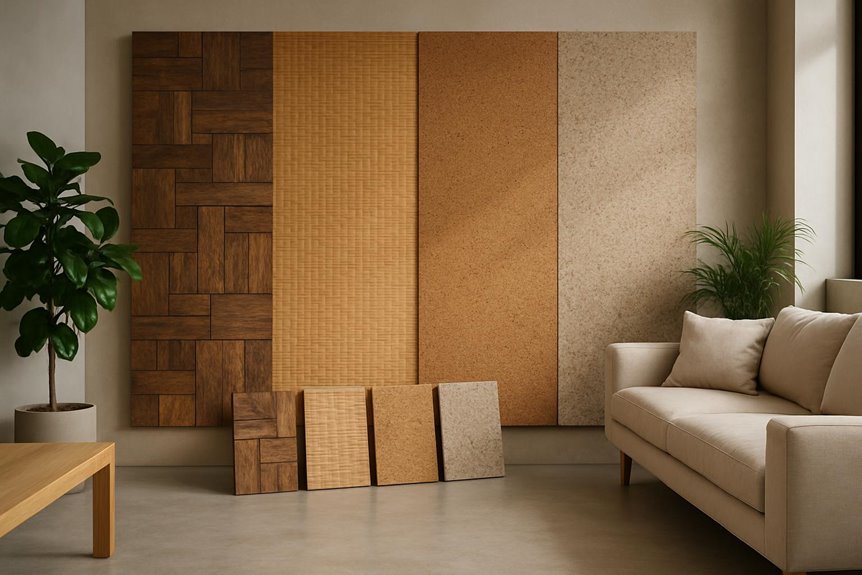
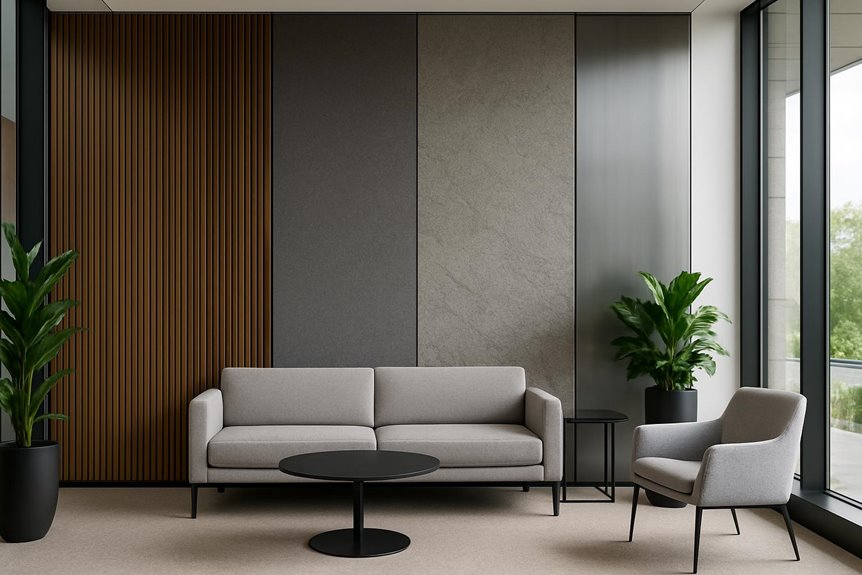
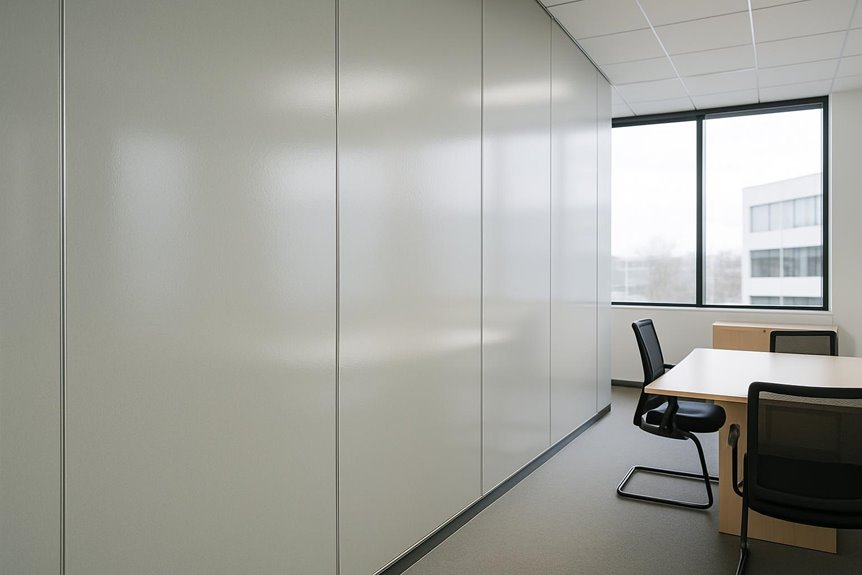
Eco-friendly wall panels are assessed by more than surface appearance. Material origin, recycled content, VOC emissions, durability, and end-of-life options all affect their true environmental value. Reclaimed wood, bamboo, recycled metal, and low-emission composites can reduce impacts while improving acoustics and indoor air quality. Selection depends on moisture exposure, maintenance needs, documentation, and project certification goals. The key question is which panel performs sustainably across its full service life.
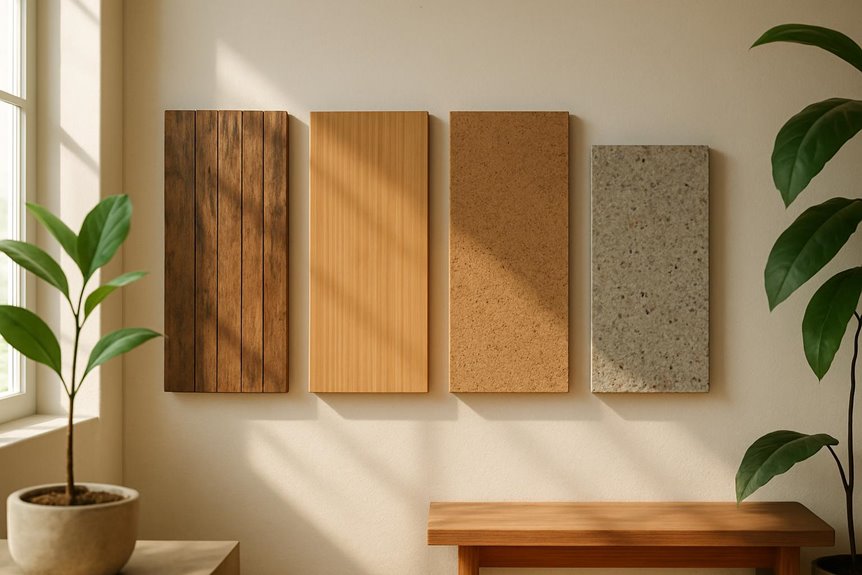
Evaluate an eco-friendly wall panel by looking beyond a single “green” claim and checking the product’s full material, manufacturing, use, and end-of-life profile.
Credible eco-friendly wall panels should contain recycled or renewable content, use responsibly sourced raw materials, and document low VOC and formaldehyde emissions.
True eco-friendly panels pair recycled or renewable content with responsible sourcing and verified low-emission performance.
Manufacturing should minimize energy, water, and material waste, while installation should reduce offcuts and unnecessary adhesives.
In use, sustainable wall panels should offer long service life, moisture or wear resistance where needed, and low maintenance without harsh cleaners.
Better products are also repairable, replaceable in sections, or designed for reuse or recycling after removal.
“Eco-friendly” should thus be supported by measurable data, certifications, or technical documentation rather than broad marketing language alone.
This approach enables fair comparison across products.
Eco-friendly wall panels are available in several material classes, each with different sustainability, durability, and performance profiles.
Common options include recycled metal, fiber cement, HPL, WPC, and bamboo wall panels.
Selection typically depends on recycled content, moisture resistance, maintenance needs, indoor air quality impact, and intended application.
Consider recycled metal wall panels when a project requires a durable, low-maintenance surface with a long service life. Aluminium and steel panels can include post-consumer or post-industrial scrap, making them practical recycled wall panels for commercial, residential, and exterior applications.
Their strength helps resist impact, weathering, and dimensional change, reducing replacement frequency over the building lifecycle.
As sustainable wall materials, metal panels also offer straightforward maintenance: periodic cleaning and inspection are usually sufficient when coatings and fasteners are correctly specified.
At end of life, aluminium and steel are commonly recyclable, which can support material recovery rather than disposal. However, recycled content should be verified through manufacturer documentation, environmental product declarations, or certifications.
It should not be assumed from the material category alone. Accurate sourcing data improves sustainability assessment.
When durability is a primary selection criterion, fiber cement wall panels can be a practical option for eco-conscious projects because their long service life helps reduce material turnover. Made from cement, cellulose fibers, and mineral fillers, these panels support stable performance in demanding interiors and sheltered exterior applications.
Key advantages include:
For environmentally friendly wall panels, fiber cement should be evaluated across its full lifecycle. Cement content and manufacturing energy can increase embodied carbon, so sourcing, product certifications, and expected service life matter.
Used appropriately, it can complement sustainable interior wall panels in resilient design strategies.
HPL Wall Panels
HPL wall panels are a strong option where a durable decorative surface and long service life are priorities. High-pressure laminate offers good resistance to impact, abrasion, stains, and repeated cleaning, helping reduce the need for frequent replacement or refinishing.
That durability can be one of HPL’s main sustainability advantages. Extending the replacement cycle can reduce material consumption, installation waste, transport, and disruption over the life of the interior.
Some HPL products are also available with certified paper or fibre inputs and low-emission formulations, although these claims should be verified through supplier documentation.
| Selection factor | Practical value | Sustainability link |
|---|---|---|
| Wear resistance | Suitable for high-traffic corridors and public interiors | Fewer replacements |
| Stable decorative finish | Maintains appearance over longer fit-out cycles | Reduced refinishing |
| Certified fibre inputs | Supports documented raw-material sourcing | Improved material traceability |
| Low VOC emissions | Better suited to occupied interiors | Supports indoor air quality goals |
For eco-friendly decorative wall panels, HPL can provide solid colours, woodgrains, stone effects, and custom patterns while reducing reliance on repeated painting or surface renewal.
Where HPL prioritises a durable laminate surface, WPC wall panels combine recycled wood fibre with polymer binders to create a moisture-resistant, dimensionally stable cladding option for interiors and some exterior applications.
Their composite structure uses wood residues efficiently while recycled polymer content can reduce dependence on virgin plastic.
Performance benefits typically include resistance to rot, insects, abrasion, and routine moisture exposure, making WPC practical for high-use rooms.
As green wall panels, WPC products should be compared by manufacturer data, because recycled content and end-of-life recycling routes vary widely across suppliers and regions.
Because bamboo reaches harvestable maturity far faster than most hardwoods, bamboo wall panels can offer strong sustainability credentials when the product is responsibly manufactured. Bamboo’s rapid renewability reduces pressure on slower-growing timber resources, while its linear grain provides a natural, contemporary visual appearance suitable for residential and commercial interiors.
Engineered bamboo veneers or laminated panels can also use material efficiently, producing broad, stable surfaces from smaller culms.
However, environmental value depends on the full specification. Buyers should assess adhesive systems, especially formaldehyde content and volatile organic compound emissions. Surface coatings should be low-emission, durable, and appropriate for expected moisture, abrasion, and cleaning conditions.
Fire, water, and scratch resistance vary by product construction. Long service life is essential, because premature replacement can offset renewable material benefits over time.
Reclaimed wood wall panels repurpose existing timber from sources such as old barns, factories, flooring, pallets, or deconstructed buildings, reducing demand for virgin wood while preserving material that might otherwise be discarded.
Their environmental value comes from material reuse, lower extraction pressure on forests, and extended service life for structurally suitable timber. Visually, reclaimed boards provide distinctive natural finishes, including weathering, saw marks, knots, nail holes, and variable grain.
Key selection criteria include:
Maintenance typically involves dusting, controlled humidity, and periodic resealing where traffic or sunlight is significant.
Many recycled PET acoustic wall panels function as both a decorative finish and a sound-control layer, using compressed polyester fibers—often sourced partly or largely from post-consumer plastic bottles—to create lightweight panels that reduce echo while adding color, texture, or geometric depth to interiors.
Their porous fiber structure dissipates sound energy, making them useful in offices, classrooms, studios, corridors, and open-plan homes.
Selection should verify the recycled PET percentage, since higher documented content generally supports stronger circular-material claims.
Fire classification is critical; panels should meet the code required for the room and installation height.
Low or no-VOC emissions data helps confirm suitability for occupied interiors.
End-of-life options also matter: some panels can be mechanically recycled, returned through take-back programs, or reused if installed reversibly.
How do the main eco-friendly wall panel materials differ in real use? Performance depends on density, binder chemistry, surface finish, and installation environment.
WPC suits damp or high-wear areas because wood fiber is stabilized by plastic, improving resistance to swelling, insects, and routine abrasion.
WPC performs well in damp, busy spaces where swelling resistance and easy upkeep matter.
Bamboo veneer offers a rapidly renewable face material with good hardness and a warm appearance, but substrate quality affects durability.
Reclaimed wood provides strong visual character and useful acoustic diffusion, though dimensional variation requires careful fitting.
Selection should match room conditions, expected traffic, code needs.
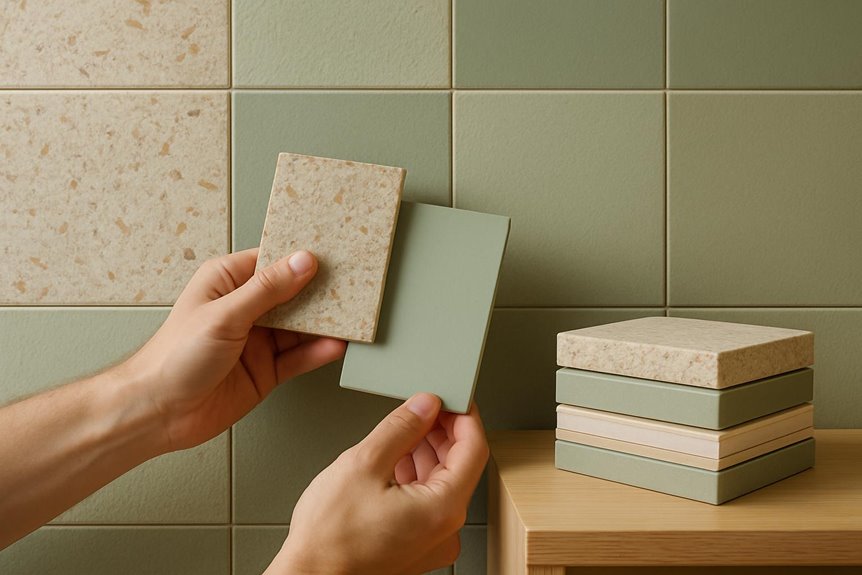
Clarity matters because recycled content and recyclability describe different stages of a wall panel’s life cycle.
Recycled content means the proportion of recovered material used during manufacture, such as reclaimed wood fiber, recycled plastic, or reused backing material.
Recyclability refers to whether the finished panel can realistically be collected, separated, and processed into new material after service.
These qualities do not always align. A panel may contain high recycled content yet be difficult to recycle if binders, coatings, or fused layers prevent separation.
Another panel may contain little recycled material but be readily recyclable through established waste streams.
Some products deliver both advantages; others deliver neither.
Mixed-material panels require closer review because recyclable components can become impractical to recover once laminated, bonded, or combined with incompatible materials.
Low-VOC wall panels matter because indoor environmental quality depends not only on recycled content but also on chemical emissions from panels and related products.
VOC and formaldehyde emissions can originate from adhesives, resins, coatings, printing inks, sealants, and composite substrates.
Installation materials should be evaluated alongside the panels to reduce total indoor emissions after occupancy.
Many occupied interiors contain large surface areas of wall paneling, so product emissions can materially affect indoor air quality over time. VOCs can be released from resins, coatings, adhesives, and surface finishes, especially after installation and during warm, poorly ventilated conditions.
Selecting low-VOC panels helps reduce chemical loading in homes, offices, schools, and healthcare spaces where occupants spend extended periods.
Practical evaluation should consider:
Lower-emission products support healthier interiors without compromising durability, moisture resistance, acoustic value, or design flexibility.
They are especially relevant for bedrooms, nurseries, workspaces, and renovations in occupied buildings where exposure begins immediately.
Some eco-friendly wall panels require closer emissions review because formaldehyde is particularly relevant in products containing wood fibres, resins, adhesives, or composite cores.
Composite products such as MDF, wood-fibre panels, and some WPC or veneer-backed boards may use binders that can release formaldehyde in small amounts over time.
Evaluation should focus on declared emissions performance, not marketing terms alone. Relevant indicators include compliance with recognized low-emission standards, published test data, and clear material disclosure from the manufacturer.
Lower-emitting panels support better indoor air quality, especially in bedrooms, offices, schools, and tightly sealed homes with limited ventilation.
Specifiers should compare products by emissions class, substrate type, and resin system. Choosing panels with verified low formaldehyde emissions reduces avoidable indoor pollutants while preserving durability, aesthetics, and sustainability goals over time.
Formaldehyde performance is only one part of indoor air quality evaluation; installation materials can also determine the final emissions profile of an eco-friendly wall panel system. A low-emission panel may perform poorly in practice if paired with high-VOC adhesives, mastics, primers, or sealants.
Selection should consequently address the assembly, not only the decorative surface.
Installers should follow manufacturer spread rates, curing times, and ventilation guidance. Excess adhesive increases off-gassing risk.
For projects prioritizing healthier interiors, documentation for every installation product should be reviewed before purchase.
Durability is a core sustainability metric because a wall panel that remains serviceable for longer reduces the need for replacement materials, transport, packaging, installation labour, refinishing, and disposal of construction waste.
Selection should consequently consider service-life performance, not only recycled content or low-impact sourcing. Impact resistance matters in corridors, commercial spaces, and homes with children or pets.
Service life matters: durable panels reduce damage, replacement cycles, and long-term environmental impact.
Scratch resistance helps preserve the surface without frequent repainting or coating. Moisture resistance is critical in kitchens, bathrooms, and humid climates, where swelling, staining, or mold risk can shorten useful life.
UV resistance is relevant near windows or outdoors, limiting fading and embrittlement. Cleaning durability also affects sustainability because panels that tolerate routine washing retain hygiene and appearance.
The lowest-impact material at installation may not be the lowest-impact option over decades.
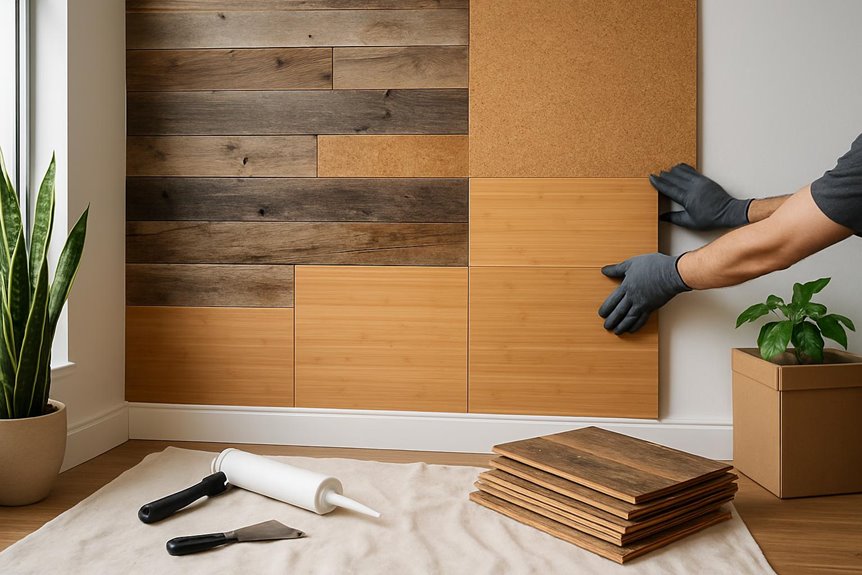
Installation methods influence a wall panel’s lifecycle impact through adhesive use, labor intensity, and material waste.
Dry installation and modular wall systems can reduce offcuts, simplify disassembly, and support local panel replacement when damage occurs.
This limits full-wall demolition and helps preserve the environmental value gained from durable, eco-friendly materials.
Choose dry installation to lower the environmental impact of wall upgrades from the start. Prefinished wall panels arrive with completed surfaces, so installers can reduce site-applied finishing steps that generate dust, wastewater, packaging, and offcuts.
This approach is especially relevant when comparing panel systems with traditional plaster-and-paint assemblies. Fewer wet trades also shorten installation time and reduce drying delays, which can limit energy use for ventilation or temporary heating.
Key avoided processes include:
For sustainable projects, dry installation supports cleaner job sites, more predictable material use, and lower disruption during interior upgrades.
Beyond dry installation, replacement strategy also affects the lifecycle footprint of eco-friendly wall panels. Systems that permit local panel replacement reduce material waste because a scratched, stained, swollen, or impact-damaged section can be removed without stripping the complete wall finish.
This matters in high-use areas such as corridors, kitchens, bathrooms, retail interiors, and offices, where isolated damage is more likely than total failure.
From a sustainability perspective, localized repair preserves undamaged panels, backing materials, adhesives, trims, and labor already invested in the installation. It also lowers disposal volume and limits demand for new replacement stock.
During specification, panel size, fastening method, edge detailing, and access to spare panels should be reviewed. A practical maintenance plan should identify how individual units can be removed, matched, and reinstalled with minimal disturbance.
Where layouts are expected to change, modular wall systems can improve the sustainability profile of eco-friendly wall panels by making installation, access, and replacement less destructive.
Unlike fixed assemblies, demountable systems use repeatable connections that allow panels and supporting components to be removed with limited damage to adjacent finishes. This matters in offices, retail interiors, schools, and multifamily spaces where services or room functions may change.
Key sustainability advantages include:
For best results, designers should verify fastening methods, panel compatibility, fire and acoustic ratings, and availability of replacement components over time.
Plan panel dimensions and layouts early to reduce cutting, offcuts, and replacement waste during installation. In eco-friendly wall panel projects, waste is strongly affected by how panel sizes align with wall heights, openings, corners, and service penetrations. A layout that coordinates seams with existing dimensions can reduce saw cuts and limit unusable remnants.
Material selection should also account for replacement patterns. Durable WPC, PVC, bamboo veneer, reclaimed wood, or acoustic panels may lower waste when they resist moisture, scratches, fading, or deformation in the intended room.
Large-format panels can speed coverage, but they should be specified only when wall geometry supports efficient use. Installers can improve sustainability by ordering accurate quantities, retaining usable offcuts for small areas, and choosing systems that allow selective panel replacement rather than full-wall removal.
A credible eco-friendly wall panel specification should be supported by documentation that verifies environmental claims, material safety, and sourcing practices. Buyers should request evidence before accepting terms such as recycled, low-emission, or responsibly sourced.
Key records help compare WPC, bamboo, PVC, MDF, reclaimed wood, and composite panels on measurable criteria.
Measurable documentation turns broad environmental claims into comparable panel selection criteria.
Material composition data should identify binders, plastics, coatings, additives, and wood fiber sources.
Responsible sourcing records should confirm certified, reclaimed, rapidly renewable, or traceable inputs.
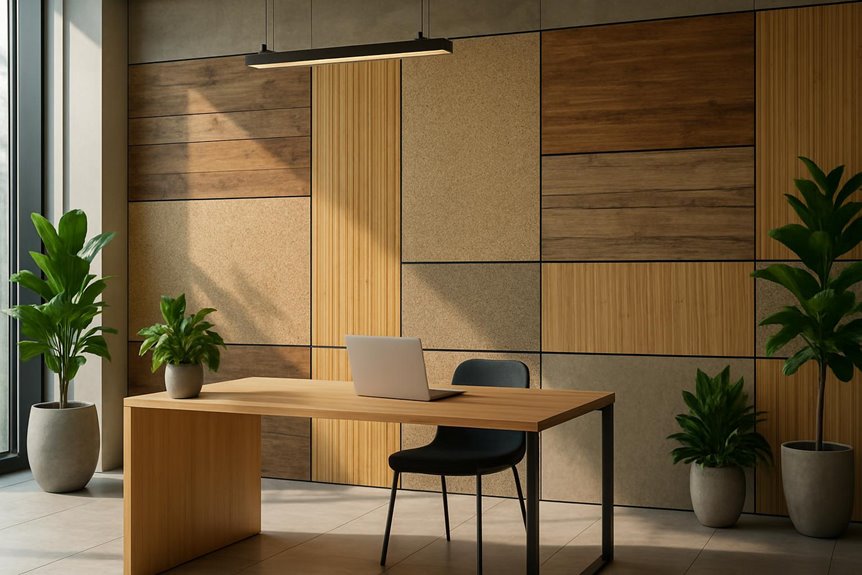
How can eco-friendly wall panels support LEED or BREEAM goals without guaranteeing certification? They can provide documented product attributes that align with specific project criteria. A panel alone does not make a building LEED- or BREEAM-certified, and no credit should be assumed without checking the rating system version, project scope, and evidence requirements.
Relevant documentation may support categories linked to material transparency, responsible sourcing, recycled content, low-emitting materials, environmental product declarations, construction waste reduction, and lifecycle performance.
For example, WPC panels with recycled plastic content, reclaimed wood panels, or low-emission bamboo-based panels may be useful when their claims are verified through supplier data, certificates, or declarations.
Project teams should treat wall panels as contributing components within a wider compliance strategy, not as standalone certification solutions.
When selecting eco-friendly wall panels, the decision should be based on application, material composition, verified environmental evidence, service life, maintenance needs, and end-of-life options.
Interior and exterior systems face different moisture, UV, impact, and cleaning conditions, so suitability must be confirmed before design approval.
Maintenance should also be quantified.
Panels requiring repainting, recoating, specialist cleaning, or frequent repair may reduce sustainability benefits.
Replacement planning should confirm removability, component separation, reuse potential, and realistic recycling access.
Yes. Many eco-friendly wall panels can be painted or refinished, depending on material and surface coating. Bamboo, MDF, and wood accept finishes; WPC, PVC, or UV-coated panels require sanding, primer, and manufacturer-approved products.
Pet-safe panels can be suitable when selected sensibly: choose low-VOC, non-toxic finishes, smooth sealed surfaces, and moisture-resistant WPC, bamboo, or PVC. They resist scratches, clean easily, and reduce odors; avoid splintering reclaimed wood.
Eco-friendly wall panels should be dusted regularly, wiped with a damp microfiber cloth, and cleaned using mild, non-abrasive soap. Heavier moisture, harsh chemicals, and abrasive pads should be avoided to protect finishes and structural integrity.
Yes. Wall panels can be installed over existing tile or wallpaper if surfaces are flat, dry, clean, stable, and well-bonded. Loose tiles, peeling wallpaper, moisture, grease, or uneven areas require repair, removal, or proper preparation first.
Yes. Eco-friendly wall panels can improve acoustic comfort by absorbing and diffusing sound, especially fluted, textured, bamboo charcoal, WPC, or acoustic wood panels. They reduce echo, but full soundproofing requires insulation, sealing, and mass.
Eco-friendly wall panels should be selected using measurable factors such as material composition, recycled or renewable content, emissions, durability, maintenance, installation waste, and end-of-life options.
Rather than searching for one material that can be labelled the “most sustainable,” compare how different panel systems perform across the complete lifecycle and select the option that delivers the required wall performance with lower environmental impact.
Philigreen provides decorative wall panel solutions across metal, inorganic, HPL, PVC, and composite systems, allowing material and construction options to be evaluated according to both project performance and environmental objectives.