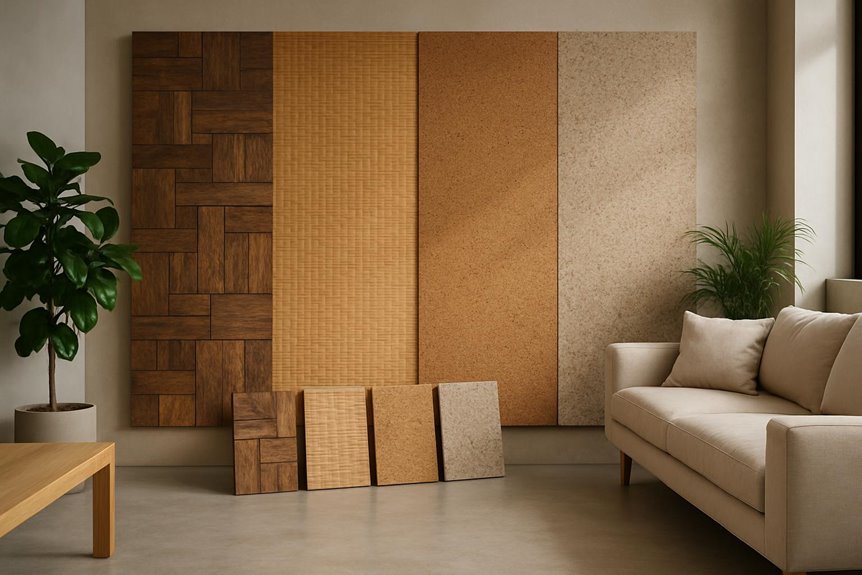
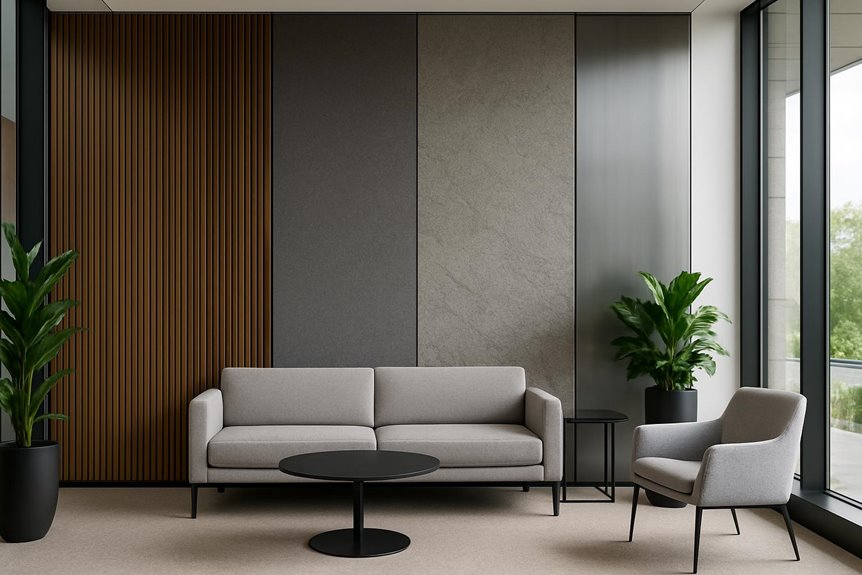
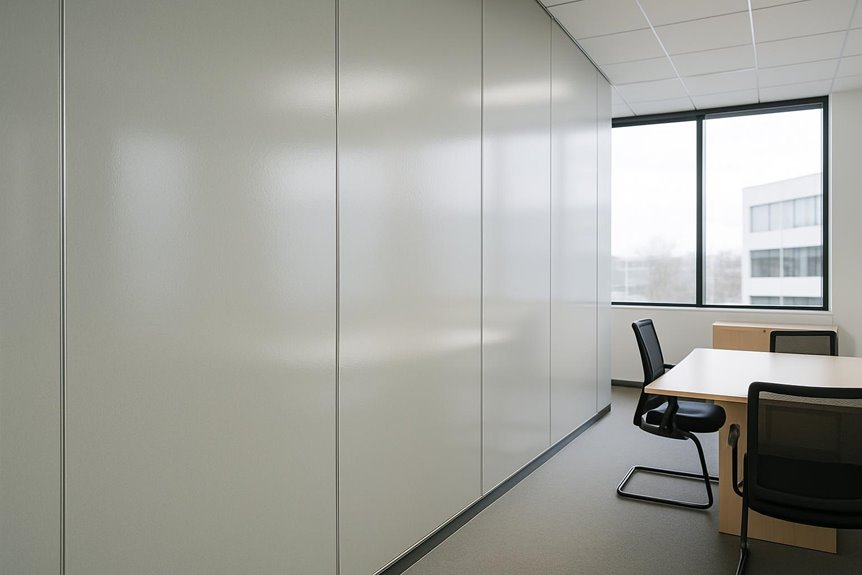
Selecting the right cleanroom wall panels involves evaluating material, core, and surface finish options to guarantee environmental control and compliance. Consider modular sandwich panels for flexibility and durability or HPL for chemical resistance. Core materials like aluminum honeycomb offer strength, while surface finishes like PVDF-coated steel guarantee resistance to harsh conditions. Joint design and compliance with industry standards enhance contamination control. Exploring these factors further will provide deeper insights into optimizing cleanroom performance.
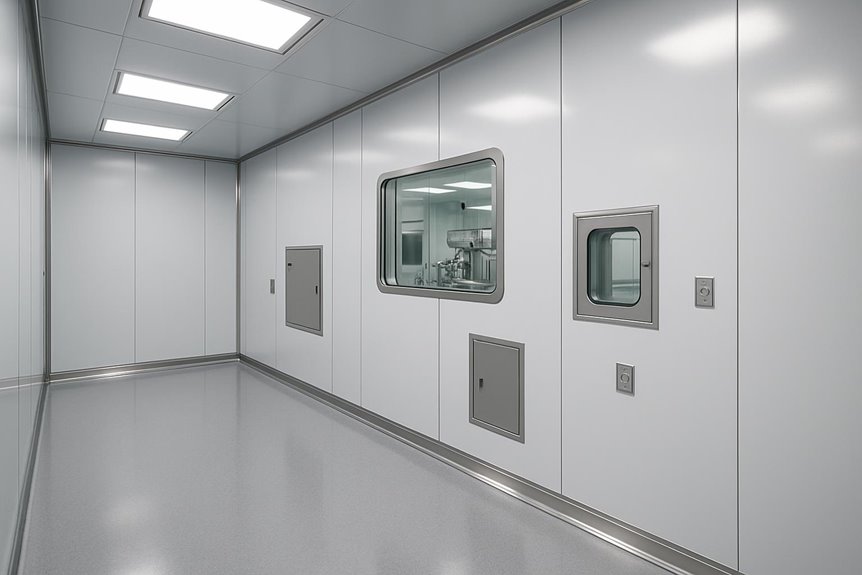
Cleanroom wall panels are integral components of a cleanroom's structure, designed to maintain stringent environmental controls. These panels form the core of a cleanroom wall system, ensuring the integrity and performance necessary for controlled environments.
Unlike decorative wall panels, cleanroom partition panels are engineered to support specific cleanliness and safety standards. They play a vital role in the cleanroom envelope, harmonizing with ceilings, flooring, and HVAC systems to create a cohesive and efficient space.
The selection of appropriate materials and designs is essential, as it directly affects the cleanroom's ability to meet regulatory requirements. With options like insulated metal, honeycomb, and rigid wall structures, cleanroom wall systems offer tailored solutions for diverse industry needs.
Although often overlooked, the wall systems in cleanrooms play a critical role in maintaining the environment's stringent requirements.
Modular cleanroom panels and cleanroom sandwich panels are pivotal in controlling contamination, air leakage, and pressure stability. These panels guarantee precise environmental conditions by minimizing potential contamination pathways and maintaining the integrity of the controlled atmosphere.
Their design facilitates easy cleaning, which is essential for compliance with regulatory standards. Additionally, the robustness of these systems reduces maintenance downtime, guaranteeing operational efficiency.
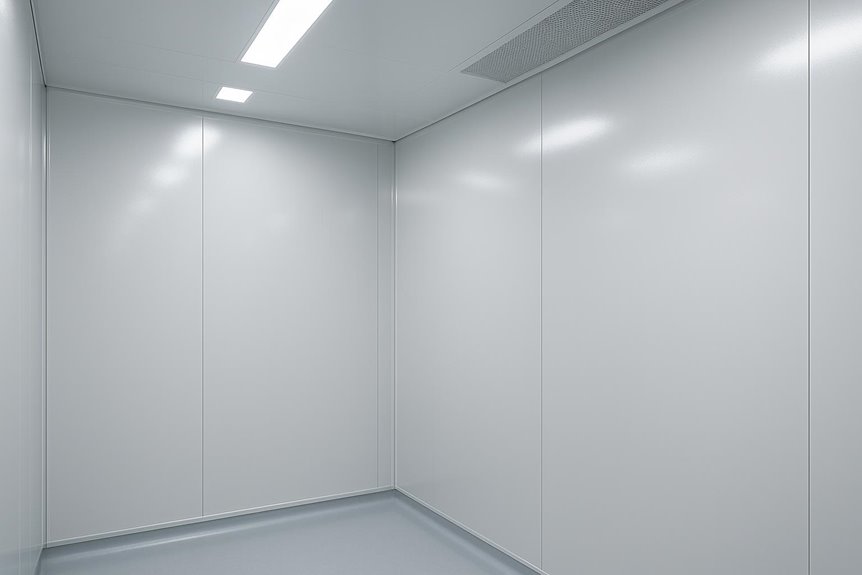
Cleanroom wall panel systems encompass a variety of options, each tailored to specific environmental needs and performance criteria.
Modular sandwich panels and flush metal wall panels offer robust construction and ease of installation, while HPL cleanroom panels provide high durability and resistance to chemicals.
Additionally, epoxy-coated drywall and glass partition systems offer versatile solutions for creating smooth, cleanable surfaces and enhancing visibility within controlled environments.
Modular sandwich panels offer a versatile solution for cleanroom wall systems, combining functionality and efficiency.
These hygienic wall panels are integral to cleanroom construction, providing superior thermal insulation and structural integrity. With steel skins and aluminum honeycomb cores, these panels guarantee robustness while maintaining a lightweight form.
They can be filled with materials such as rock wool, PIR, or EPS, each chosen for specific thermal and acoustic properties, enhancing the cleanroom's environmental control.
Their modular design allows for easy installation and flexibility in configuration, meeting stringent regulatory standards.
This adaptability makes them suitable for diverse applications, assuring that cleanroom environments remain compliant and efficient, thereby fulfilling the industry's demand for precision and reliability.
Flush Metal Wall Panels offer a sleek and efficient solution for cleanroom environments, characterized by their smooth, continuous surfaces and excellent cleanability.
These panels are ideal for pharmaceutical cleanroom panels, where maintaining a contamination-free environment is essential. The flush wall panel system guarantees easy cleaning and minimizes particle accumulation, which is vital for regulatory compliance and operational efficiency.
Their durable construction supports long-term performance while maintaining aesthetic appeal. By integrating these panels, facilities can achieve a seamless look that enhances both functionality and design.
The adaptability of flush metal wall panels allows for precise customization, aligning with specific cleanroom requirements. This makes them a preferred choice for environments demanding stringent cleanliness and reliability standards.
High-Pressure Laminate (HPL) panels emerge as a versatile option for cleanroom environments, offering superior chemical resistance essential for laboratories and healthcare facilities.
These panels align with GMP cleanroom wall panels standards, ensuring compliance with stringent cleanliness and safety requirements. HPL's smooth, non-porous surface aids in easy cleaning and maintenance, reducing contamination risks.
As part of an ISO cleanroom wall system, they provide reliable performance under varied conditions. Their adaptability makes them suitable for both new installations and retrofitting projects.
The durability and resistance of HPL panels to harsh chemicals make them a prudent choice for controlled environments, where maintaining high standards of hygiene and performance is paramount.
Their integration supports efficient cleanroom operations, meeting industry demands for control and reliability.
Epoxy-coated drywall stands out as a cost-effective solution for cleanroom wall panel systems, especially when refurbishment budgets are constrained. This option provides a moisture-resistant barrier, ensuring a smooth and cleanable surface vital for maintaining controlled environments.
The epoxy coating enhances durability, offering protection against wear and surface damage, essential for sustaining long-term performance.
Adopting epoxy-coated drywall allows for flexibility in design while meeting stringent industry standards. It supports efficient implementation and maintenance, aligning with the need for streamlined operations.
The choice of epoxy-coated drywall can reduce the complexity of installation and minimize downtime, maximizing resource allocation. This approach delivers a balance between cost efficiency and performance, offering a viable alternative for those managing budgetary limitations without compromising quality.
Glass partition systems in cleanroom environments offer a unique combination of transparency and functionality, facilitating enhanced observation and process monitoring. These systems provide a clear view of operations while maintaining necessary environmental controls.
Key features include:
Selecting glass partition systems enables precise management of cleanroom activities. Their design supports both efficiency and compliance, vital for maintaining controlled conditions.
This approach guarantees that facilities can achieve peak performance while meeting stringent industry standards.
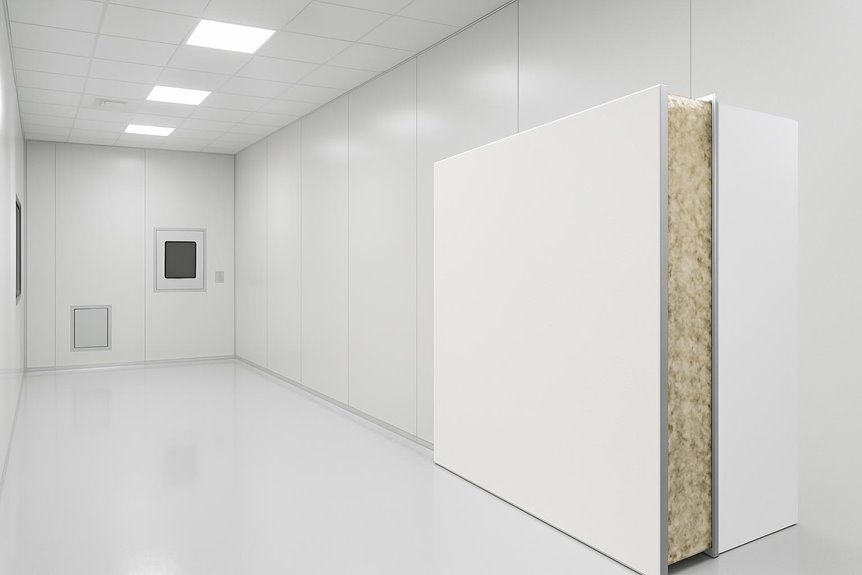
Cleanroom panels rely on advanced core materials to enhance performance and meet specific industry needs.
Aluminum honeycomb offers a high strength-to-weight ratio, providing robust support without adding unnecessary bulk.
Mineral wool excels in thermal and acoustic insulation, ideal for environments requiring strict temperature and sound control.
PIR (polyisocyanurate) is known for its superior thermal insulation, enhancing energy efficiency.
Paper honeycomb, while lightweight, guarantees structural stability for less demanding applications.
Magnesium board is fire-resistant and durable, offering enhanced safety in sensitive areas.
Steel framing provides unmatched durability and structural integrity, supporting long-term use in rigorous conditions.
Each material's unique advantages allow for tailored solutions, maximizing efficiency and compliance in controlled environments.
Surface finishes play an essential role in maintaining cleanroom hygiene by providing protective layers that enhance both cleanliness and durability. Selecting the right finish guarantees peak performance in controlled environments.
These finishes address critical aspects such as particle retention, chemical resistance, scratch resistance, and cleaning ease, guaranteeing a controlled environment's integrity.
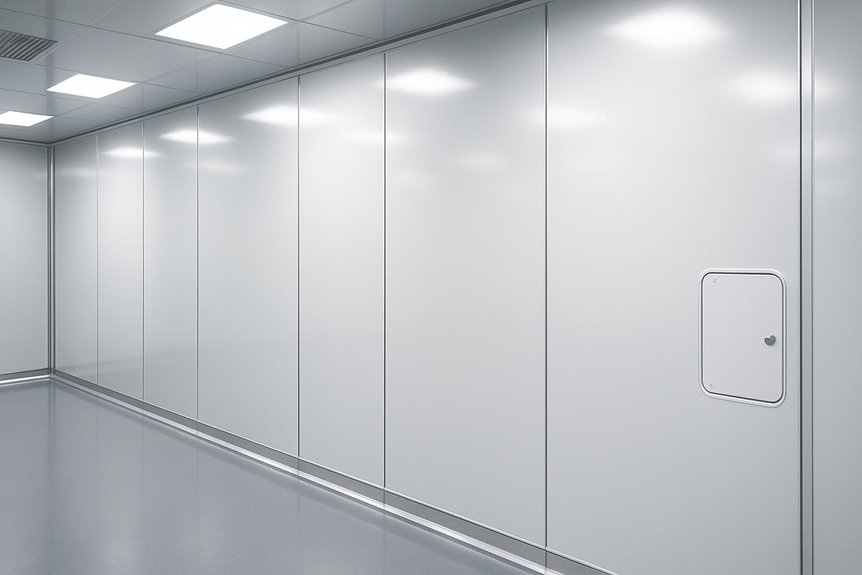
Selecting the appropriate surface finish is essential for cleanroom hygiene, yet engineers often emphasize the significance of joint design over panel material. Key considerations include flush joints, silicone joints, and concealed fixing. These elements guarantee a seamless, contamination-resistant environment.
Gasket systems and radius corners further enhance cleanliness by minimizing crevices where particles might accumulate. Proper floor changes and ceiling interfaces are critical for maintaining the integrity of controlled environments, preventing leaks and facilitating easy cleaning.
Engineers prioritize these aspects to achieve a high standard of performance, guaranteeing the cleanroom remains efficient and compliant with strict industry regulations. The focus on joint design reflects the need for precision and control in maintaining ideal cleanroom conditions.
When determining the most suitable wall panels for cleanroom applications, it’s vital to evaluate the specific environmental requirements of each industry. Different sectors demand distinct wall systems that align with their operational needs:
Each selection should be tailored to meet industry compliance and optimize cleanroom performance, making sure that the environment supports critical operational functions.
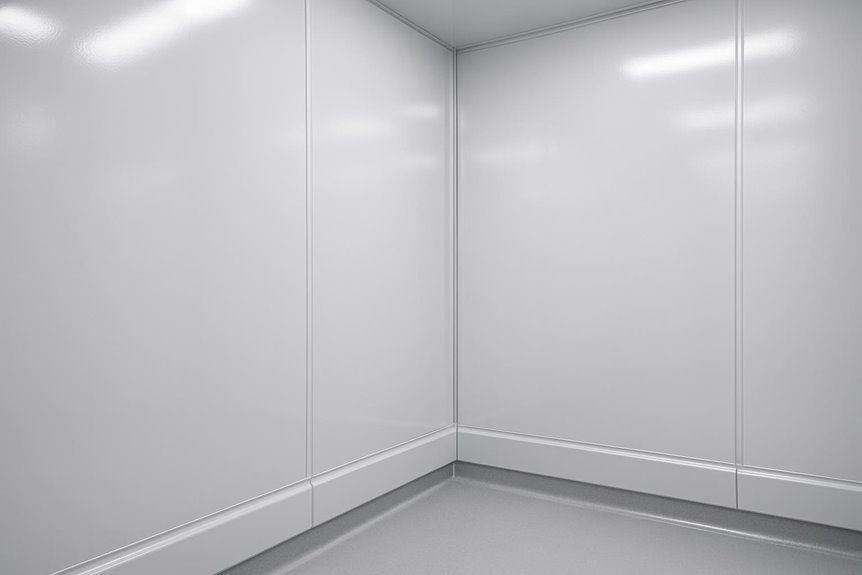
Although cleanroom environments must prioritize stringent cleanliness standards, the significance of fire, moisture, and chemical resistance cannot be overlooked. Fire ratings are essential to guarantee that wall panels can withstand high temperatures, minimizing risks in controlled environments.
Moisture resistance is equally important, as it prevents mold growth and maintains structural integrity. Additionally, resistance to disinfectants and chemicals is critical; it guarantees that walls can endure rigorous cleaning protocols without degrading.
Corrosion resistance further enhances durability, especially in environments exposed to harsh substances. Low VOC emissions are also a key consideration, as they contribute to air quality and safety.
These factors collectively enhance the longevity and effectiveness of cleanroom wall systems, ensuring compliance with regulatory standards and operational efficiency.
In the domain of cleanroom construction, understanding the distinctions between modular and traditional methods is essential for making informed decisions.
Modular panels offer significant advantages:
Conversely, traditional construction may involve longer installation times and less flexibility for future changes.
While both systems have their merits, modular construction often provides greater adaptability and efficiency, appealing to those seeking control over their cleanroom environment.
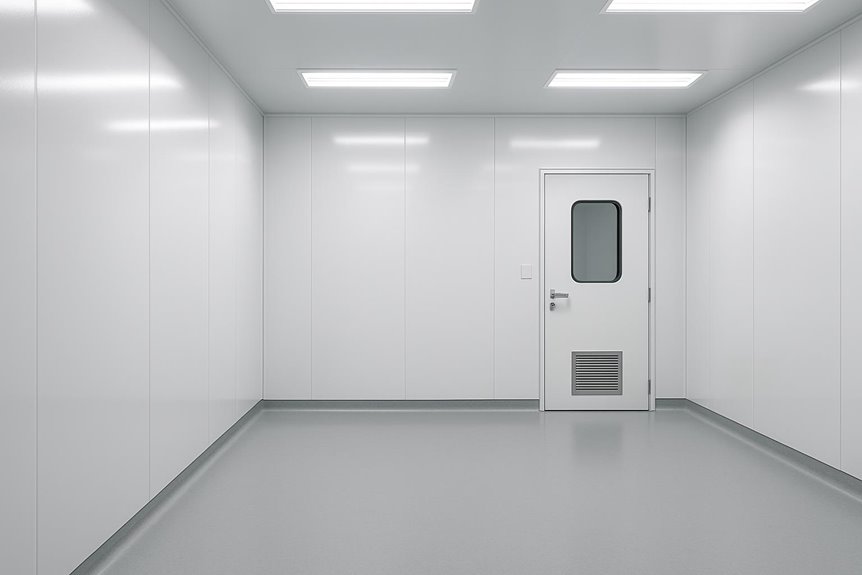
A frequent challenge in cleanroom construction is the occurrence of specification mistakes that can compromise the facility's integrity and performance.
Choosing decorative wall panels may prioritize aesthetics over functionality, risking non-compliance. Ignoring joint detailing and poor penetration detailing can lead to contamination risks. Mixing incompatible sealants may result in chemical reactions that degrade wall integrity.
Selecting incorrect core materials could impact thermal performance and load-bearing capacity. Specifying paint instead of factory finishes may not provide the necessary durability or cleanliness.
In addition, focusing solely on initial cost without considering long-term maintenance can lead to higher expenses over time.
These common mistakes highlight the necessity for meticulous planning and adherence to cleanroom standards to guarantee peak performance.
Why is it vital to ask the right questions before selecting cleanroom wall panels? Making informed decisions guarantees compliance, efficiency, and adaptability in controlled environments.
Key inquiries help in aligning with specific requirements and future needs, enhancing overall functionality and performance.
Aligning with specific needs and future goals enhances functionality and performance.
Consider the following important questions:
These considerations are pivotal in choosing the most suitable wall panels, driving favorable outcomes.
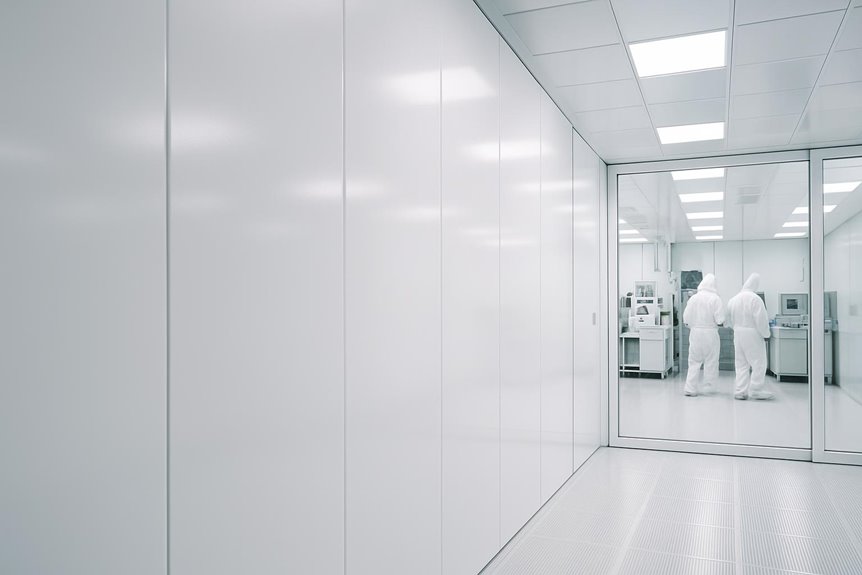
Integrating cleanroom wall panels as a complete system enhances the functionality and integrity of controlled environments.
Walls, ceilings, doors, windows, service panels, corners, and sealants must work cohesively to maintain a contamination-free atmosphere. Each component plays a critical role in guaranteeing seamless construction, reducing contamination risks, and supporting structural integrity.
Selecting a thorough system allows for better adaptability and guarantees compliance with industry standards. It facilitates effective integration of elements, optimizing thermal insulation and durability.
Cleanroom wall panels enhance energy efficiency by providing superior thermal insulation, reducing heating and cooling demands. Insulated metal panels, for instance, minimize energy loss, ensuring stable temperature control and optimizing operational costs in controlled environments.
Different wall sealing methods influence costs considerably. Silicone caulking is economical, while chemical cold welding is more expensive due to its seamless finish. Each method's cost impacts budget considerations, balancing between installation ease and contamination control.
Wall panel systems are customized by evaluating industry-specific requirements such as thermal insulation, durability, and regulatory standards. Tailoring materials and design guarantees peak performance, compliance, and functionality, addressing unique environmental and operational demands effectively.
Different wall panel types require specific maintenance protocols. Insulated metal panels need regular inspections for thermal integrity, honeycomb panels demand periodic cleaning, while liner and rigid panels benefit from consistent surface checks to prevent contamination and damage.
"An ounce of prevention is worth a pound of cure." Wall panel choices directly impact adherence to regulatory standards, influencing sanitation and performance. Selecting compliant materials guarantees efficient operation and aligns with industry requirements, safeguarding cleanroom integrity.
Cleanroom wall panels are not simply interior finishes—they are an integral part of contamination control. Long-term performance depends on selecting the appropriate panel construction, surface finish, joint detailing, and sealing system for the operating environment. Considering lifecycle maintenance, future modifications, and cleanability during specification helps reduce downtime while maintaining consistent cleanroom performance.
Philigreen provides modular decorative wall panel systems engineered for hygienic, high-performance interiors, offering durable finishes, precision manufacturing, and flexible solutions for healthcare, pharmaceutical, laboratory, electronics, and other controlled environments.