Selecting durable, hygienic wall cladding for hospitals involves evaluating impact resistance, cleanability, and material suitability. Prioritize high-pressure laminate, PVC, and metal panels for strength and hygiene. Consider the specific needs of high-traffic zones, patient areas, and wet rooms, emphasizing moisture resistance and fire safety. Pay attention to joints, corners, and changes to guarantee longevity and minimize maintenance costs. Strategic planning can optimize performance and cost-efficiency, offering further insights into effective wall protection solutions.
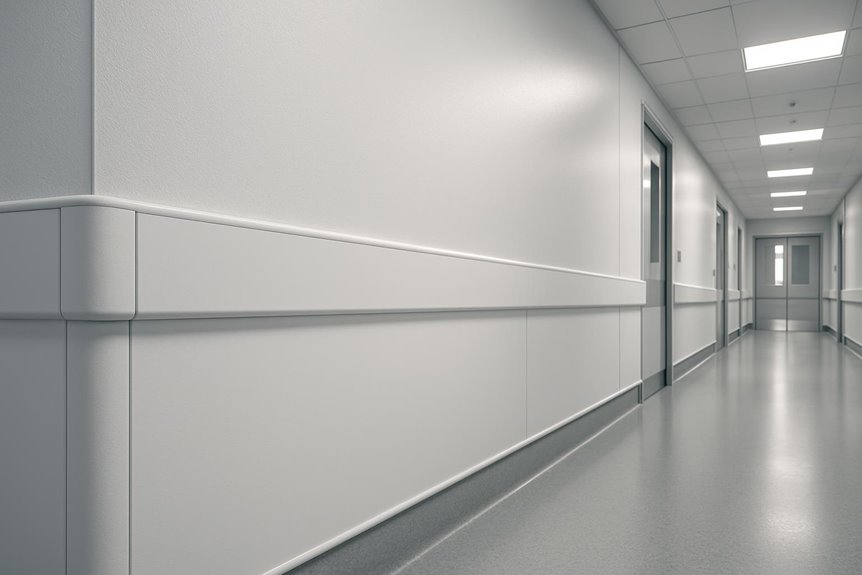
Hospital wall protection panels are specialized interior wall systems engineered to withstand the rigors of healthcare environments. These systems are essential for maintaining the integrity and cleanliness of healthcare facilities.
Designed to reduce damage from frequent contact and impact, they include hospital wall cladding and impact-resistant wall panels. By incorporating hygienic wall cladding, these panels guarantee surfaces remain cleanable and durable, minimizing maintenance costs.
Hospital wall panels ensure durability and cleanliness, reducing maintenance by withstanding frequent contact and impact.
Healthcare wall protection panels can be installed as full or partial-height systems, with options like wall guards and crash rails enhancing protection. In busy areas like hospital corridors, effective wall protection is critical to prevent damage and maintain safety.
This strategic investment supports operational efficiency by reducing repair frequency, thereby safeguarding both patients and staff.
While often grouped together, wall cladding and wall protection serve distinct roles within healthcare environments. Hospital wall panels are designed for specific functions that address both hygiene and impact resistance. Medical wall cladding, used in treatment rooms and washrooms, guarantees a cleanable, continuous surface, essential for infection control. In contrast, healthcare interior wall panels like hospital crash rails and hospital wall guards protect against impacts in high-traffic areas such as corridors.
| System | Primary Function |
|---|---|
| Full-height hygienic cladding | Creates a cleanable, continuous wall finish |
| Impact-resistant panels | Protects from repeated contact and abrasion |
| Crash rails and handrails | Absorb impact from trolleys and beds |
| Corner guards | Protect vulnerable external corners |
Understanding these differences guarantees cost-effective, safety-focused planning for robust hospital environments.
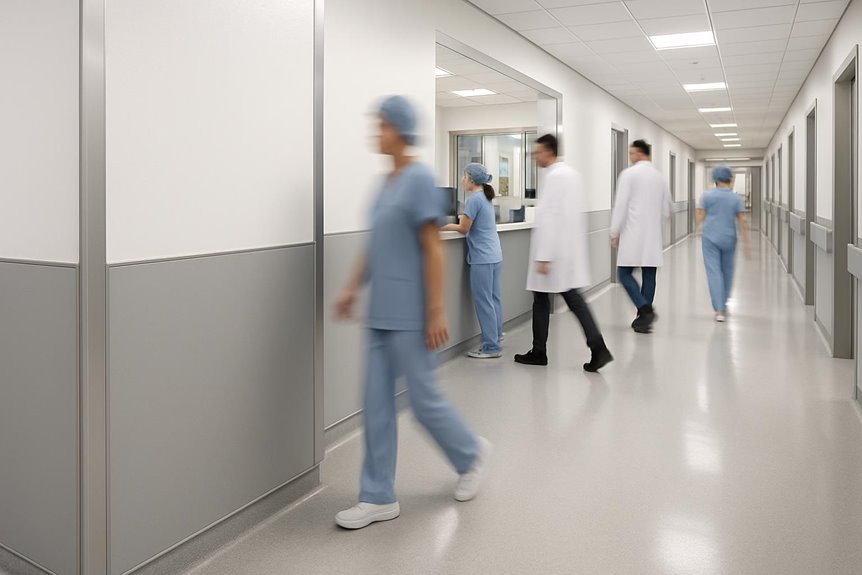
In hospitals, wall protection is vital in high-traffic areas such as corridors and bed transport routes to prevent damage from frequent movement.
Patient rooms, emergency departments, and treatment areas require robust solutions to guarantee both safety and hygiene.
Additionally, operating rooms, procedure spaces, and public zones like waiting areas must be safeguarded to maintain structural integrity and minimize repair costs.
Corridors in healthcare facilities require robust protection due to the constant movement of beds, trolleys, wheelchairs, and medical equipment. These areas endure significant wear and tear, making durable wall cladding essential.
Implementing full-height cladding enhances surface longevity, offering a barrier against daily impacts. Additionally, strategically placed crash rails and corner protectors at bed and trolley height can effectively mitigate concentrated damage. This approach not only preserves wall integrity but also reduces maintenance costs over time.
Selecting materials that are both durable and hygienic is crucial, ensuring compliance with health standards while maintaining aesthetic appeal. Investing in high-quality wall protection is a cost-effective strategy that prioritizes safety and minimizes disruptions in these high-traffic zones.
Patient rooms necessitate meticulous attention to wall protection due to frequent interactions with beds, furniture, and medical equipment. Ensuring walls are presentable and hygienic is paramount, as these areas endure constant wear from mobility aids and cleaning routines.
Selecting materials that are both durable and easy to clean is critical for maintaining hygiene standards.
Partial-height impact panels are a practical solution, offering robust protection where it is most needed, while allowing for decorative finishes above to enhance the room’s aesthetic. This approach balances functionality with cost-effectiveness, reducing the need for frequent repairs and replacements.
Prioritizing these considerations helps maintain a safe, inviting environment that supports patient care while effectively managing long-term maintenance costs.
Emergency departments and treatment areas demand exceptional wall protection due to their high-stress environments. These settings experience high turnover, rapid equipment movement, and frequent cleaning, all of which necessitate durable and hygienic wall solutions.
To guarantee longevity and maintain safety standards, wall systems should be designed to withstand intensive daily use. Minimizing difficult-to-clean joints is essential, as it reduces potential microbial growth and simplifies maintenance.
Cost-effective materials that offer both durability and ease of cleaning are ideal, ensuring that the walls remain intact and hygienic over time. By prioritizing these factors, hospitals can maintain a controlled environment that supports efficient operations and patient safety, ultimately protecting their investment and enhancing overall care quality.
In critical hospital environments such as operating rooms, procedure areas, and clinical support rooms, robust wall protection is paramount.
These spaces demand surfaces that are smooth, hygienic, and low-maintenance to guarantee patient safety and compliance with health standards. The selection process should consider the following:
Beyond the vital environments of operating and clinical support rooms, public zones such as waiting areas also demand significant attention to wall protection. These spaces experience high foot traffic, making durability necessary. Walls must resist scuffs, luggage impacts, and wear from frequent cleaning.
Selecting wall cladding that withstands these challenges guarantees longevity and reduces maintenance costs. Furthermore, high-touch surfaces should support a hygienic environment, a fundamental factor in hospitals. Materials that offer easy cleaning and bacterial resistance contribute to overall safety.
Additionally, the aesthetic aspect of wall panels should not be overlooked; they must enhance a calm, coordinated interior finish. By prioritizing these elements, hospitals can maintain both functionality and a welcoming atmosphere in their public zones.
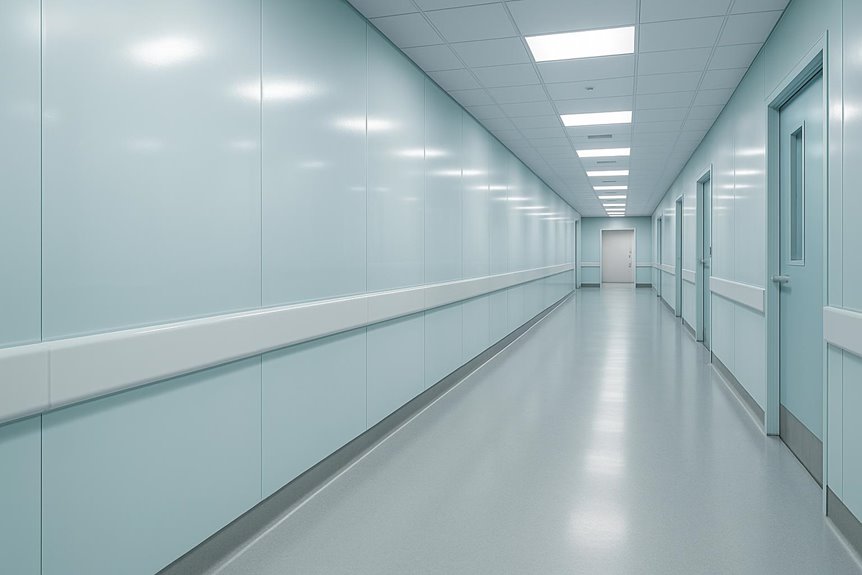
When selecting hospital wall cladding, it is essential to prioritize impact and abrasion resistance to withstand daily wear.
Cleanability and hygiene are vital to maintaining a sterile environment, while moisture resistance helps prevent mold and structural damage.
Fire performance and efficient repair and replacement planning further guarantee safety and cost-effectiveness in hospital settings.
Robustly engineered to endure the rigors of a bustling hospital environment, wall protection panels must excel in impact and abrasion resistance. Securing structural integrity and longevity involves several key considerations:
Maintaining a safe and hygienic hospital environment extends beyond impact resistance to include the cleanability of wall protection panels. Wall surfaces in healthcare settings must withstand frequent cleaning with approved agents, ensuring they remain free from contaminants.
Selecting materials with smooth, non-porous finishes is essential as they minimize dirt accumulation and simplify maintenance routines, thereby enhancing infection control. Controlled joints further reduce potential harborage points for dirt and bacteria, aligning with rigorous hygiene standards.
Although often overlooked, moisture resistance is a critical consideration in the design of hospital wall cladding systems, particularly in washrooms, utility areas, and cleaning rooms. The complete system's performance hinges on multiple components, guaranteeing durability and safety.
Key areas of focus include:
Attention to these details guarantees the cladding remains cost-effective and maintains its protective function over time.
A thorough approach not only safeguards the facility but also supports infection control measures, ultimately protecting both patients and staff.
Guaranteeing ideal fire performance in hospital wall cladding systems is paramount to safeguarding lives and property. Fire classification must be verified for the entire wall assembly rather than assumed from the panel's surface alone. Factors such as substrates, adhesives, insulation, cavity conditions, and fixing methods considerably influence the system's fire performance. By evaluating these elements, decision-makers can guarantee compliance with stringent safety standards while maintaining cost-effectiveness.
| Factor | Impact on Fire Performance | Consideration |
|---|---|---|
| Substrates | Affects combustibility | Choose non-combustible options |
| Adhesives | Alters fire resistance | Verify fire-rated adhesives |
| Insulation | Impacts heat retention | Use fire-resistant materials |
| Fixing Methods | Influences stability | Guarantee secure installation |
A thorough understanding of these components allows for informed choices, enhancing safety and compliance.
Effective planning for the repair and replacement of hospital wall cladding is essential to minimize disruptions in high-use healthcare environments. Key performance criteria include systems that support seamless local panel replacement, ensuring operational continuity and safety. These systems are designed to avoid extensive demolition, thereby reducing costs and preserving the integrity of adjacent areas.
To achieve the best possible outcomes, consider the following:
These considerations provide control and efficiency in maintaining hospital infrastructure.
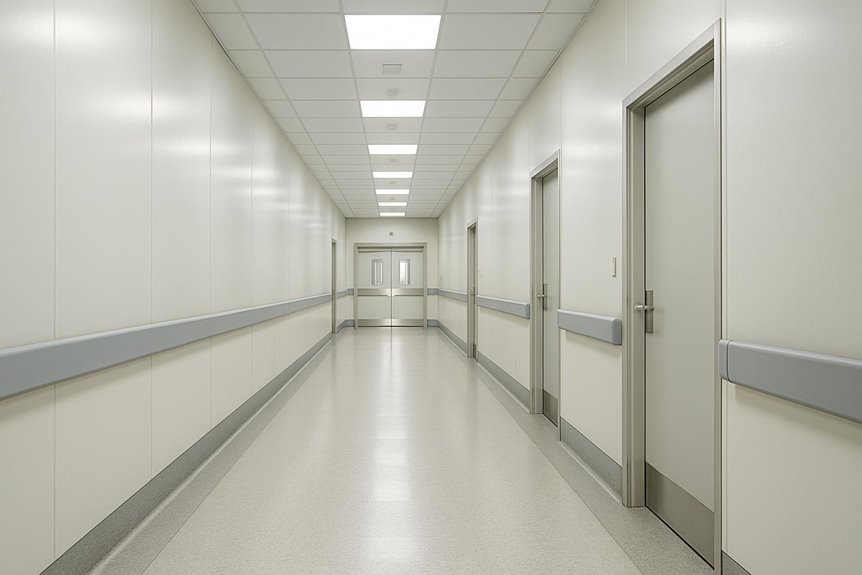
In hospital environments, choosing the right wall protection materials is essential for maintaining hygiene and durability.
High-Pressure Laminate (HPL) panels, PVC and hygienic cladding, fiber cement decorative panels, and metal wall panels are commonly used due to their resilience and ease of maintenance.
Cost-effectiveness and safety are paramount, making these materials ideal for high-traffic healthcare settings.
High-pressure laminate (HPL) panels stand out as a robust choice for hospital wall protection, combining durability with aesthetic appeal. Engineered to endure high-contact environments, HPL panels offer a practical solution for areas like corridors, patient rooms, and public spaces.
Their design guarantees both functionality and visual appeal, making them suitable for healthcare settings seeking to balance practicality and ambiance.
Key benefits include:
This strategic choice empowers facilities to maintain both safety and budget control.
PVC wall cladding emerges as a practical solution for hospital environments, offering a seamless, easy-to-clean surface ideal for wet-adjacent and hygiene-sensitive areas. Its smooth finish reduces the risk of harboring bacteria, making it suitable for spaces requiring stringent sanitation standards.
Cost-effective and relatively easy to install, PVC cladding provides a balance between affordability and functionality.
However, careful consideration is necessary for areas exposed to high impact, heat, or specific fire-performance requirements. Although effective in lower-impact locations, PVC may not meet the demands of all hospital zones.
Facilities managers should evaluate the intended use and environmental conditions to guarantee compliance with safety standards. Selecting the appropriate cladding material will enhance both the durability and hygiene of hospital interiors.
While PVC cladding provides practical benefits for many hospital applications, fiber cement decorative panels present an alternative with enhanced durability and fire resistance.
These panels offer a stable, moisture-tolerant substrate essential for healthcare environments. Their fire resistance adds an extra layer of safety, addressing stringent hospital safety codes. The ability to choose decorative finishes enhances aesthetic appeal without compromising functionality.
Benefits include:
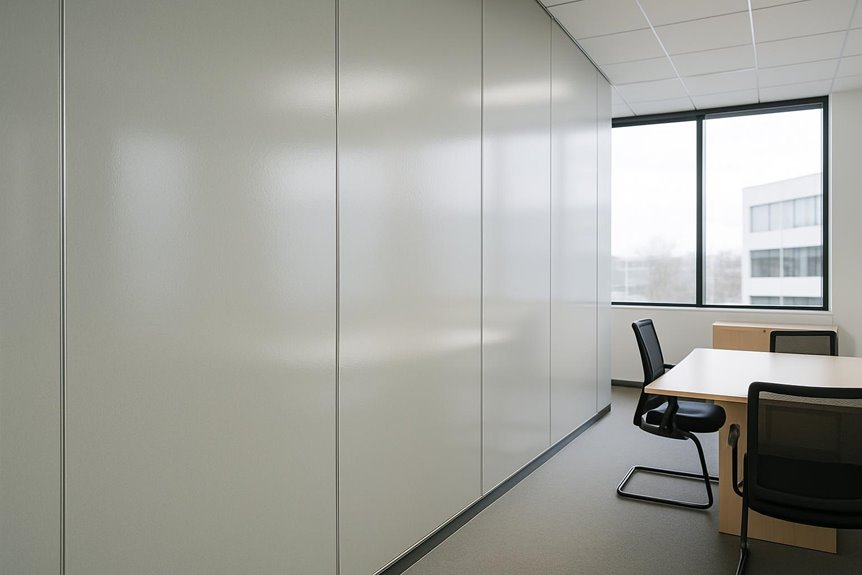
Metal wall panels offer a durable solution for hospital environments, where robustness and hygiene are paramount.
These panels are ideal for service areas, utility spaces, and interiors that demand high resistance to impact and rigorous cleaning processes.
Selecting the appropriate metal wall panel involves considering factors such as surface finish, which affects both aesthetics and cleaning efficiency.
Edge treatment is essential for safety and longevity, minimizing potential damage and maintenance costs.
Moreover, acoustic performance should not be overlooked, as it contributes to a quieter, more restful environment for patients and staff.
Choosing between full-height cladding and partial-height protection panels requires careful consideration of various factors.
Full-height cladding is ideal for environments prioritizing hygiene, cleaning, and visual continuity. It provides a uniform finish and minimizes repainting needs.
On the other hand, partial-height panels offer a cost-effective solution, especially in areas like corridors and patient rooms, where impacts are frequent in lower-wall zones. This approach can be enhanced with additional protection such as crash rails and corner guards.
Key considerations include:
This strategic choice impacts both functionality and budget.
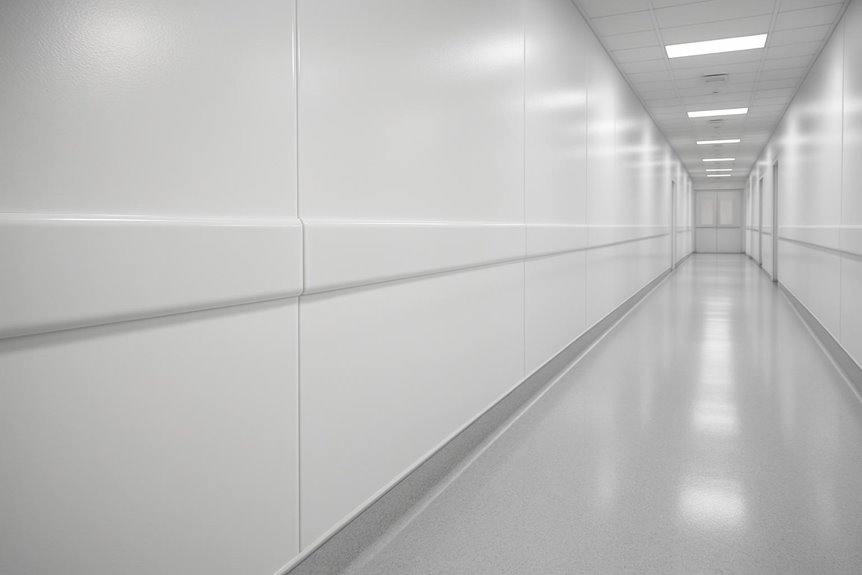
Evaluating wall protection strategies extends beyond surface coverage to the intricate details of joints, corners, and changes. The performance of wall panels is often dictated by these elements rather than the panel face.
Poorly designed joints can accumulate dirt, trap moisture, or present cleaning challenges, compromising hygiene and durability. Unprotected corners are particularly vulnerable, often failing before the main wall surface, leading to costly repairs.
For a thorough wall protection system, attention must be given to internal and external corners, door frames, service penetrations, wall-to-floor shifts, panel joints, expansion gaps, crash rail interfaces, window reveals, and ledges.
Prioritizing these areas guarantees longevity and safety, mitigating maintenance costs and enhancing the hospital environment's overall integrity and cleanliness.
Selecting the appropriate wall protection system for a hospital requires a nuanced approach that considers multiple factors vital to performance and safety. Mapping the building into specific wall-exposure zones is fundamental:
Confirming the required balance of impact resistance, hygiene, moisture resistance, fire performance, decorative finish, and maintenance access for each zone guarantees a durable specification.
This tailored approach avoids the pitfalls of a one-size-fits-all solution, thereby optimizing both functionality and cost-effectiveness. Control over these factors is essential for creating a safe, efficient hospital environment.
Wall protection panels enhance infection control by providing a seamless, non-porous surface that resists bacterial growth. Their durability guarantees long-term efficacy, while easy maintenance minimizes costs. This supports a hygienic environment, essential for safety-focused healthcare facilities.
The installation process, akin to assembling a protective fortress, involves precise measurements, secure adhesive application, and meticulous alignment. Each step is a calculated dance, balancing safety and cost, ensuring panels stand guard against contamination and wear.
Yes, eco-friendly options exist for hospital wall cladding. These materials prioritize sustainability, using recycled content and low VOC emissions. They guarantee safety and durability while being cost-effective, offering a controlled, responsible choice for environmentally-conscious healthcare facilities.
Wall panels can be customized with intricate designs and colors, balancing aesthetics and functionality. Choices include antimicrobial coatings and impact-resistant materials. Selecting the perfect harmony guarantees a safe, appealing, and cost-effective environment, maintaining control over hospital design.
The cost of hospital wall protection panels ranges from $10 to $50 per square foot. Decision-makers must evaluate durability, hygiene, and compliance standards, ensuring investments align with safety protocols and budgetary constraints for ideal facility management.
Hospital wall protection panels and hospital wall cladding should be selected as part of a complete interior performance strategy. The right system protects vulnerable walls, supports cleaning routines, improves visual consistency, and reduces maintenance disruption in high-use healthcare environments.
For healthcare interiors requiring durable decorative wall panels, hygienic finishes, and coordinated modular wall systems, Philigreen provides project-specific wall solutions that balance surface performance, installation efficiency, and long-term maintenance requirements.