Fiber cement siding issues primarily arise from installation errors like improper fastening and missing flashing, leading to moisture intrusion and cracking. Ensuring adherence to manufacturer guidelines and using quality sealants greatly reduces risks. Regular inspections and maintenance, including sealing checks, are essential for longevity. Modern panels offer enhanced durability and moisture resistance compared to older versions. Maintaining factory-applied coatings and understanding installation intricacies can prevent common problems, enhancing siding performance. Discover effective strategies to mitigate these issues further.
Why do so many homeowners misunderstand fiber cement siding issues? The complexity of fiber cement siding problems often lies in installation mistakes rather than material defects. Many issues, such as moisture problems and cracking, stem from neglecting manufacturer guidelines.
Improper fastening and inadequate clearances are common errors, leading to costly repairs. Mismanaged water detailing further exacerbates these problems, causing water infiltration and structural damage.
Improper fastening and inadequate clearances lead to costly repairs, with water mismanagement worsening infiltration and structural damage.
Fiber cement siding maintenance demands strict adherence to installation protocols to avoid such pitfalls. Ignoring these requirements results in compromised durability and aesthetic degradation.
Homeowners must guarantee that installation follows precise standards to mitigate risks. Understanding the intricacies of fiber cement siding installation enables better control over potential failures and long-term performance.
Moisture intrusion behind fiber cement siding is a critical concern that can lead to significant structural damage. This issue often arises from fiber cement cladding problems such as missing flashing, poor drainage design, blocked ventilation cavities, and failed sealants.
When water becomes trapped, it exacerbates fiber cement siding issues, potentially leading to rot and mold. To mitigate these risks, employing proper weather barriers is vital. Utilizing a rainscreen design and guaranteeing correctly detailed penetrations can prevent moisture intrusion.
Consistent inspection and maintenance of sealants further protect against water ingress. Adhering to manufacturer guidelines and incorporating these preventative measures guarantees the longevity and effectiveness of the siding, offering homeowners control over potential moisture-related challenges.
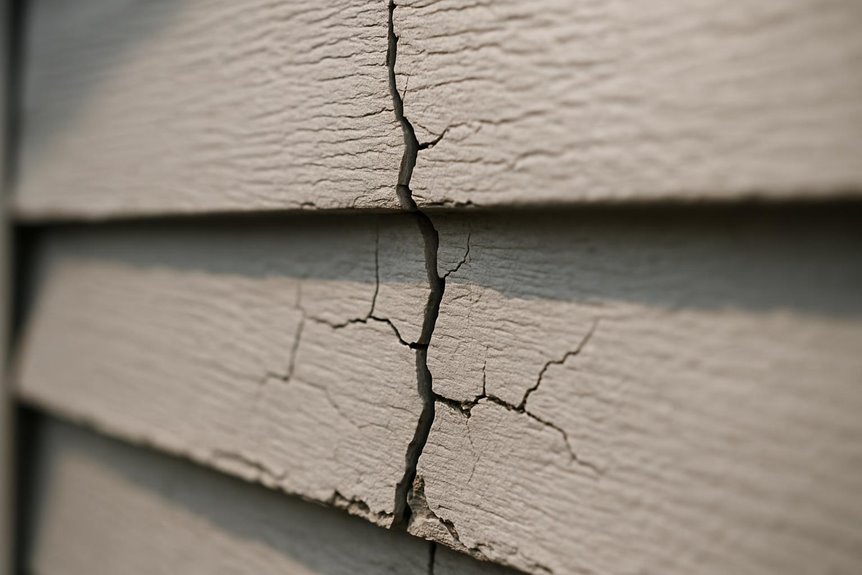
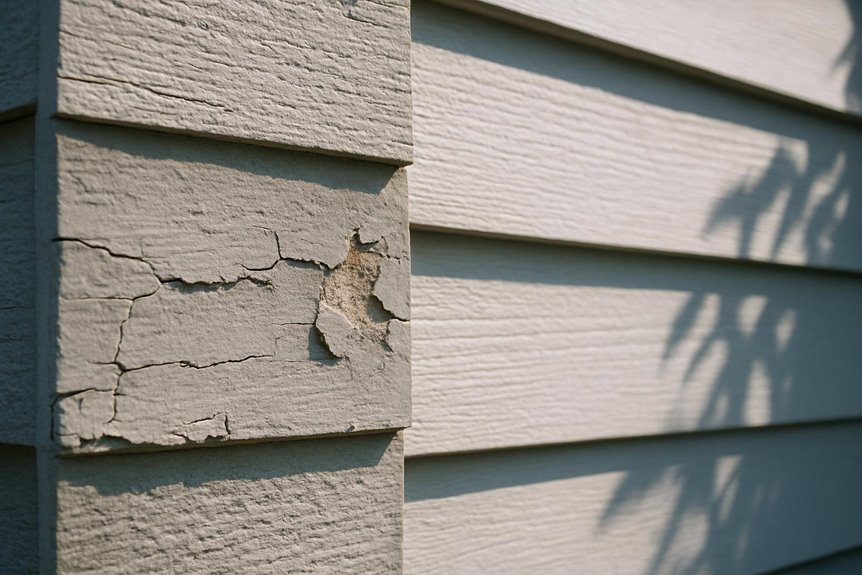
Cracking and edge damage are among the most frequently reported fiber cement siding problems, but they are rarely caused by the material alone. In most cases, these issues result from improper handling, impact during transport or installation, overdriven fasteners, or insufficient allowance for panel movement. While minor chips may be cosmetic, larger cracks can compromise appearance, moisture protection, and long-term durability.
Preventing fiber cement panel damage starts before installation. Panels should be stored flat, handled carefully to avoid edge stress, and installed using manufacturer-recommended fastening methods. Proper joint spacing and movement detailing also help reduce stress concentrations that can lead to cracking over time.
| Common Causes | Prevention | Potential Impact |
|---|---|---|
| Improper handling and storage | Store panels flat and transport carefully | Cracks, chipped edges |
| Impact damage during installation or service | Protect panels from excessive force | Visible surface damage |
| Overdriven or incorrectly placed fasteners | Follow recommended fixing methods | Panel stress and cracking |
| Inadequate movement joints | Allow for thermal and structural movement | Joint failure and edge cracking |
Most cracking and edge damage issues can be avoided through correct handling, installation, and detailing practices, helping maximize the lifespan and appearance of fiber cement siding systems.
Paint peeling and surface deterioration in fiber cement siding can greatly undermine its aesthetic and functional integrity. These issues often stem from several key factors:
To prevent these problems, it is advisable to use factory-finished panels and guarantee proper edge sealing.
Scheduled inspections and maintenance can also help identify potential issues before they escalate, maintaining the siding’s structural and visual appeal.
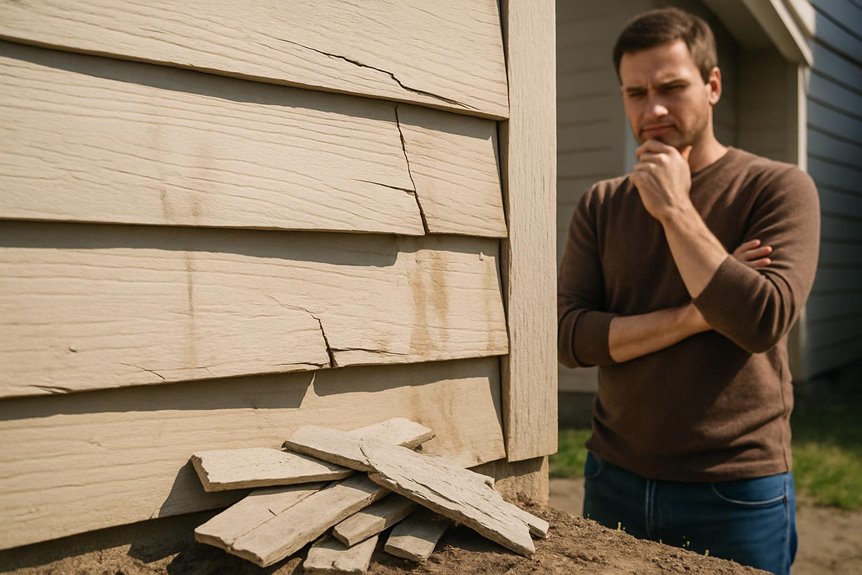
Installation errors in fiber cement siding projects can lead to a host of long-term issues, greatly impacting the material's performance and durability.
Common mistakes include incorrect fastener spacing, which compromises structural integrity by allowing panels to loosen. Missing flashing is another frequent error, increasing the risk of water infiltration and subsequent damage.
Insufficient ground clearance fails to protect against moisture absorption from the ground, while improper panel overlap can result in exposure to the elements.
Poor joint alignment further exacerbates potential weaknesses, leading to gaps and uneven surfaces.
These installation shortcomings often overshadow the inherent quality of the panels, underscoring the critical need for adherence to manufacturer specifications and installation guidelines to guarantee lasting performance and homeowner satisfaction.
Fiber cement siding, while dimensionally stable, can still experience panel movement and joint failure, primarily due to factors such as thermal cycling, humidity changes, and structural shifts. Proper joint detailing is essential to mitigate these issues.
Key considerations include:
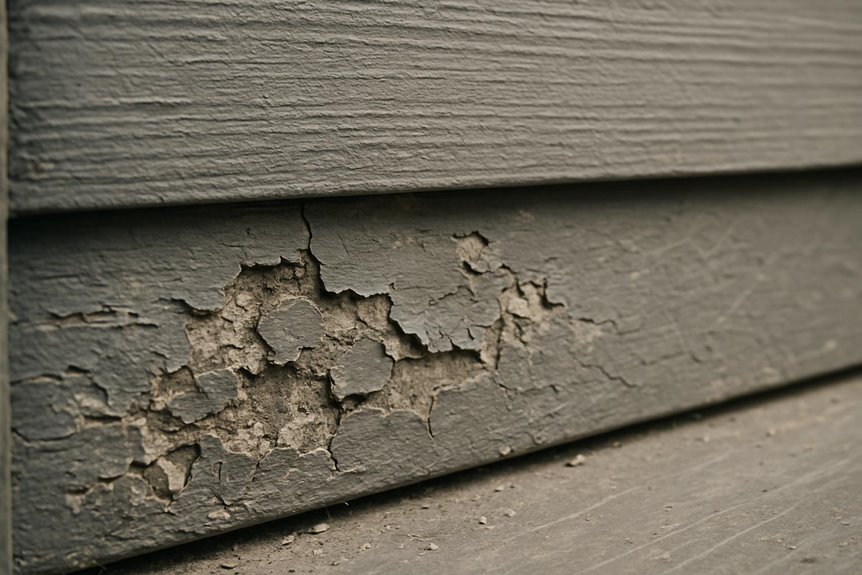
In high-traffic areas, the durability of fiber cement siding is frequently tested by various forms of impact damage. Equipment impacts, landscaping tools, transportation mishaps, and even vandalism are potential sources of damage.
While fiber cement is renowned for its resilience, its thickness and installation location greatly influence its vulnerability to these impacts. Panels situated closer to ground level or in busy environments are particularly susceptible. The material is robust but not indestructible, and repeated or severe impacts can lead to cracking or chipping.
To mitigate these risks, strategic placement and protective barriers can be employed. Additionally, regular inspections and prompt repairs are essential in maintaining the integrity and aesthetics of the siding in such demanding locations.
Despite being often labeled as low maintenance, fiber cement siding requires a thorough approach to upkeep to secure its long-term efficacy. This material, while durable, is not maintenance-free and necessitates routine attention.
Regular inspections are essential to identify potential issues early, making certain that the siding remains in peak condition.
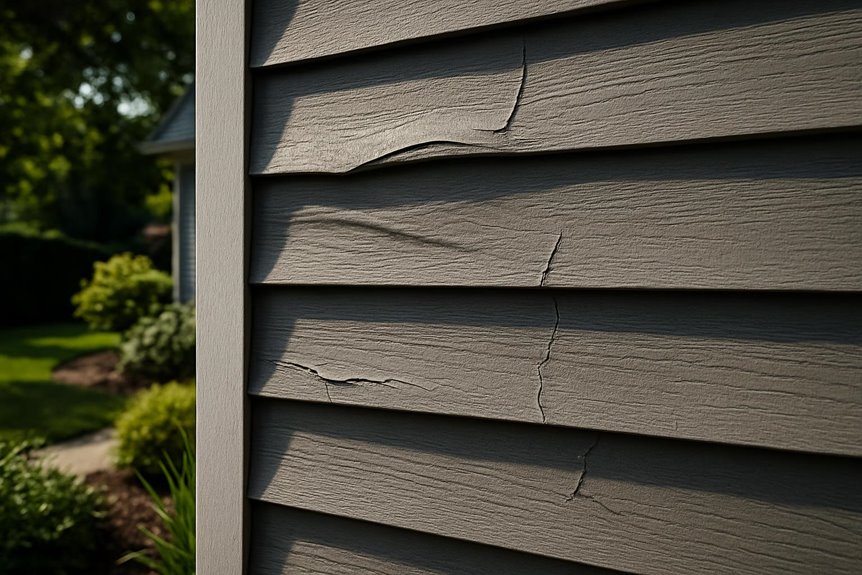
Some issues associated with fiber cement siding, such as its tendency to absorb water, susceptibility to cracking, and perceived maintenance difficulty, are often overstated.
While fiber cement can absorb moisture, proper installation and maintenance greatly mitigate this risk.
Similarly, cracking is typically a result of improper handling or installation, and maintenance requirements are comparable to other siding materials when guidelines are followed accurately.
Fiber cement siding, often lauded for its durability, faces criticism regarding its tendency to absorb water—a concern that is frequently overstated.
When properly detailed and installed, fiber cement's water absorption issues are minimized. Key installation practices guarantee peak performance:
These measures, when diligently applied, guarantee fiber cement siding remains resilient against water-related issues.
Why do some claim that fiber cement siding cracks so easily when, in reality, it is often a result of improper handling or installation techniques?
Cracks typically arise from violations of manufacturer guidelines during installation, such as inadequate nailing and fastening. Fasteners not placed correctly can lead to structural stress. Overdriven nails often cause material breakage, exacerbating vulnerabilities.
Additionally, mishandling during transportation and storage contributes to brittleness. The lack of adherence to proper nailing patterns and clearance requirements further compounds these issues.
Ensuring compliance with detailed installation instructions can mitigate the risk of cracking. This proactive approach not only enhances durability but also aligns with the high-performance expectations of fiber cement siding, offering control over the material’s longevity and appearance.
Despite perceptions to the contrary, maintaining fiber cement siding is not inherently burdensome when compared to traditional timber systems. Its maintenance requirements are often exaggerated, overshadowing its durability and low upkeep.
Fiber cement siding demands:
These tasks, although necessary, are minimal compared to the extensive care required by other materials, ensuring fiber cement remains a viable, long-term siding solution.
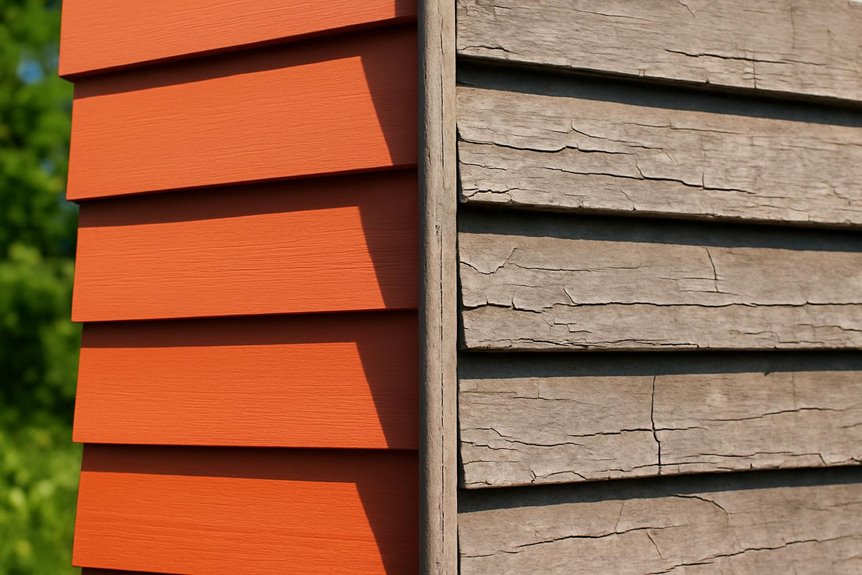
While advancements in technology have considerably improved modern fiber cement panels, older generations often suffered from inconsistencies in manufacturing and installation practices.
Modern systems now benefit from enhanced manufacturing consistency, which minimizes defects and guarantees uniform performance. Factory-applied coatings provide superior moisture resistance, reducing vulnerability to environmental damage. Improved installation systems further enhance durability, addressing many historical issues linked to improper installation techniques.
Enhanced manufacturing and coatings boost durability and moisture resistance, resolving past installation issues.
In contrast, older fiber cement products frequently faced challenges such as variable quality and inadequate moisture management, leading to premature wear and structural issues.
Today's advancements focus on precision and resilience, offering solutions to past problems. As a result, modern fiber cement panels present a more reliable and efficient option for contemporary building applications.
Modern advancements in fiber cement panels have addressed many past challenges, yet the potential for issues remains if preventive measures are overlooked. Effective risk reduction requires attention to design, installation, and maintenance.
Prevention is considerably less expensive than remediation, making these measures essential.
The production of fiber cement siding involves high energy consumption and significant emissions, contributing to global warming potential. Its manufacturing and shipping processes impact water resources and environmental footprint, raising concerns about sustainability compared to other siding materials.
Fiber cement siding, a paragon of expense, triumphs over wood, vinyl, and aluminum in costliness. Installation demands Herculean effort, ensuring homeowners embrace fiscal responsibility while contemplating its alluring charm and superior durability against less ambitious alternatives.
Fiber cement siding is generally suitable for most climate zones due to its durability and resistance to pests and fire. However, proper installation and regular maintenance are essential to mitigate issues related to moisture absorption and temperature fluctuations.
When cutting fiber cement siding, one must use special saw blades and wear respirators, akin to a knight donning armor. Proper ventilation and dust collection systems are critical to mitigate the risks of crystalline silica exposure.
Fiber cement siding installation is complex, requiring strict adherence to guidelines. While DIY is possible, professional expertise guarantees proper handling, precise cutting, and effective water management, reducing risks of costly errors and assuring long-term durability.
Coincidentally, the very qualities that make fiber cement siding appealing—its durability and aesthetic—are also its greatest pitfalls when mishandled. Improper installation and maintenance can transform its strengths into liabilities, leading to moisture intrusion, surface deterioration, and expensive repairs. By meticulously adhering to manufacturer guidelines and staying vigilant with upkeep, homeowners can sidestep these issues. Therefore, understanding the intricacies of fiber cement siding is essential to fully enjoy its long-term benefits without unexpected setbacks.