Cement board for exterior walls presents a robust solution known for durability and resistance to weather. Its fire and pest-resistant properties enhance safety, yet its installation demands meticulous attention to climate and moisture management. While cement board is advantageous in many contexts, it may not fit projects needing lightweight or highly customized materials. Understanding its strengths and limitations is essential for effective application. Explore further to uncover the nuances of its best use.
Why is cement board a viable option for exterior walls?
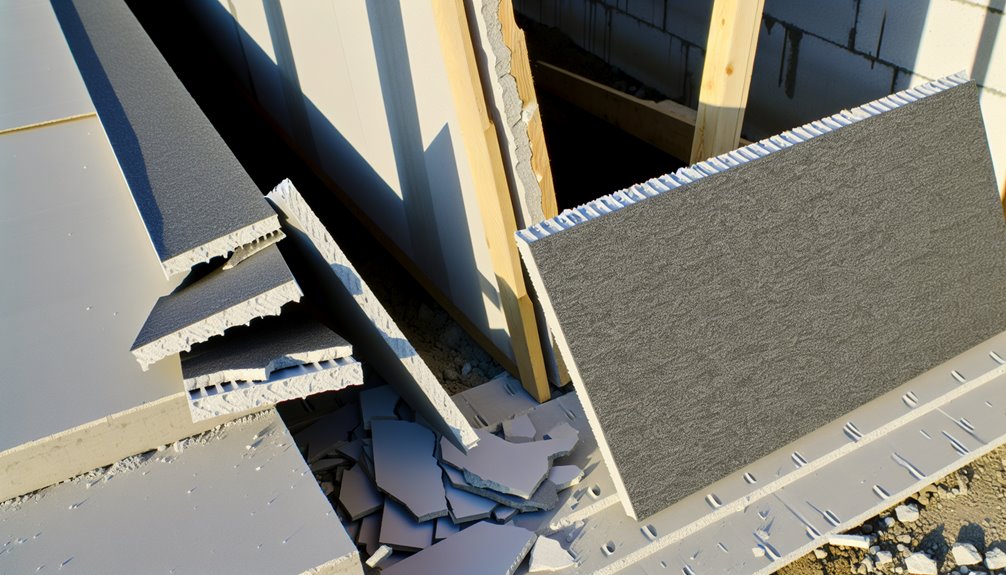
Cement board for exterior walls offers robust protection due to its composition of cement, sand, and cellulose fibers. Fiber cement exterior wall panels are particularly noted for their durability and weather resistance, making them suitable for diverse climates.
The inclusion of additives enhances fire resistance and longevity, ensuring a lifespan of 50 to 100 years. Weather-resistant cement board provides a reliable barrier against environmental elements such as rain, wind, and UV rays, requiring minimal maintenance.
However, it is essential to select the appropriate type, such as fiber cement boards or exterior-grade cement composite panels, for peak performance. Standard interior tile backer boards are not recommended for exposed exterior use.
When evaluating cement boards for exterior walls, three distinct types stand out: fiber cement boards, cementitious sheathing boards, and decorative cement composite panels.
Fiber cement boards are known for their durability and resistance to weather elements, making them a robust choice for various climates.
Cementitious sheathing boards offer a lightweight alternative with excellent fire resistance, while decorative cement composite panels provide aesthetic versatility without compromising structural integrity.
Fibre cement boards, a prevalent choice for exterior walls, offer exceptional durability and weather resistance. Often used in cement board cladding, these boards are available as panels, planks, or façade boards, providing flexibility in design.
Their composition includes cement, sand, and cellulose fibers, which contribute to their strength and long lifespan of 50 to 100 years. The use of cement board siding panels enhances protection against rain, wind, and sun, offering a robust solution for various climates.
Additionally, the cement board rainscreen system provides effective moisture management, preventing rot and extending the building's longevity. While initial installation costs may be higher, the reduced maintenance requirements make fibre cement boards a cost-effective option for exterior applications.
Cementitious sheathing boards, an essential component in modern construction, are renowned for their fire and moisture resistance, making them an excellent choice for exterior walls.
These boards are used behind rainscreen systems to enhance the durability and safety of structures. As cement board exterior wall options, they provide a robust barrier against environmental elements, ensuring long-term protection and stability.
Their composition allows for effective performance in diverse climates, resisting both fire and moisture intrusion. Cement board for outdoor walls is valued for its ability to maintain structural integrity while minimizing maintenance.
As construction methods evolve, the focus often shifts toward materials that offer both functionality and enhanced aesthetic appeal.
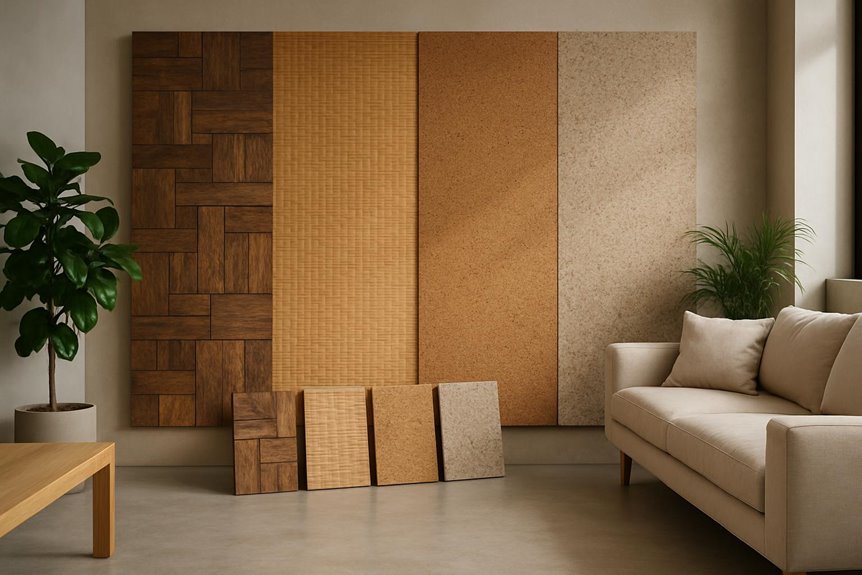
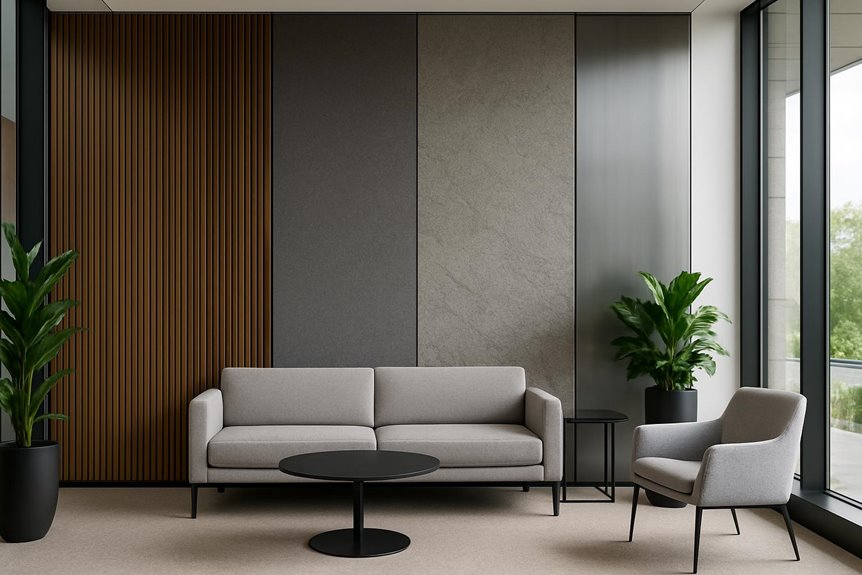
Decorative cement composite panels stand out for their dual ability to serve as a durable cement board outside wall and to provide visually striking cement board façade panels. These panels are widely used in modern commercial façades due to their combination of durability and aesthetic finishes.
When evaluating exterior wall materials, understanding the distinction between cement board and fiber cement board is essential.
Cement board is primarily used as an interior backer board, suitable for areas not exposed to weather. Its composition focuses on providing a sturdy base for tile or similar finishes.
In contrast, fiber cement board is specifically designed for exterior applications. It consists of cement, sand, cellulose fibers, and water, allowing it to withstand harsh environmental conditions.
Highly resistant to rot and fire, fiber cement offers a lifespan of 50 to 100 years with minimal maintenance. Its durability, combined with aesthetic versatility, makes it a preferred choice for exterior walls where weather exposure is a factor.
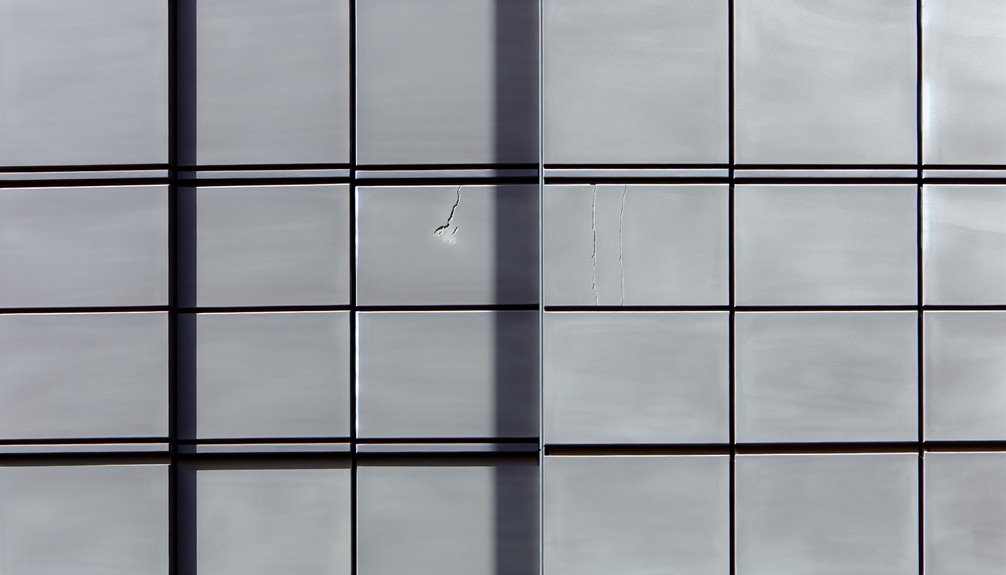
Cement boards are favored for exterior walls due to their exceptional moisture resistance, making them ideal for environments subject to weather fluctuations. This characteristic guarantees structural integrity and longevity.
Exceptional moisture resistance in cement boards ensures structural integrity and longevity, perfect for variable weather conditions.
Additionally, cement boards provide superior fire performance, offering enhanced safety for buildings. The material's pest and rot resistance further contributes to its appeal, eliminating concerns associated with timber systems.
These features position cement boards as a practical choice for those seeking reliable performance and reduced maintenance in exterior wall applications.
The utilization of cement boards for exterior walls presents a strategic advantage in environments requiring robust moisture resistance and structural integrity.
Cement boards excel in commercial buildings, schools, and hospitals where durability and fire resistance are paramount. In apartment developments, they offer longevity and minimal maintenance, enhancing structural efficiency.
Utility and service buildings benefit from their insect resistance, ensuring lasting performance. Modern residential façades leverage the aesthetic versatility of cement boards, combining style with functionality.
Additionally, they are ideal for soffits and perimeter wall systems, providing an all-encompassing solution for diverse architectural needs. The material’s adaptability makes it suitable for various projects, ensuring effective protection against environmental elements while maintaining cost-efficiency.
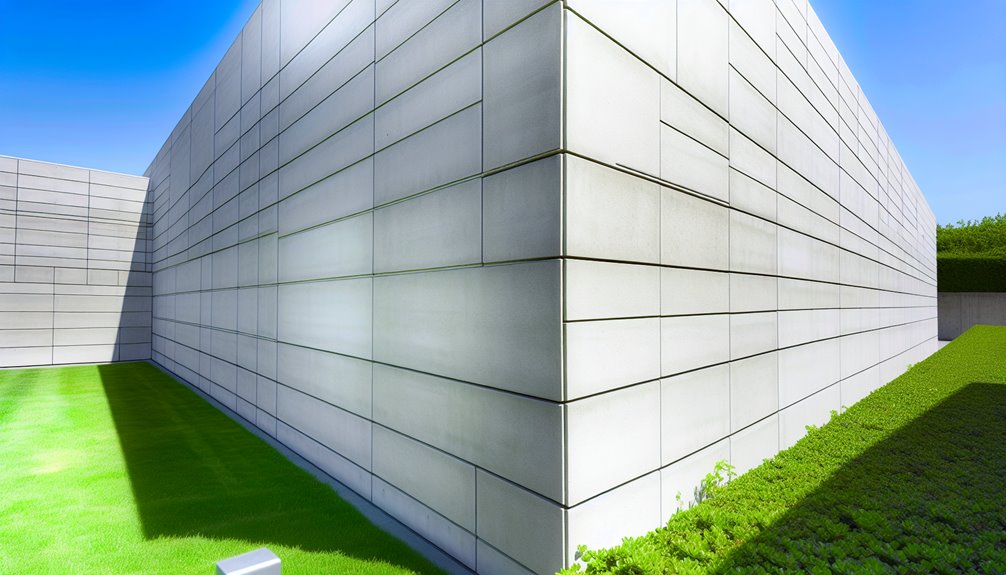
Effective exterior wall design requires careful consideration of several vital factors. These factors guarantee that the chosen cement board system performs most effectively under various conditions.
Climate and rainfall exposure, for instance, play a significant role in determining the suitability of materials and their assembly. Additionally, freeze-thaw cycles can affect the integrity of the wall, necessitating the evaluation of durability in colder climates.
Climate and rainfall exposure significantly influence material suitability, while freeze-thaw cycles demand durability in colder climates.
Coastal salt exposure demands materials with enhanced corrosion resistance. Moreover, fire regulations must be adhered to, guaranteeing safety and compliance.
The design should incorporate a ventilated cavity to manage moisture effectively. Panel joint detailing and subframe compatibility are also essential to prevent water ingress and maintain structural integrity.
When installing cement board outdoors, several common mistakes can undermine performance and durability.
Using interior backer board externally is a frequent error, leading to insufficient weather resistance. A lack of a rainscreen cavity or drainage path can trap moisture, accelerating degradation.
Poor joint detailing often results in water infiltration, compromising structural integrity. Incorrect fasteners may fail under stress, while ignoring movement allowances can cause cracks due to thermal expansion.
Additionally, treating the substrate board as a finished façade panel without proper protection further exposes it to environmental damage.
These failures are more common and detrimental than material defects themselves, necessitating precise adherence to installation guidelines to maintain the longevity and effectiveness of cement board in exterior applications.
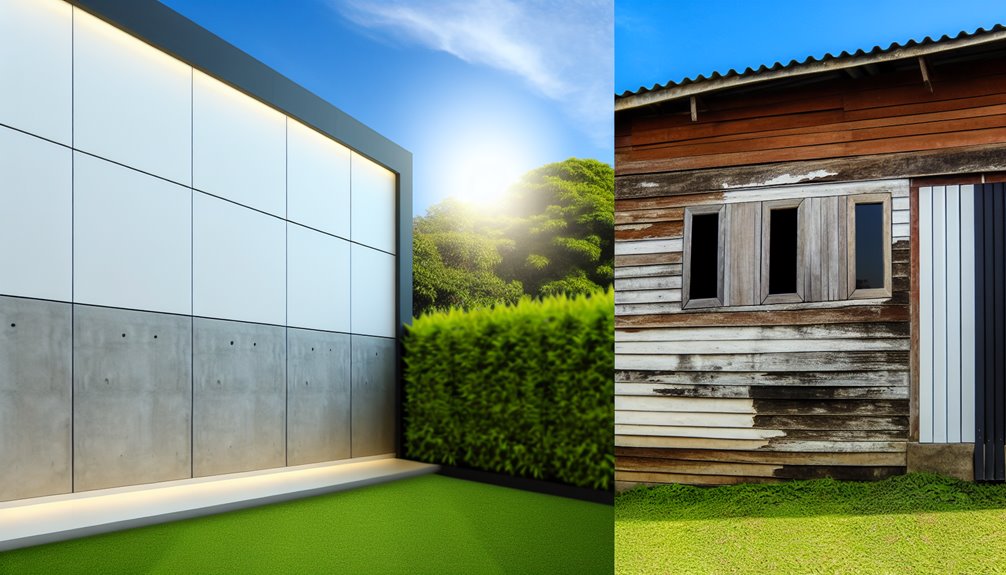
Cement board offers distinct advantages and challenges when compared with other exterior wall materials such as timber cladding, metal panels, and render systems.
While timber cladding provides aesthetic warmth, it demands higher maintenance to protect against rot, unlike the rot-resistant properties of cement board.
In contrast, metal panels offer sleek modernity with low maintenance but may lack the thermal insulation properties that cement board provides.
Whereas render systems can offer a uniform finish but often require more labor-intensive installation compared to cement board's straightforward application.
While fiber cement board offers notable advantages, timber cladding remains a popular choice for its aesthetic appeal.
Fiber cement excels in durability and maintenance, requiring less frequent attention compared to wood. Its resistance to moisture and pests provides reliable protection, minimizing future repair costs.
Conversely, timber’s charm comes with higher maintenance due to susceptibility to rot and insect damage.
Fiber cement board presents a robust option, particularly in regions with challenging weather conditions, offering homeowners a balance of performance and visual appeal.
Fiber cement board and metal panels are both widely used in exterior wall systems, but they deliver different advantages. Fiber cement typically provides a heavier, more solid architectural appearance, while metal panels are often selected for their lighter weight, sharper lines, and modern façade aesthetics.
From a performance perspective, both materials offer strong durability when correctly specified. The main differences usually come down to weight, installation method, design intent, and substructure requirements. Fiber cement systems may require more handling and support due to panel mass, while metal panels often allow faster dry installation and reduced structural load.
| Feature | Fiber Cement Board | Metal Panels |
|---|---|---|
| Durability | High | High |
| Weight | Heavier | Lighter |
| Visual Style | Solid, textured, natural finishes | Clean, modern, precision lines |
| Installation | Heavier handling, more support required | Faster dry-install systems |
| Maintenance | Low | Low |
The better choice depends less on which material is “better” and more on the project priority—whether that is solid mineral aesthetics, lighter façade weight, installation speed, or contemporary design language.
Exploring the advantages of cement board in comparison to render systems reveals distinct differences in performance and application for exterior walls.
Cement boards offer a modular installation approach, reducing complexity and ensuring cleaner results. Their impact resistance surpasses many traditional render systems, making them suitable for areas requiring enhanced durability.
Whereas render systems may suffer from cracking, cement boards maintain structural integrity over time.
These attributes position cement boards as a robust alternative for precise exterior wall applications.
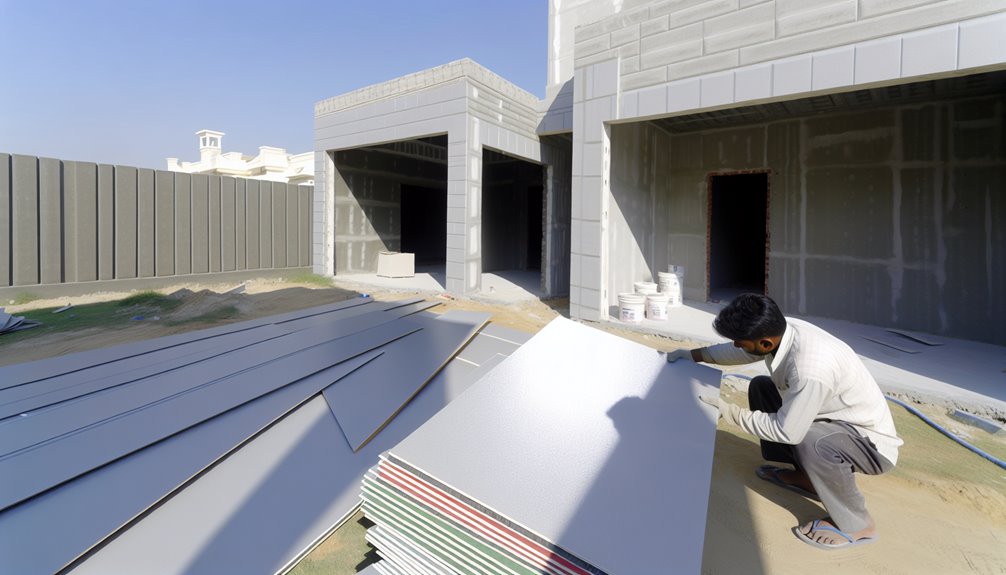
Selecting the appropriate exterior cement board system requires a thorough analysis of several essential factors.
First, the decision between an exposed finish or hidden substrate impacts the visual outcome. Desired appearance should align with architectural aesthetics, while fire resistance must meet safety regulations.
Maintenance expectations vary, influencing long-term costs and frequency of upkeep. Installation method considerations include ease and speed, affecting labor expenses and overall project timeline.
Balancing budget constraints with lifecycle cost analysis is vital; initial investment should be weighed against durability and maintenance savings.
Each factor contributes to an ideal choice tailored to specific project requirements, ensuring both functionality and aesthetics align with client expectations.
An informed decision demands a thorough evaluation of these interconnected elements.
While cement board offers durability and fire resistance, certain architectural needs render it less suitable. In scenarios where ultra-lightweight façades are essential, cement board's heft could be a disadvantage.
Projects demanding high-end metallic aesthetics may also find cement boards lacking in visual appeal. Additionally, when rapid modular dry-install systems are prioritized, cement boards might impede efficiency due to their complex installation requirements.
Highly customized designs featuring curved or intricate geometries further challenge cement board's adaptability.
Selecting the best material requires understanding these limitations and aligning choices with project-specific demands.
Fiber cement board impacts energy efficiency by offering a moderate R-value of 0.37, slightly lower than brick. While not the highest in insulation, it excels in durability and resistance, contributing to long-term energy management.
Manufacturing fiber cement board involves significant energy consumption and resource use, contributing to carbon emissions. The process requires mining raw materials like silica and cement, impacting ecosystems. However, its long lifespan and low maintenance can mitigate environmental costs.
Fiber cement board colors, like a sunset fading into twilight, may diminish over decades. This gradual fading, influenced by UV exposure and weather, requires periodic repainting every 10 to 15 years to maintain its visual appeal and integrity.
Fiber cement board exhibits moderate seismic resilience due to its flexibility and strength. Its composition allows it to absorb some seismic forces, but proper installation and support structures are essential to enhance its performance during seismic events.
"One man's trash is another man's treasure." Fiber cement board can be recycled, though the process is complex due to mixed materials. Efficient recycling systems offer control over waste management, transforming used boards into new products or raw materials.
To summarize, cement board for exterior walls stands as a robust and resilient option, akin to a steadfast guardian against the elements. Its durability and resistance to fire and pests make it a preferred choice in many climates. However, success hinges on meticulous design and installation, particularly regarding moisture management. While its strengths are numerous, it may falter when lightweight or highly customized solutions are paramount. Therefore, careful evaluation of project needs is essential.