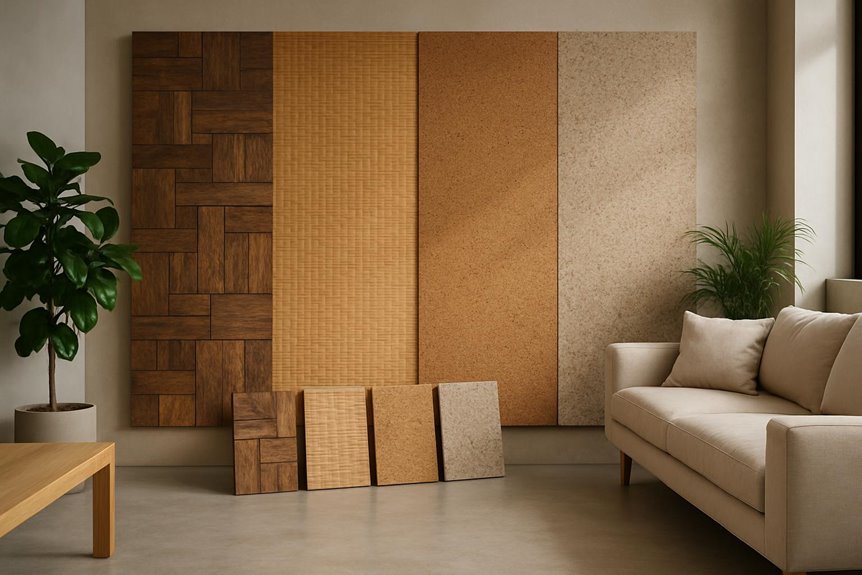
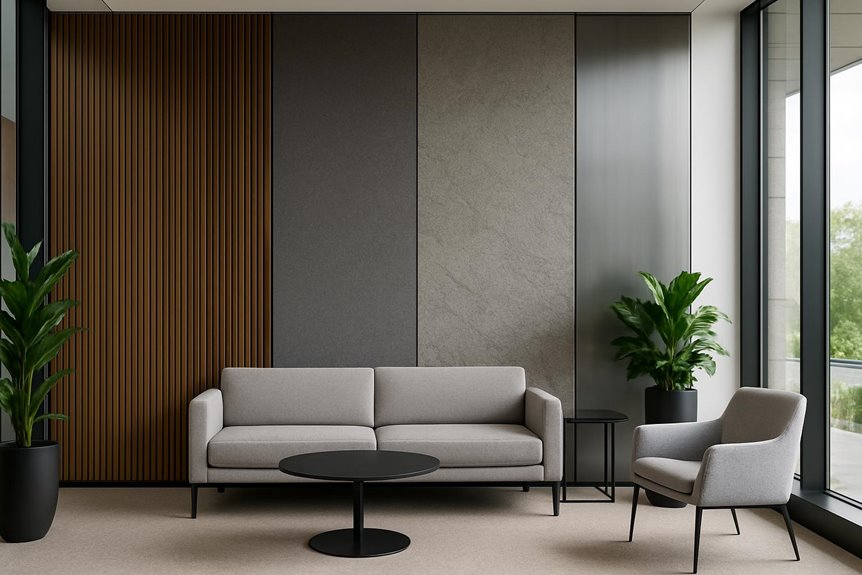
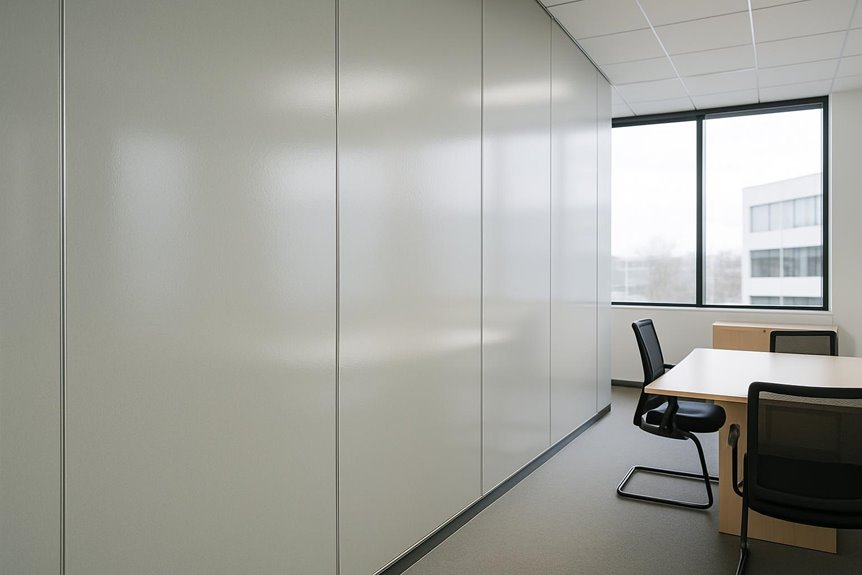
A thorough understanding of fiber cement panel sizes and thicknesses is essential for architects and builders. Available in standard dimensions, these panels offer versatility for various applications. Thinner panels cater to interior uses, while thicker ones provide durability for exteriors. The choice of size and thickness directly impacts installation efficiency and structural integrity. Exploring the nuances of panel selection can reveal insights into optimizing both functionality and aesthetics.
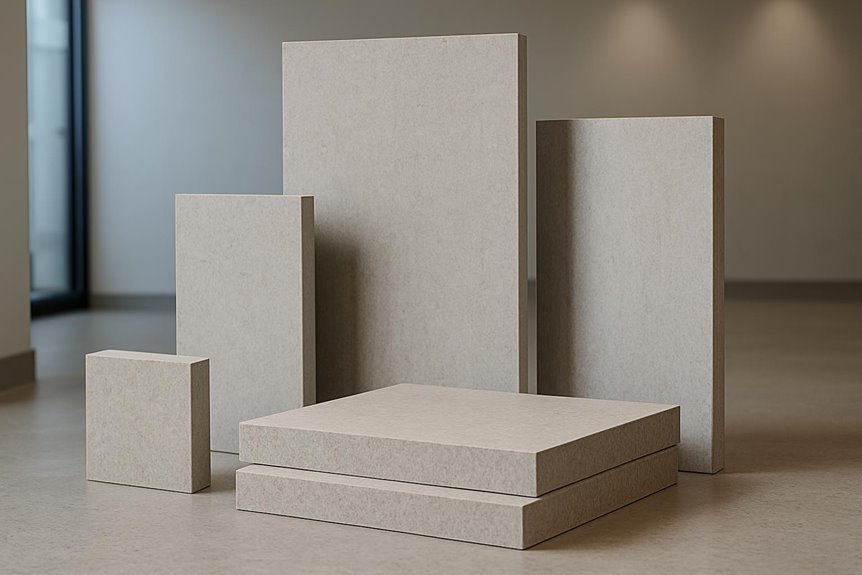
Standard fiber cement panels are available in various thicknesses ranging from 4mm for lightweight applications to 25mm for heavy-duty use.
Common width dimensions include 900mm, 1,000mm, and 1,200mm, while lengths typically range from 2,400mm to 3,050mm, depending on regional preferences.
These standardized sizes guarantee compatibility with framing systems and facilitate efficient transportation and installation.
When considering fiber cement panel sizes, the thickness of the board plays a critical role in determining its suitability for various applications.
Fiber cement panel thickness ranges from 6 mm to over 15 mm, each offering distinct benefits. Panels with a thickness of 6 mm are lightweight, ideal for ceiling panels and internal partition linings.
The 8 mm to 12 mm range is the most versatile, suited for exterior wall cladding and internal dry walls, balancing strength and manageability.
For applications demanding higher impact resistance, such as industrial settings, panels thicker than 15 mm are recommended.
Carefully selecting the appropriate fiber cement panel thickness guarantees peak performance and longevity, aligning with specific project requirements and environmental conditions.
Fiber cement panels come in a variety of width and length dimensions to accommodate diverse construction needs. Typical fiber cement panel dimensions include 1200 × 2400 mm, 1220 × 2440 mm, and 1200 × 3000 mm, providing flexibility for different applications.
These fiber cement board sizes are designed to match standard framing systems, facilitating efficient installation and transportation. The 1220 × 2440 mm size, equivalent to 4x8 feet, is commonly utilized in North America, aligning with prevalent building practices.
Larger panels, such as those measuring 1200 × 3000 mm, are available for architectural projects requiring expansive coverage. The exact dimensions may vary based on manufacturer specifications and façade system requirements, ensuring compatibility with regional construction standards.
In evaluating fiber cement panel thicknesses, specific uses are determined by their structural demands and application areas.
Panels ranging from 6 to 8 mm are typically utilized for interior ceilings and partitions due to their lightweight nature.
Conversely, 10 to 12 mm panels are suited for exterior cladding and robust interior walls, while panels 15 mm and above are reserved for high-impact and industrial uses requiring enhanced durability and acoustic properties.
Many construction projects benefit from using 6–8 mm fiber cement panels due to their versatility in interior decorative wall systems and lightweight cladding applications. These panels offer a favorable balance between strength and manageability, making them ideal for installations where reduced weight is essential.
Fiber cement panel specifications for this thickness category emphasize adaptability, allowing for various fiber cement wall panel sizes to fit seamlessly into diverse architectural designs. Commonly used in ceiling and soffit systems, 6–8 mm panels provide efficient installation without compromising structural integrity.
Their standardized dimensions facilitate easy integration with existing framing systems, ensuring minimal material waste. This thickness is particularly favored in residential settings for its ease of handling and aesthetic appeal.
10–12 mm fiber cement panels are widely used for exterior façade systems and commercial wall applications because they balance rigidity, durability, and installation practicality. This thickness range provides stronger structural stability than thinner boards while remaining suitable for large-format panel systems with controlled joint layouts.
| Feature | Specification |
|---|---|
| Typical Applications | Exterior façades, commercial wall systems |
| Common Panel Sizes | 1200 × 2400 mm, 1200 × 3000 mm |
| Key Advantages | Improved rigidity, flatter appearance, better impact resistance |
Large-format fiber cement panels in this range help reduce visible joints and support cleaner façade lines. They are commonly selected for projects requiring long-term dimensional stability, weather resistance, and modern architectural aesthetics without excessive panel weight.
For applications requiring exceptional durability, 15 mm and thicker fiber cement panels serve as an ideal choice. These robust architectural fiber cement panels are well-suited for high-impact environments and heavy-duty façade assemblies. The increased thickness provides enhanced structural integrity and superior resistance to external stressors, making them indispensable in specialized architectural systems.
When specifying fiber cement cladding panel dimensions, careful consideration of span, fixing method, and exposure conditions is crucial. These panels excel in environments demanding high performance, ensuring long-lasting protection and aesthetic appeal.
Their substantial mass offers excellent acoustic insulation and impact resistance, essential for industrial and commercial installations. Selecting the appropriate thickness aligns with project requirements, maximizing both functionality and design precision while adhering to stringent performance standards.
Although large-format fiber cement panels present handling challenges, their use in modern façades offers significant architectural benefits. These panels allow for minimal joint lines and a sleek, contemporary appearance, contributing to a monolithic wall aesthetic.
The larger fiber cement sheet sizes facilitate faster coverage across extensive elevations, enhancing construction efficiency.
However, they necessitate:
These considerations underline the importance of meticulous planning and execution when employing large-format panels in modern architectural projects.
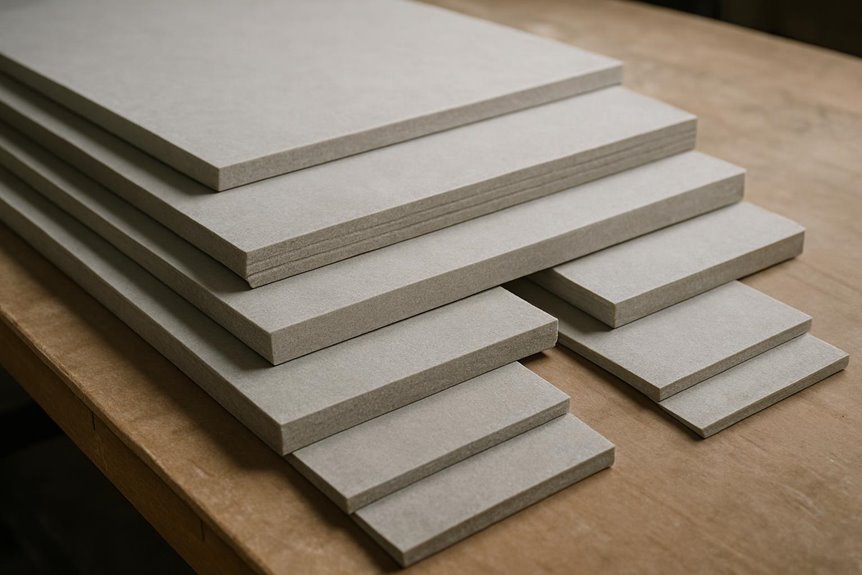
Large-format fiber cement panels offer a sleek aesthetic but introduce specific challenges in installation. Their dimensions considerably influence installation speed, as larger panels decrease the number of joints, reducing installation time.
However, these panels require precise alignment and robust support systems, impacting subframe spacing and expansion joint planning. Handling and transportation logistics become more complex due to increased weight and size, necessitating careful planning to mitigate risks.
Precise alignment and robust support systems are crucial, as handling logistics become complex due to increased panel size and weight.
Efficient lifting mechanisms are essential to guarantee safe handling and proper placement. The choice of panel size directly affects installation complexity, requiring skilled labor for accurate fitting.
Consequently, while large panels enhance visual appeal by reducing visible joints, they demand meticulous planning to guarantee successful installation and structural integrity.
When selecting fiber cement panel sizes, considerations for interior applications differ from those for exterior ones.
Interior panels often prioritize ease of installation and aesthetic integration, typically utilizing thinner boards for lightweight handling.
Conversely, exterior applications demand thicker, more robust panels to withstand environmental stressors, ensuring durability and structural integrity.
Selecting the appropriate fiber cement panel sizes for interior applications requires careful consideration of both functionality and aesthetics.
Smaller and thinner panels are often sufficient indoors, providing ease of handling and installation. Coordination with decorative finishes is essential to guarantee a harmonious interior design.
Panels typically range from 4mm to 6mm in thickness, ideal for ceilings and partition linings. They offer a balance between structural integrity and aesthetic appeal.
These considerations facilitate the best interior applications of fiber cement panels.
In contrast to interior applications, exterior use of fiber cement panels demands greater thickness and rigidity to withstand environmental stresses. Thickness typically ranges from 8mm to 12mm for exterior wall cladding, ensuring structural integrity against weather exposure.
Larger panels are favored in rainscreen systems to reduce joint lines and enhance aesthetic appeal. The increased movement considerations due to weather necessitate these dimensions to prevent warping and cracking.
Standard width options of 900mm, 1,000mm, and 1,200mm, along with lengths up to 3,050mm, accommodate various architectural designs. Selecting the correct size is essential for optimizing performance and ensuring efficient installation.
Custom sizes may be employed for bespoke projects, though they involve trade-offs in cost and lead time.
Read Also: Fiber Cement Siding Types
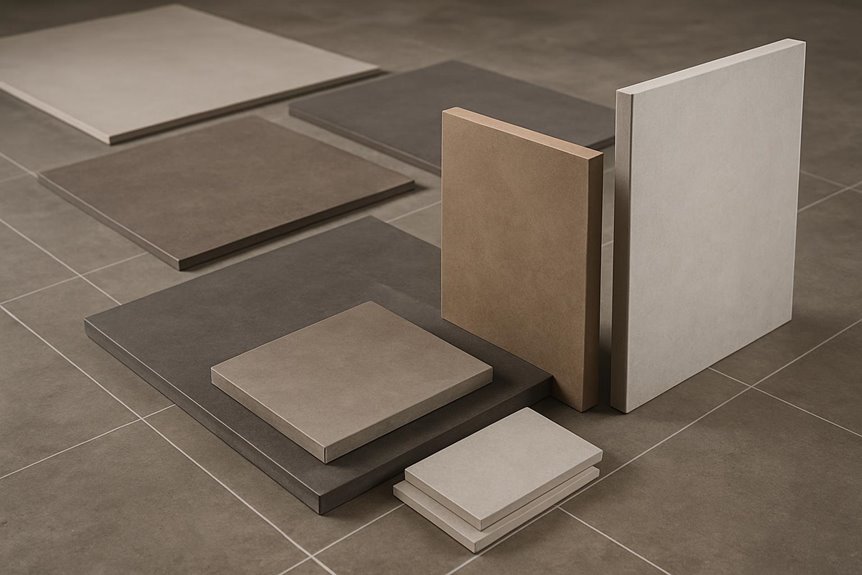
Effective joint layout and modular coordination are essential in optimizing the functionality and aesthetics of fiber cement panel installations. By aligning panel sizing with structural elements, such as window spacing and façade grids, one can achieve a seamless appearance and minimize waste.
Proper coordination guarantees that expansion joints are strategically placed, preserving the visual rhythm across elevations.
Strategically placed expansion joints preserve the visual rhythm across elevations for an aesthetically pleasing façade.
Neglecting these considerations can lead to a disjointed façade and increased material costs.
Aligning joint layout and modular coordination establishes a foundation for enhancing fiber cement panel installations.
Custom fiber cement panel sizes cater to unique architectural requirements, offering tailored solutions for large-scale façade systems and prefabricated wall assemblies. These custom dimensions allow for branded architectural designs, reduced material waste, and the creation of concealed joint layouts that improve façade continuity.
While advantageous for precision and design specificity, custom sizes may impact production lead times and transportation logistics. Manufacturers provide options such as cut-to-size boards and oversized panels to meet bespoke demands, enhancing the aesthetic and functional aspects of construction projects.
Despite potential trade-offs, custom sizing remains a strategic choice for achieving ideal design and structural integration.
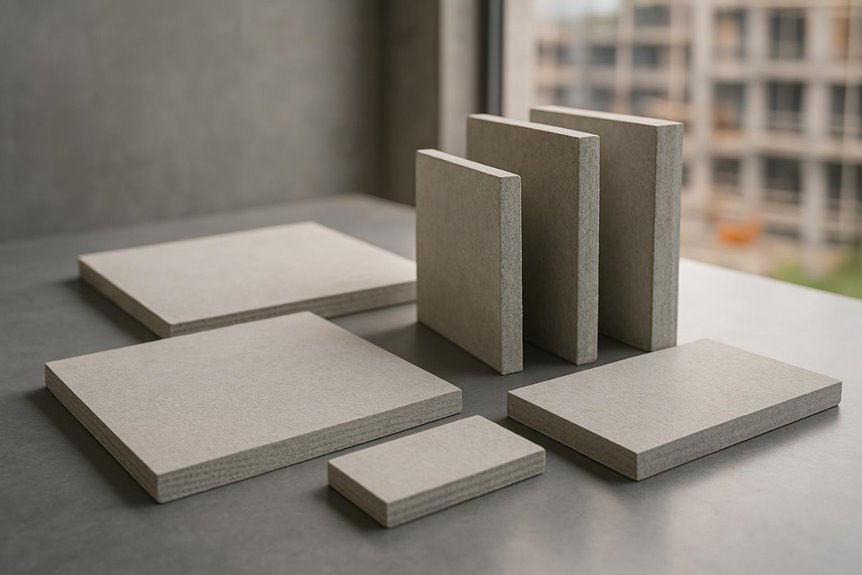
Choosing the right fiber cement panel size affects far more than material coverage. Panel dimensions directly influence installation efficiency, joint stability, façade alignment, and long-term durability. Poor sizing decisions often create unnecessary labour, handling problems, and performance risks.
Common mistakes include:
Correct panel sizing should balance aesthetics, handling, structural performance, and installation efficiency—not appearance alone.
Precision in panel size selection greatly impacts the long-term performance of fiber cement installations. Correct sizing enhances panel flatness, joint stability, and façade alignment, essential for maintaining structural integrity.
Appropriately sized panels resist cracking and deflection, ensuring durability under environmental stress. The relationship between panel dimensions and fixing systems is fundamental; improper sizing can lead to compromised resistance and increased maintenance demands.
Additionally, ideal sizing facilitates efficient installation and minimizes material waste, contributing to cost-effective project execution. Environmental exposure requires careful consideration of panel size to prevent performance degradation.
Fiber cement stands as a fortress against fire, offering superior resistance compared to wood and vinyl. Its non-combustible nature guarantees minimal flame spread, providing security and reliability in high-risk environments, catering to those prioritizing safety and durability.
The production of fiber cement panels involves significant energy consumption and raw material use. However, their long lifespan and low maintenance requirements can offset environmental impacts, offering a more sustainable option compared to traditional building materials.
Yes, fiber cement panels can be painted or stained after installation. Their surface, primed for durability, awaits transformation. Proper preparation and quality finishes guarantee long-lasting color and protection, meeting aesthetic desires while maintaining structural integrity.
Fiber cement exteriors require minimal maintenance. Regular cleaning with mild detergent and water prevents dirt buildup. Inspect for damage or caulking failure annually. Repainting every 7-15 years maintains appearance and protection, depending on environmental exposure.
Fiber cement panels, amusingly unfazed by seismic tantrums, exhibit remarkable resilience in seismic zones. Their dimensional stability and resistance to cracking guarantee structural integrity, appeasing those who crave control over their architectural fortresses during earth’s unpredictable moods.
In selecting fiber cement panels, understanding standard sizes, appropriate thicknesses, and their specific applications is essential. Large-format panels enhance modern façades, while precise joint layouts guarantee modular coordination. Choosing the right size impacts installation efficiency and long-term performance, whether for interior or exterior use. Custom sizes minimize waste, assuring structural integrity. Avoid common selection errors by considering application needs, installation conditions, and architectural requirements. Master these elements to optimize both functionality and aesthetic appeal in construction projects.
For projects requiring architectural fiber cement panel systems, Phili Green Panels supports custom panel sizing, façade coordination, and decorative wall system solutions for modern commercial exteriors and interiors.